 flip
flipQadid — Spiced Dried Mutton Strips for Preservation
Qadid — Spiced Dried Mutton Strips for Preservation
Why this dish? Ibn Khaldun, observer of Maghrebi tribal societies, knew the economy of nomads and mountain dwellers: one does not slaughter a sheep every day, so one preserves. Qadid — meat dried in the sun, salted and spiced — allowed meat from Eid or a slaughter to be kept for months and transported. It is the preservation reflex of arid lands that he describes.
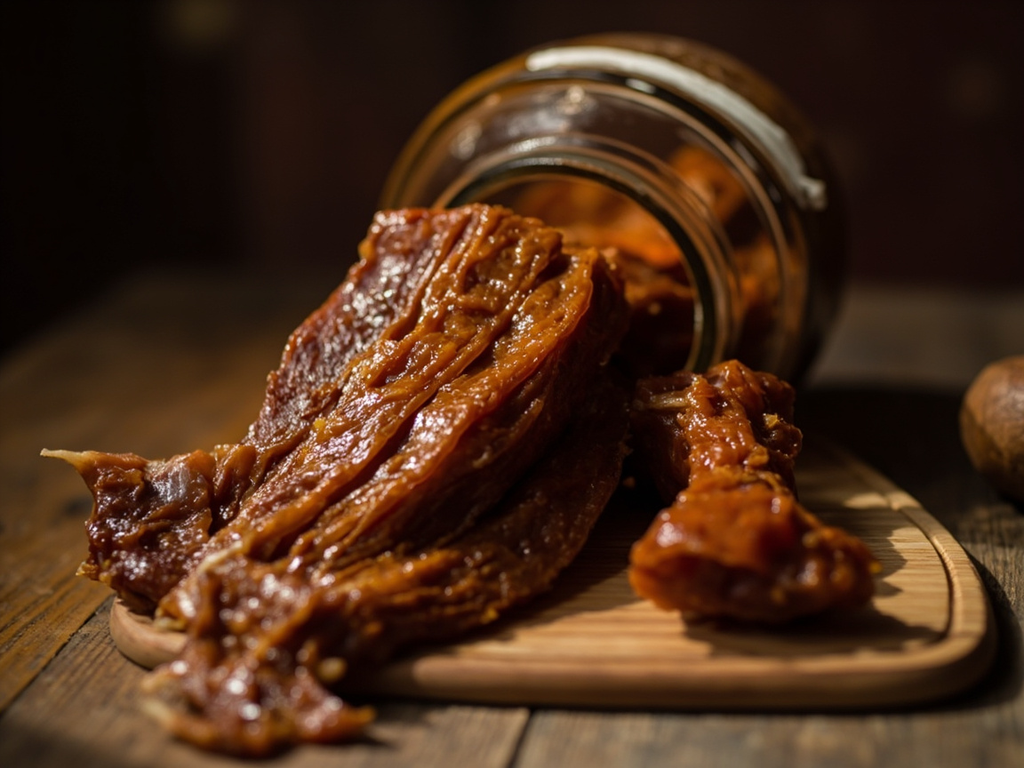
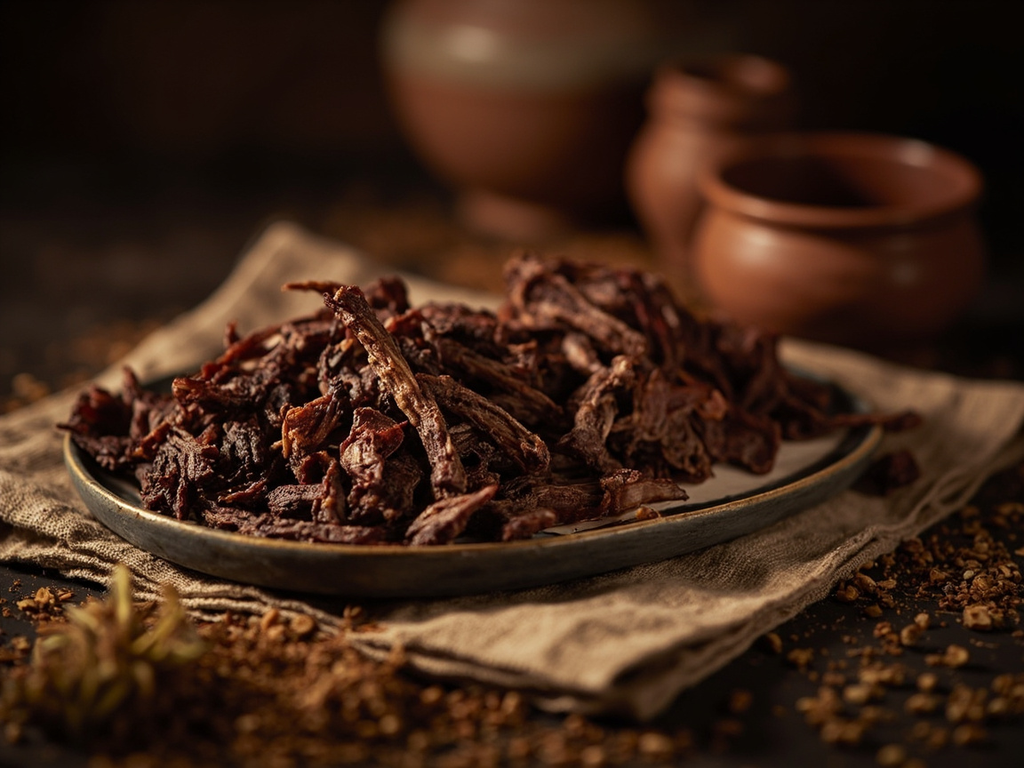
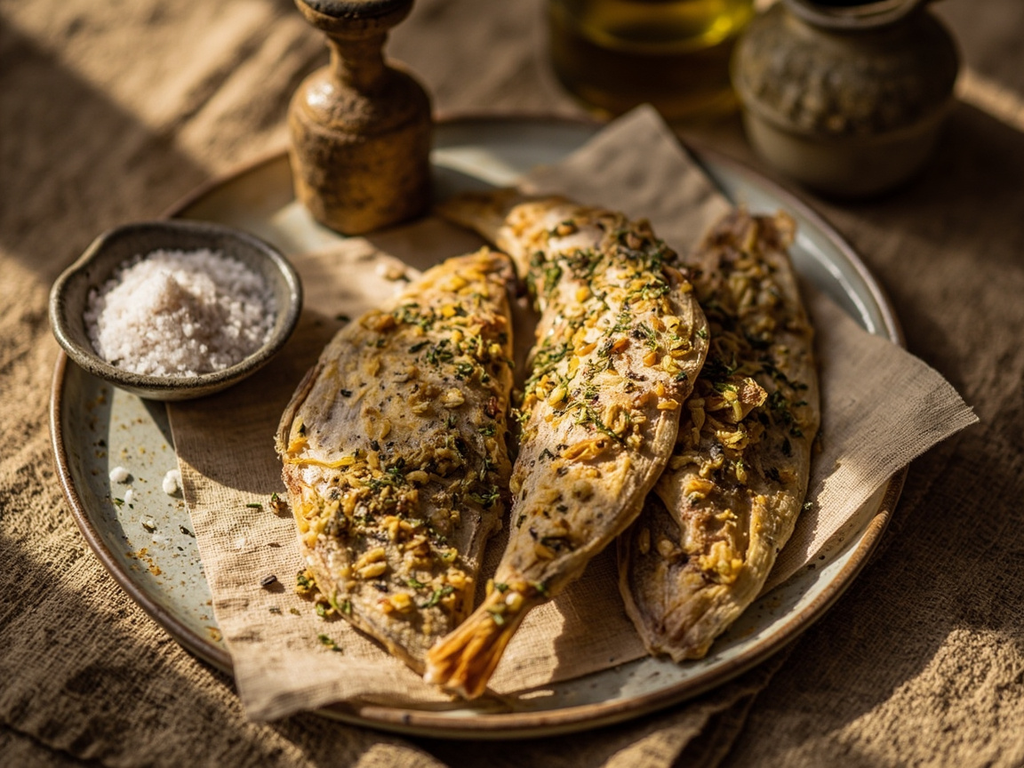
Thin strips of mutton rubbed with salt, garlic, cumin, and coriander, dried in the dry sun, then confit or rehydrated when cooking. Concentrated, salty, deeply 'meaty', qadid then flavors soups, lentils, and festive dishes.
In the mountains and at the edges of the desert, a wise man lets nothing go to waste. When we slaughtered a sheep, my household would cut it into strips, rub them with salt, pounded garlic, and cumin, then hang them in the full sun until they hardened like leather. Thus the meat kept for whole moons, and a single handful thrown into the lentil pot gave them the flavor of a feast day. That is the wisdom of frugal people, friend: to foresee scarcity in the midst of abundance. The dynasties that forget it perish.
- •Lean mutton — in thin strips (base to preserve)
- •Salt — generously (preserving agent)
- •Pounded garlic — abundant (aromatic antiseptic)
- •Cumin and coriander — to taste (preserving spices)
- •Olive oil or melted fat — for confit after drying (sealing)
Qadid — Spiced Dried Mutton Strips for Preservation
Thin strips of mutton rubbed with salt, garlic, cumin, and coriander, dried in the dry sun, then confit or rehydrated when cooking. Concentrated, salty, deeply 'meaty', qadid then flavors soups, lentils, and festive dishes.
Why this dish? Ibn Khaldun, observer of Maghrebi tribal societies, knew the economy of nomads and mountain dwellers: one does not slaughter a sheep every day, so one preserves. Qadid — meat dried in the sun, salted and spiced — allowed meat from Eid or a slaughter to be kept for months and transported. It is the preservation reflex of arid lands that he describes.
In the mountains and at the edges of the desert, a wise man lets nothing go to waste. When we slaughtered a sheep, my household would cut it into strips, rub them with salt, pounded garlic, and cumin, then hang them in the full sun until they hardened like leather. Thus the meat kept for whole moons, and a single handful thrown into the lentil pot gave them the flavor of a feast day. That is the wisdom of frugal people, friend: to foresee scarcity in the midst of abundance. The dynasties that forget it perish.
Ingredients (period version)
- Lean mutton — in thin strips (base to preserve)
- Salt — generously (preserving agent)
- Pounded garlic — abundant (aromatic antiseptic)
- Cumin and coriander — to taste (preserving spices)
- Olive oil or melted fat — for confit after drying (sealing)
Ingredients
- Lean leg of lamb — 800 g, cut into thin strips (base)
- Coarse salt — 3 tbsp (salting)
- Garlic — 1 head, pureed (aromatic/preservation)
- Ground cumin — 2 tsp (spice)
- Ground coriander — 1 tsp (spice)
- Oregano / dried herbs — 1 tsp (fragrance)
- Olive oil — for confit/preserving (sealing)
Method
- Rub the meat strips with salt, garlic puree, cumin, and coriander. Marinate in the fridge for 24 hours.
- Dry: in dry, ventilated sun for 2-3 days traditionally, OR in an oven at 60-70°C with the door ajar for 6 to 10 hours, until the meat is firm and dry.
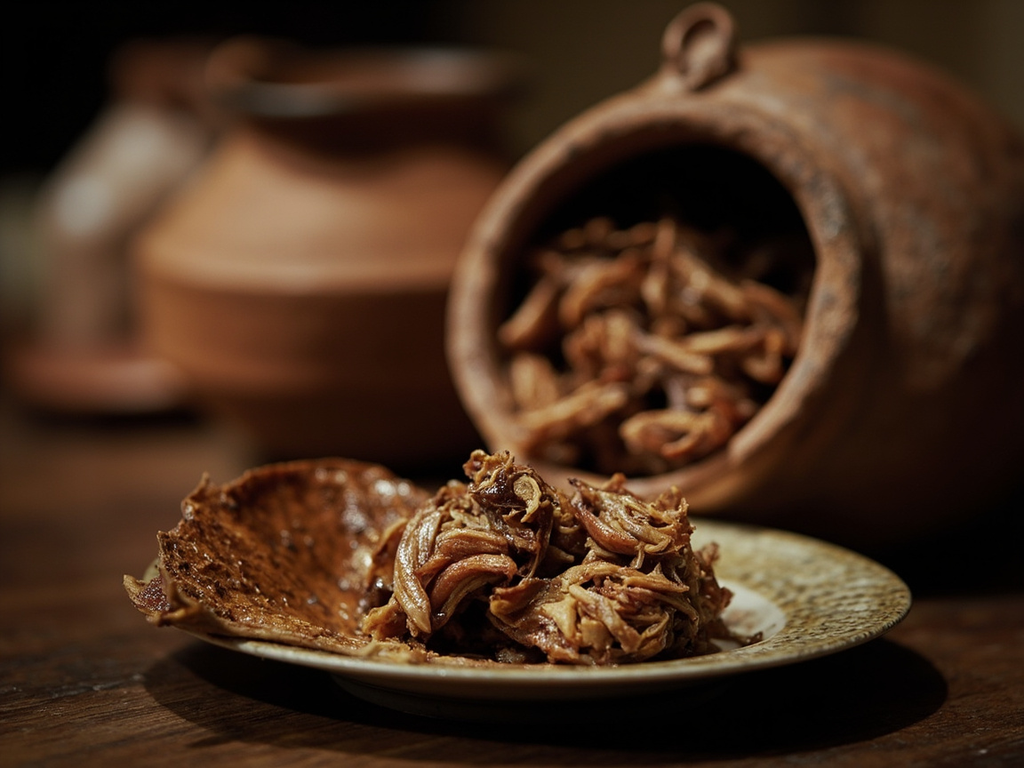
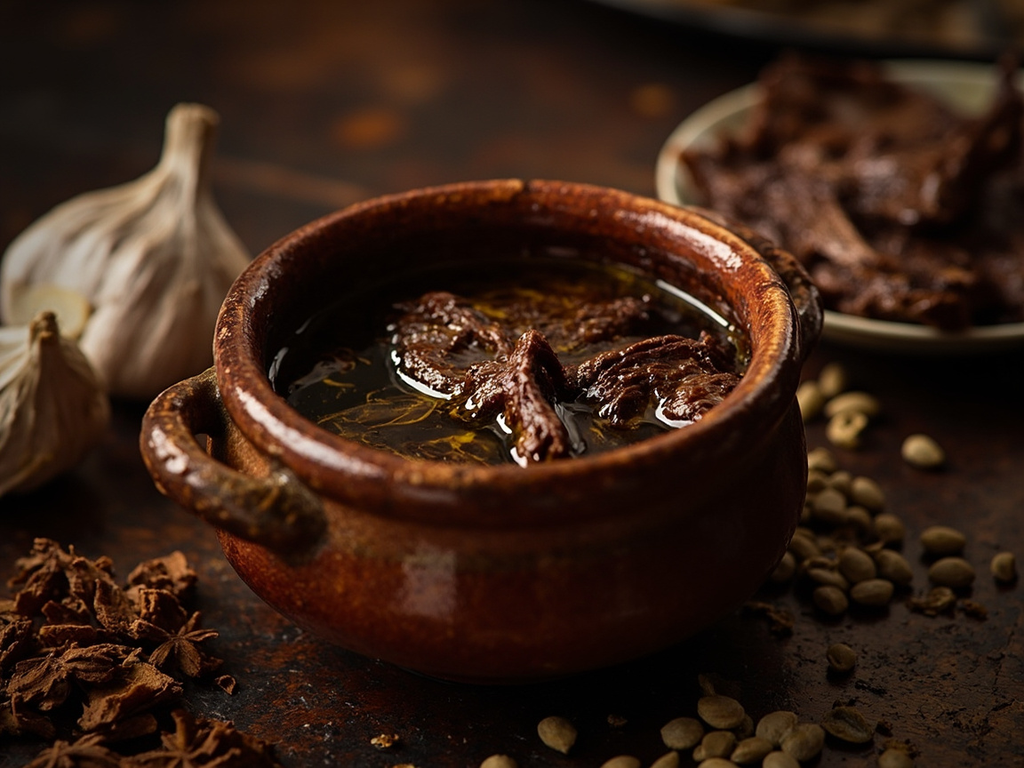
- For long preservation: gently sauté the dried strips in olive oil, then cover with oil in a jar (confit/khlii style).
- To cook: mince the qadid and toss it into a lentil soup, a semolina dish, or eggs — it flavors the whole dish.
- Taste before salting the final dish: qadid already brings a lot of salt.
How it was made : Drying meat (qadid, and its confit version khlii') is an ancient Maghrebi technique for preserving meat without cold, especially after large slaughters like Eid. Salted, spiced, and dried in the arid sun, the meat lasted months and was transportable. A small quantity sufficed to 'give flavor' to cereal and legume dishes — an umami practice avant la lettre.
The contemporary twist : Crumbled over a warm lentil purée with a soft-boiled egg and a drizzle of oil, qadid becomes a Maghrebi 'jerky', a bridge between the medieval pantry and today's plate.
Sources : Maghrebi traditions of meat preservation (qadid / khliʿ), attested from medieval times to today · Kitāb al-ṭabīkh fī al-Maghrib wa-l-Andalus — uses of salted and dried meat
Ibn Khaldun · Charactorium