 flip
flipLawzinaj (almond and honey pastry)
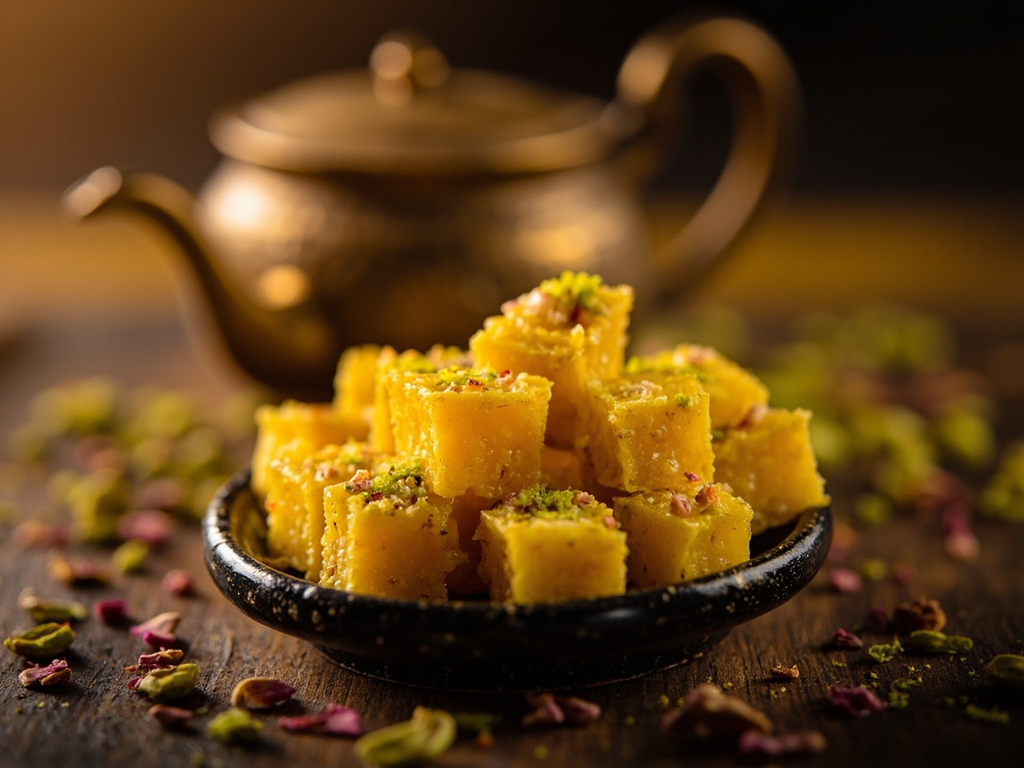
Lawzinaj (almond and honey pastry)
Why this dish? Bukhara under the Samanids was a commercial crossroads where almonds from Khorasan, mountain honey, and rose water flowed. Lawzinaj — a refined confection of thin pastry, almonds, and honey — is described in Abbasid culinary treatises as a courtly dish. It embodies the splendor and cultural refinement that Samani wished to instill in his capital.
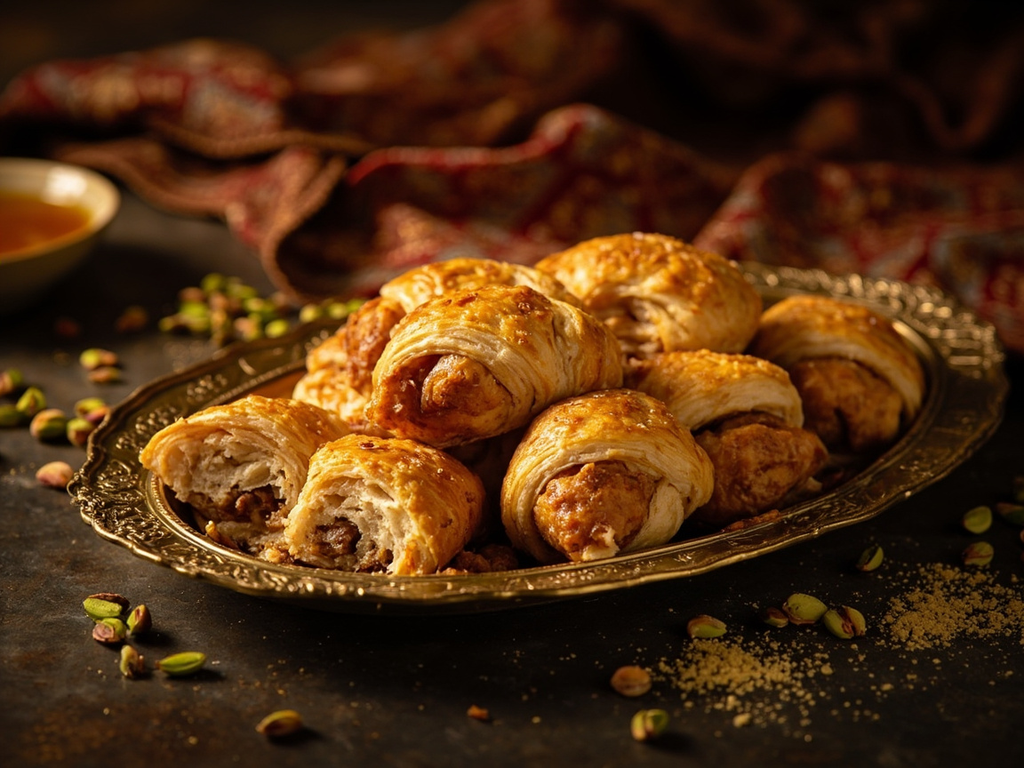
Thin pastry leaves wrapping a filling of ground almonds, perfumed with rose water and bound with honey. This delicate pastry, a possible ancestor of baklava, is a prestige sweet served at banquets and celebrations in the Samanid court.
Lawzinaj is the sweet placed before distinguished guests — poets, emissaries, scholars I attract to Bukhara. The almond must be ground finely, but not reduced to flour, for the tooth must still meet grain. My confectioner rolls the pastry so thin you can see daylight through it, then wraps it around the filling like a calligrapher rolls his parchment. The honey from the Zarafshan mountains seals it all, and the rose water gives each bite the scent of the citadel gardens.
- •Fine wheat flour — Enough for a supple dough (Pastry wrapper)
- •Blanched almonds — Two handfuls, crushed (Filling)
- •Pure honey — Generously (Binder and sweetener)
- •Rose water — A few drops (Floral fragrance)
- •Sesame oil or clarified butter — For cooking (Fat)
- •Ground cardamom — A pinch (Warm spice)
Lawzinaj (almond and honey pastry)
Thin pastry leaves wrapping a filling of ground almonds, perfumed with rose water and bound with honey. This delicate pastry, a possible ancestor of baklava, is a prestige sweet served at banquets and celebrations in the Samanid court.
Why this dish? Bukhara under the Samanids was a commercial crossroads where almonds from Khorasan, mountain honey, and rose water flowed. Lawzinaj — a refined confection of thin pastry, almonds, and honey — is described in Abbasid culinary treatises as a courtly dish. It embodies the splendor and cultural refinement that Samani wished to instill in his capital.
Lawzinaj is the sweet placed before distinguished guests — poets, emissaries, scholars I attract to Bukhara. The almond must be ground finely, but not reduced to flour, for the tooth must still meet grain. My confectioner rolls the pastry so thin you can see daylight through it, then wraps it around the filling like a calligrapher rolls his parchment. The honey from the Zarafshan mountains seals it all, and the rose water gives each bite the scent of the citadel gardens.
Ingredients (period version)
- Fine wheat flour — Enough for a supple dough (Pastry wrapper)
- Blanched almonds — Two handfuls, crushed (Filling)
- Pure honey — Generously (Binder and sweetener)
- Rose water — A few drops (Floral fragrance)
- Sesame oil or clarified butter — For cooking (Fat)
- Ground cardamom — A pinch (Warm spice)
Ingredients
- Phyllo dough — 6 sheets (Pastry wrapper)
- Blanched almonds — 200 g (Filling)
- Liquid honey — 120 g (Binder and sweetener)
- Rose water — 2 tbsp (Floral fragrance)
- Ghee or melted butter — 80 g (Fat)
- Ground cardamom — ½ tsp (Warm spice)
- Chopped pistachios — 2 tbsp (garnish) (Decoration)
Method
- Preheat oven to 180 °C. Coarsely grind almonds (keep some grain). Mix with 80 g honey, rose water, and cardamom to form a sticky filling.
- Brush one phyllo sheet with melted ghee, place a second sheet on top, brush again. Repeat for 3 layers of 2 sheets each.
- Spread the almond filling in a log along the bottom edge of each double sheet. Roll tightly, folding in the sides like a cigar.
- Place rolls seam-side down on a baking sheet lined with parchment paper. Brush tops with melted ghee.
- Bake for 20-25 minutes until golden and crispy.
- Warm remaining honey (40 g) and drizzle over rolls as they come out of the oven. Sprinkle with chopped pistachios. Cool 10 minutes before slicing into 4 cm pieces.
How it was made : Lawzinaj is documented in al-Warraq's Kitab al-Tabikh (10th century) and mentioned by several Abbasid authors as a luxury dish. It consists of very thin dough (ruqâq) filled with crushed almonds and sweetened with honey or sugar. Food historians see it as a precursor to Ottoman baklava. Rose water, produced in Iran since antiquity, was a common culinary fragrance in Persian courts.
The contemporary twist : Cut into 3 cm bites and present standing upright in small copper cups, like miniature scrolls — a nod to the Persian manuscripts of the Samanid court.
Sources : Nawal Nasrallah, Annals of the Caliphs' Kitchens: Ibn Sayyār al-Warrāq's Tenth-Century Baghdadi Cookbook, Brill, 2007 · Charles Perry, "Rotab, Lawzinaj, and Luqam al-Qadi", in Medieval Arab Cookery, Prospect Books, 2001
Ismail Samani · Charactorium