 flip
flipPatina of Fish with Garum and Honey
Patina of Fish with Garum and Honey
Why this dish? Caesar, now master of Rome, entertained the city's elite at his table, and sources say he enjoyed refined cuisine in the grand style. The patina — a sort of egg-bound terrine — was the ultimate prestige dish at banquets, combined with garum, honey, and spices from the East.
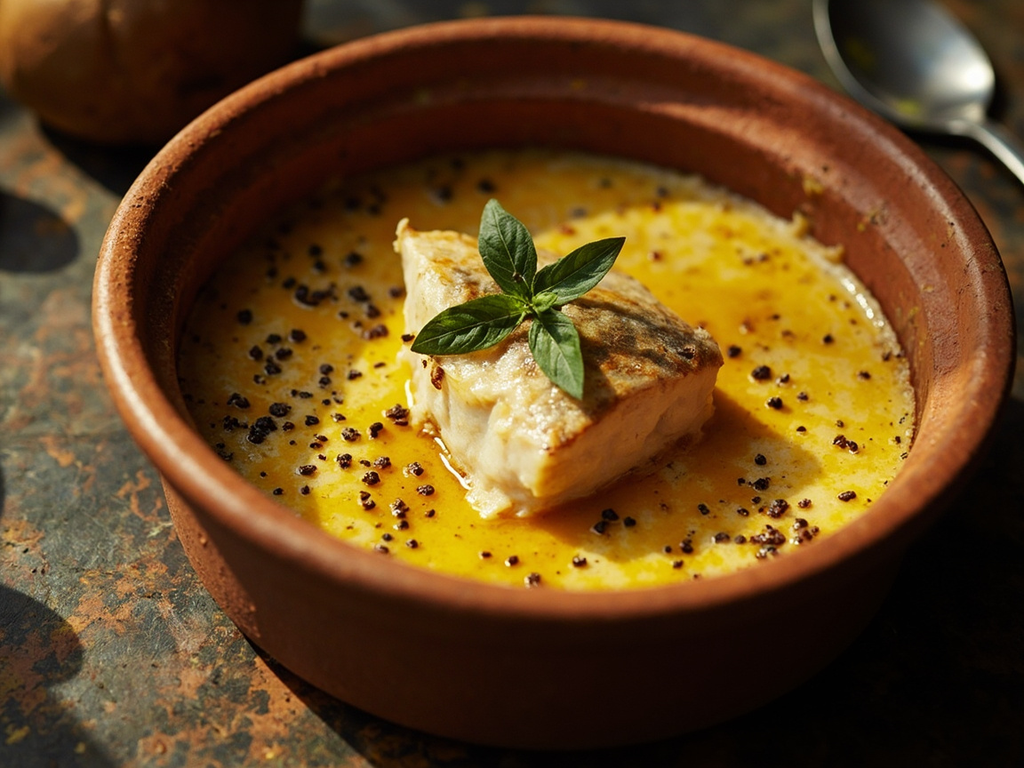
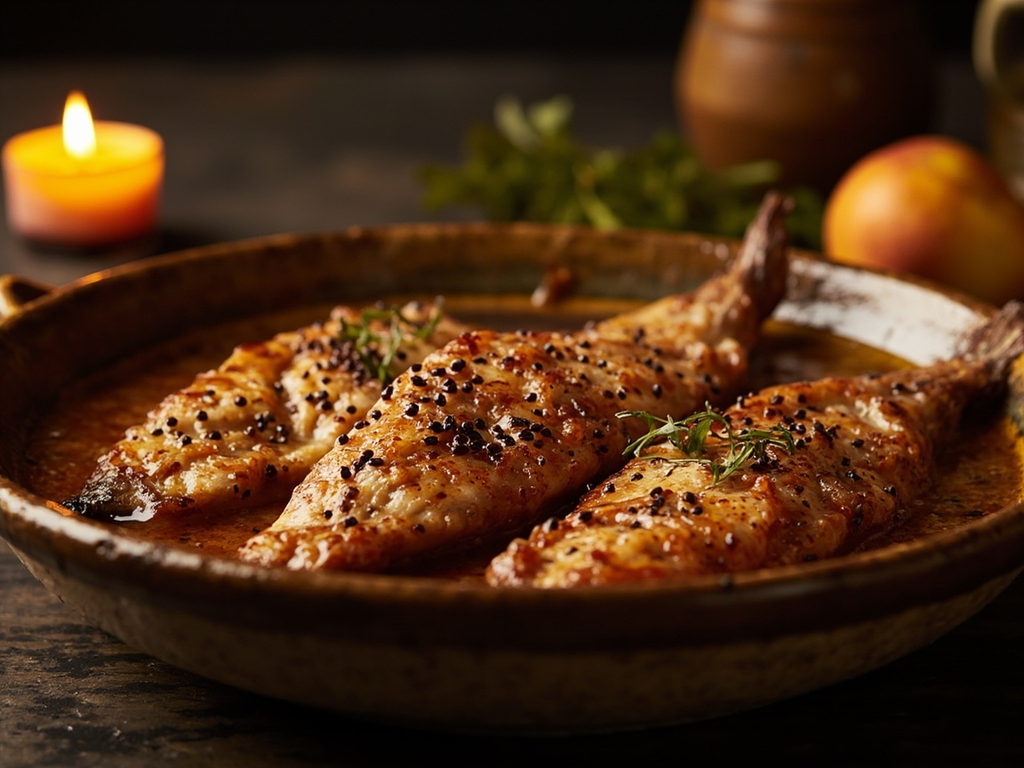
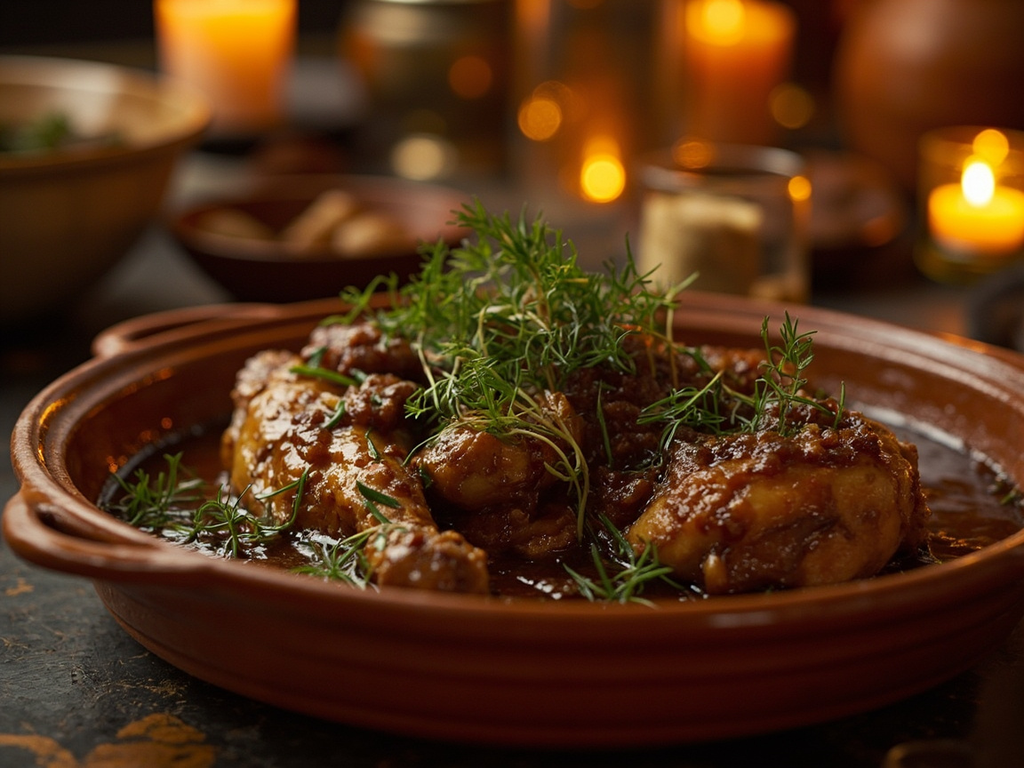
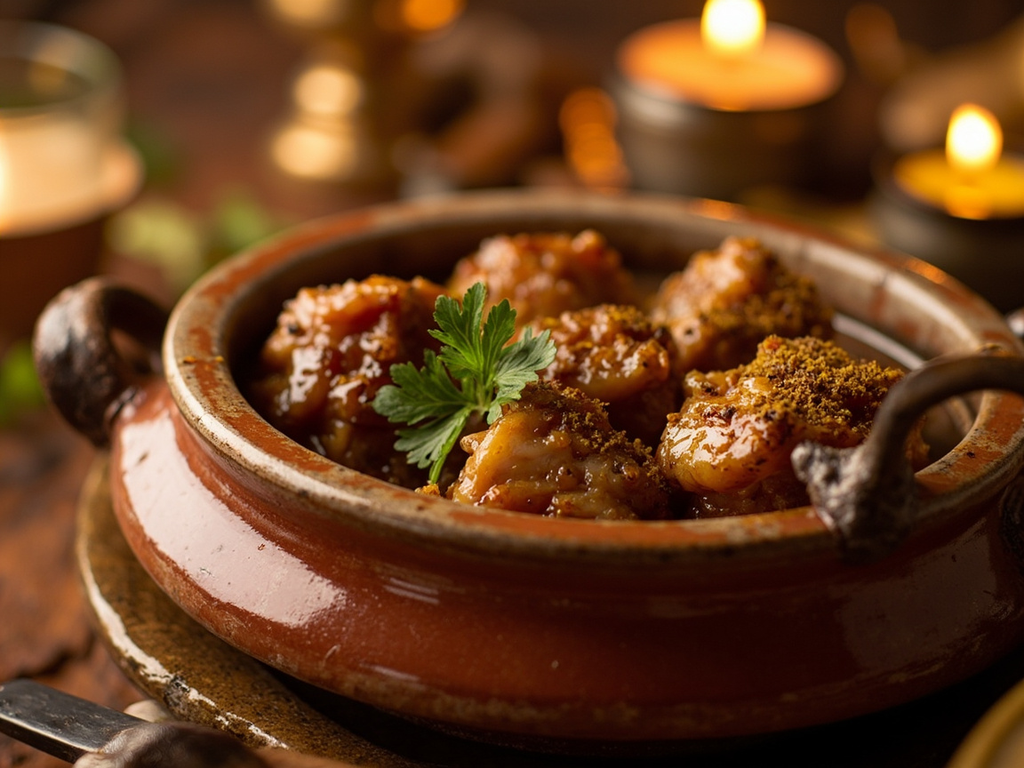
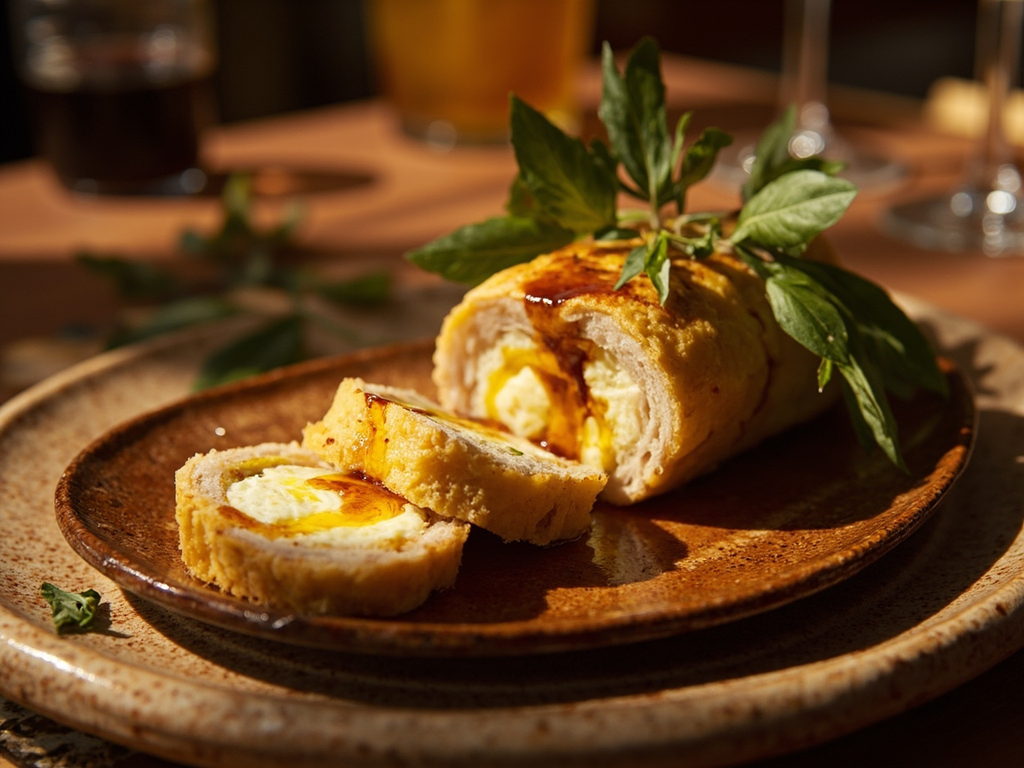
A tender fish terrine bound with eggs, flavored with garum, sweet wine, and honey, spiced with lovage and pepper. The sweet-savory contrast, typical of Roman cuisine, surprises modern palates but marked the refinement of a patrician table.
At my table, we serve more than soldier's porridge — a dictator receives the first men of Rome, and one must dazzle. Beat the eggs with garum, a little honey, a touch of cooked wine, and bind the fish in this nectar until it sets like cream. Salt embracing sweetness: that is the taste that distinguishes a man of taste from a boor. I have dined with the kings of Egypt, believe me, and nothing beats a well-made patina served warm under the lamp.
- •White fish fillets (sea bass, sea bream) — a fine piece (base)
- •Eggs — several (binder)
- •Garum — a dash (umami signature)
- •Honey — a spoonful (sweetness)
- •Sweet wine (passum) — a little (aroma)
- •Lovage and pepper — to taste (spices)
- •Olive oil — a splash (softness)
Patina of Fish with Garum and Honey
A tender fish terrine bound with eggs, flavored with garum, sweet wine, and honey, spiced with lovage and pepper. The sweet-savory contrast, typical of Roman cuisine, surprises modern palates but marked the refinement of a patrician table.
Why this dish? Caesar, now master of Rome, entertained the city's elite at his table, and sources say he enjoyed refined cuisine in the grand style. The patina — a sort of egg-bound terrine — was the ultimate prestige dish at banquets, combined with garum, honey, and spices from the East.
At my table, we serve more than soldier's porridge — a dictator receives the first men of Rome, and one must dazzle. Beat the eggs with garum, a little honey, a touch of cooked wine, and bind the fish in this nectar until it sets like cream. Salt embracing sweetness: that is the taste that distinguishes a man of taste from a boor. I have dined with the kings of Egypt, believe me, and nothing beats a well-made patina served warm under the lamp.
Ingredients (period version)
- White fish fillets (sea bass, sea bream) — a fine piece (base)
- Eggs — several (binder)
- Garum — a dash (umami signature)
- Honey — a spoonful (sweetness)
- Sweet wine (passum) — a little (aroma)
- Lovage and pepper — to taste (spices)
- Olive oil — a splash (softness)
Ingredients
- White fish fillets (sea bass, sea bream, cod) — 400 g (base)
- Eggs — 4 (binder)
- Fish sauce (garum / colatura) — 1 tbsp (umami signature)
- Honey — 1 tbsp (sweetness)
- Sweet white wine or reduced muscat grape must — 5 cl (aroma)
- Chopped lovage (or celery leaves) — 1 tbsp (spice)
- Ground black pepper — 1/2 tsp (spice)
- Olive oil — 2 tbsp (softness)
Method
- Preheat oven to 160°C.
- Briefly poach the fish fillets, drain, and flake.
- Beat eggs with fish sauce, honey, wine, and pepper.
- Mix flaked fish, lovage, and oil into the egg mixture.
- Pour into an oiled dish, cook in a water bath for 30–35 minutes until set.
- Serve warm, in slices, with a twist of pepper.
How it was made : Apicius' patinae refer to egg-bound preparations, ancestors of our baked flans and omelettes, cooked in a dish of the same name. The combination of garum, honey, and sweet wine is constant: elite Roman cuisine deliberately cultivated the sweet-savory taste.
The contemporary twist : Presented as individual ramekins, unmolded and topped with a muscat reduction — a sweet-savory flan that is sure to intrigue.
Sources : Apicius, De re coquinaria, Book IV (Patinae)
Julius Caesar · Charactorium