 flip
flipPatina of Fish from the Port with Garum and Herbs
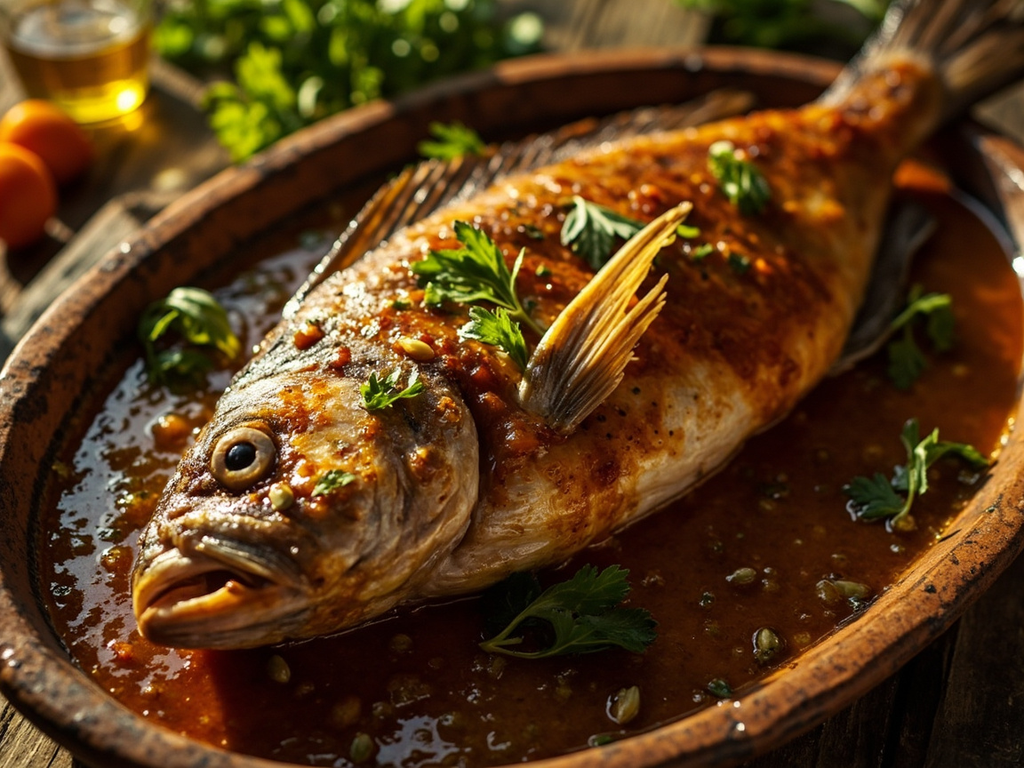
Patina of Fish from the Port with Garum and Herbs
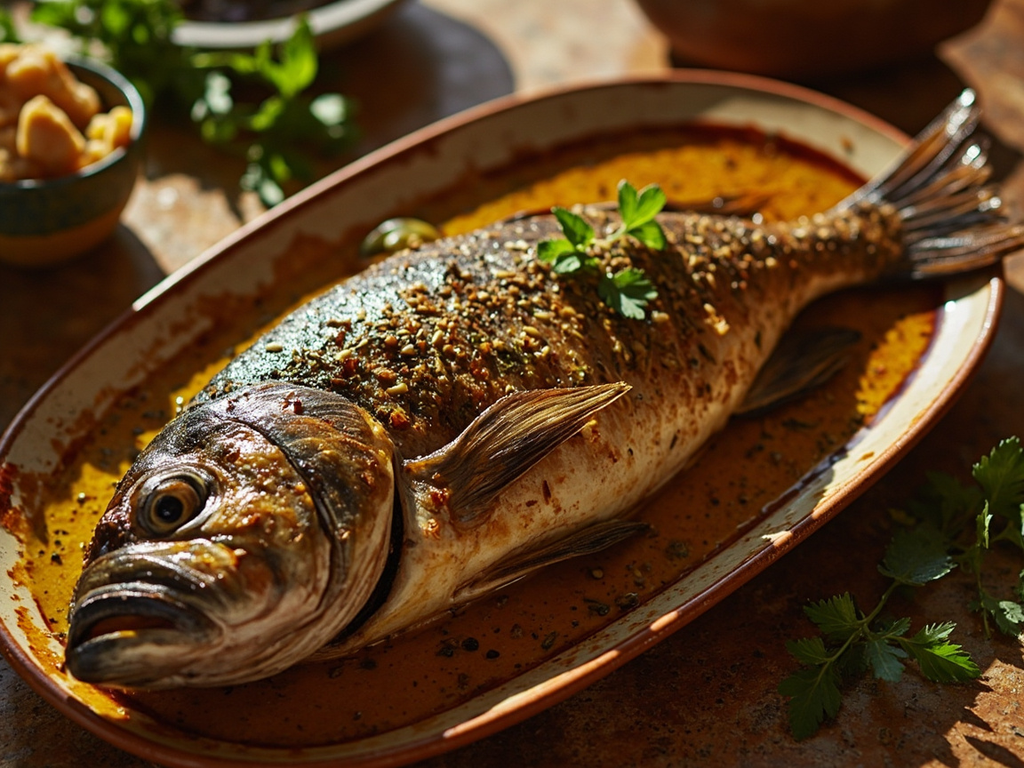
Why this dish? Alexandria was a great port: fresh fish arrived daily. For a somewhat refined evening meal, the well-off scholar could afford a fish dish bound with eggs and scented with herbs — a accomplished table dish, without ostentation, befitting a man of moderation.
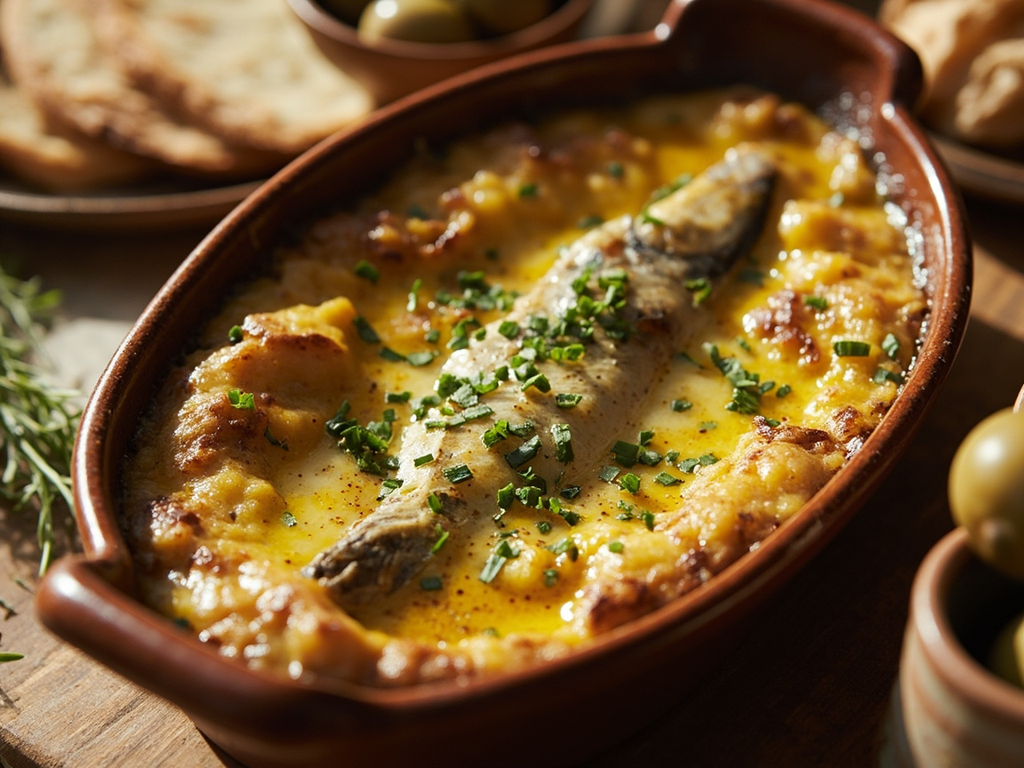
A savory flan of flaked fish, bound with eggs, flavored with garum, wine, and herbs (lovage, oregano), gently cooked. Tender, flavorful, the deipnon dish shared in the evening.
In the evening, when the stars I had catalogued during the day finally appeared, I would have this prepared. Fish taken from the port that same morning — for in Alexandria, you see, the sea feeds the city as the Nile feeds the land — flaked, bound with a few eggs, moistened with wine and garum, scented with lovage. Let it set very gently, never rush the fire, just as one would not dare rush the motion of the heavens. This is a dish of harmony: each flavor in its place, like each star on its sphere.
- •Fresh white fish — a fine piece (base)
- •Eggs — a few (binding)
- •Garum — a dash (salty umami)
- •White wine — a splash (flavor)
- •Lovage and oregano — a handful (herbs)
- •Pepper — a few ground grains (spice (imported from the East))
- •Olive oil — a drizzle (fat)
Patina of Fish from the Port with Garum and Herbs
A savory flan of flaked fish, bound with eggs, flavored with garum, wine, and herbs (lovage, oregano), gently cooked. Tender, flavorful, the deipnon dish shared in the evening.
Why this dish? Alexandria was a great port: fresh fish arrived daily. For a somewhat refined evening meal, the well-off scholar could afford a fish dish bound with eggs and scented with herbs — a accomplished table dish, without ostentation, befitting a man of moderation.
In the evening, when the stars I had catalogued during the day finally appeared, I would have this prepared. Fish taken from the port that same morning — for in Alexandria, you see, the sea feeds the city as the Nile feeds the land — flaked, bound with a few eggs, moistened with wine and garum, scented with lovage. Let it set very gently, never rush the fire, just as one would not dare rush the motion of the heavens. This is a dish of harmony: each flavor in its place, like each star on its sphere.
Ingredients (period version)
- Fresh white fish — a fine piece (base)
- Eggs — a few (binding)
- Garum — a dash (salty umami)
- White wine — a splash (flavor)
- Lovage and oregano — a handful (herbs)
- Pepper — a few ground grains (spice (imported from the East))
- Olive oil — a drizzle (fat)
Ingredients
- White fish fillets (cod, hake, sea bream) — 500 g (base)
- Eggs — 4 (binding)
- Fish sauce (as a substitute for garum) — 1 tsp (salty umami)
- Dry white wine — 50 ml (flavor)
- Lovage (or celery stalk + leaves) — 1 tbsp chopped (signature herb)
- Dried oregano — 1/2 tsp (herb)
- Black pepper — 1/2 tsp ground (spice)
- Olive oil — 2 tbsp (fat)
Method
- Poach the fish fillets for 5 minutes in a little water with the white wine, then drain and flake, removing any bones.
- Beat the eggs with the fish sauce, chopped lovage, oregano, and pepper.
- Mix the flaked fish with the egg mixture, add the olive oil.
- Pour into a greased dish and bake in a water bath at 160°C for about 30 minutes, until the patina is set but still slightly wobbly.
- Let cool for a few minutes, sprinkle with oregano, and serve with good bread.
How it was made : The patina is a family of egg-bound dishes very common in Apicius, made with fish, vegetables, or fruit. Pepper, already imported from India via the Red Sea routes that passed through Egypt, seasoned the cuisine of wealthy tables.
The contemporary twist : Baked in individual ramekins and unmolded, it presents as a fine fish timbale — an elegant 'Alexandrian flan' for an appetizer.
Sources : Apicius, De re coquinaria, Book IV (patinae) · Andrew Dalby, Food in the Ancient World from A to Z
Ptolemy · Charactorium