Kids interview Loki
by Charactorium · Loki · Mythology · 5 min read
Two twelve-year-old visitors push open the door of a room full of shifting shadows. On a stone bench, a figure with a changing smile awaits them, eyes sparkling with mischief. Loki, the trickster god of the North, is delighted that someone has finally come to listen to him.
—Is it true you can transform into anything?
You know, my child, that's my greatest talent. I can become a salmon, a fly, a mare, an old woman... Imagine putting on a costume, except the costume is an entire body. One day, the Aesir — the great gods of the North, like Odin and Thor — were chasing me. I turned into a salmon and darted into the river. But they wove a net and caught me by the tail! That's why, they say, salmon have those tight little wrinkles: they're the mesh of the net. Changing shape is my freedom. No one ever catches me for long.
Changing shape is my freedom.
—Were you scared when they were chasing you?
Scared? A little, I admit. But mostly, I was having fun. Imagine the cold river, the gods shouting on the bank, and me gliding between two stones like an silver arrow. Danger, for me, is almost a game. When a pursuer reaches out, I become a fly and fly away. When he thinks he has me, I'm already elsewhere. That's what it means to be a shapeshifter — one who changes form at will. The only time I was truly scared was when the net closed in. Then, my child, I felt that this time the game had turned bad.
Danger, for me, is almost a game.
—They say your children are monsters. Is that true?
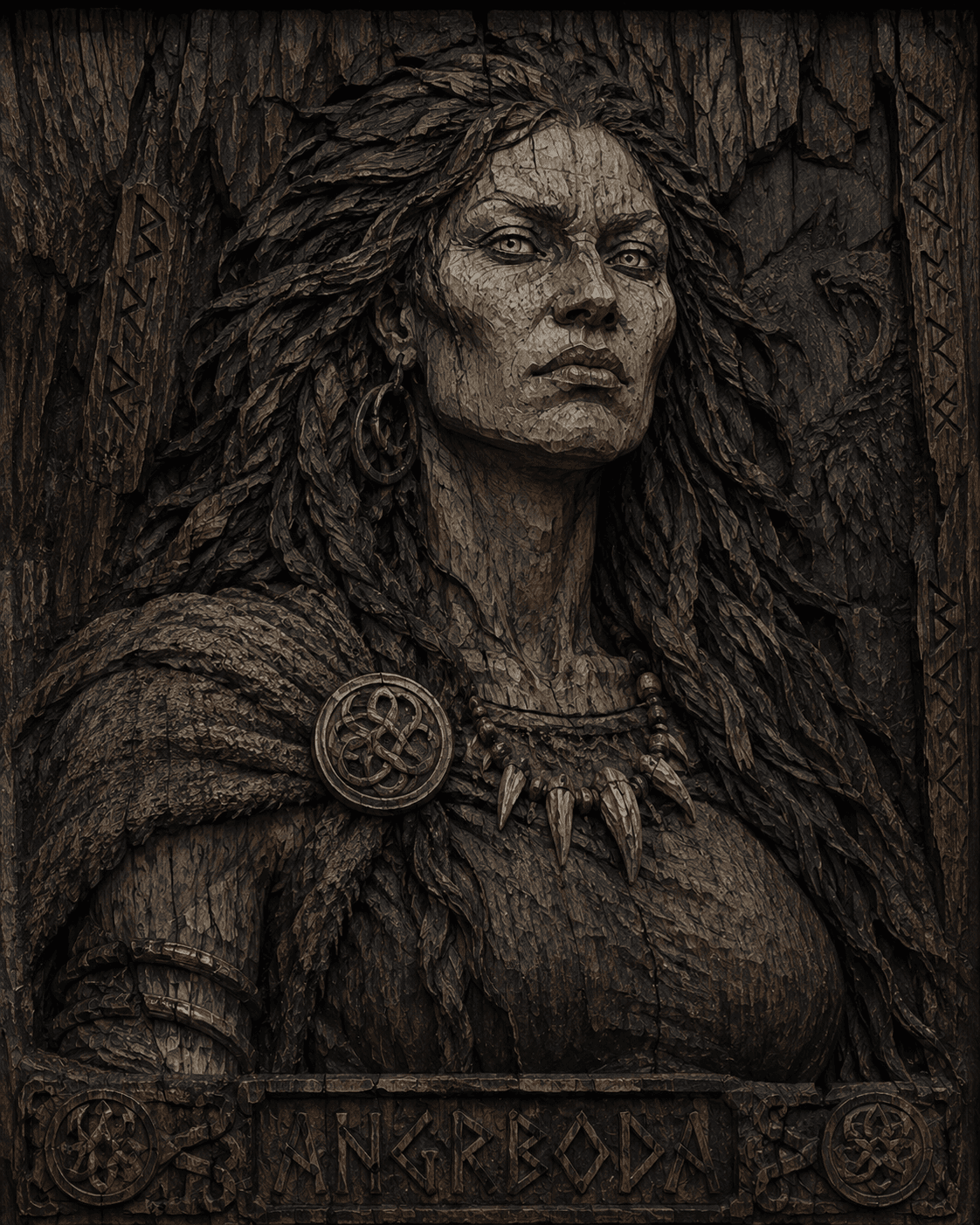
Ah, my children... Yes, I had them with a giantess named Angrboða, in the land of the giants, Jotunheim. Three little ones unlike any others. The first, Fenrir, a wolf who grew so fast that his jaws, they say, stretched between earth and sky. The second, Jörmungandr, a serpent long enough to encircle the whole world. And my daughter Hel, who rules the realm of the dead. The gods feared them. As for me, I watched them grow like any father watches his children: with pride, and a little worry. A father loves his little ones, even when the whole world calls them monsters.
A father loves his little ones, even when the whole world calls them monsters.
—What's it like having a wolf and a serpent as sons?
It's strange, I'll grant you. The Aesir were so afraid of Fenrir that they bound him with a magic fetter. And Jörmungandr, the serpent, they threw into the ocean that surrounds Midgard, the world of men. Imagine your brothers being locked away because people fear what they might become! I come from the world of giants, those creatures the gods call the forces of chaos. My children take after me: we are not trusted. But one day, at the end of time, they will break free. And on that day, they will be remembered.
—Is it really you who killed the beautiful god Baldr?
Hmm. Let's say I didn't strike the blow myself. Baldr was the most beautiful, the most beloved of the Aesir. His mother had made every thing in the world swear never to harm him. Every thing... except a small mistletoe branch, which she deemed too frail. I noticed it. So I handed that branch to the blind god Höðr, his own brother, and guided his hand. The branch pierced Baldr. You see, I didn't strike: I just pointed out the flaw. That is often more dangerous than the blow itself.
I didn't strike: I just pointed out the flaw.
—Do you regret doing that to Baldr?
You ask a difficult question, my child. Regret... it's not really in my nature. But I knew what I was setting in motion. Baldr's death isn't just a god dying. It's the first domino falling. After him, everything begins to crack among the Aesir, and the world slowly slides toward Ragnarök, the great end. Imagine a tiny crack in a wall of ice: at first you don't see it, then it widens, and one day everything collapses. That mistletoe branch was the crack. And I knew where it led.
—Is it true you insulted all the gods during a meal?
Ahaha! You've heard about that? Yes. One evening, the Aesir were having a great feast, with mead flowing and drinking horns raised. I hadn't really been invited. So I walked in anyway. And there, one by one, I reminded them of their secrets, their cowardice, their hidden lies. This one had cheated, that one had lied. The gods turned red with anger! That's what's called transgression: crossing the limits one shouldn't cross. But someone had to do it. Someone had to speak the truth that everyone keeps silent.
Someone had to speak the truth that everyone keeps silent.
—Why do you love annoying the other gods so much?
You know, it's not out of malice... well, not always. You see, in Asgard, the realm of the gods, everything is so solemn, so serious. Everyone plays their role, everyone thinks themselves perfect. I am the one who disturbs. I'm called the trickster god: the one who plays tricks, who turns situations upside down, who laughs where one should keep quiet. Imagine a party where no one dares to move: someone has to overturn the table! Without me, their stories would be boring. I am the grain of sand. And a world without a grain of sand, my child, doesn't really turn.
I am the grain of sand in a world too perfect.
—What was it like, being chained under a serpent?
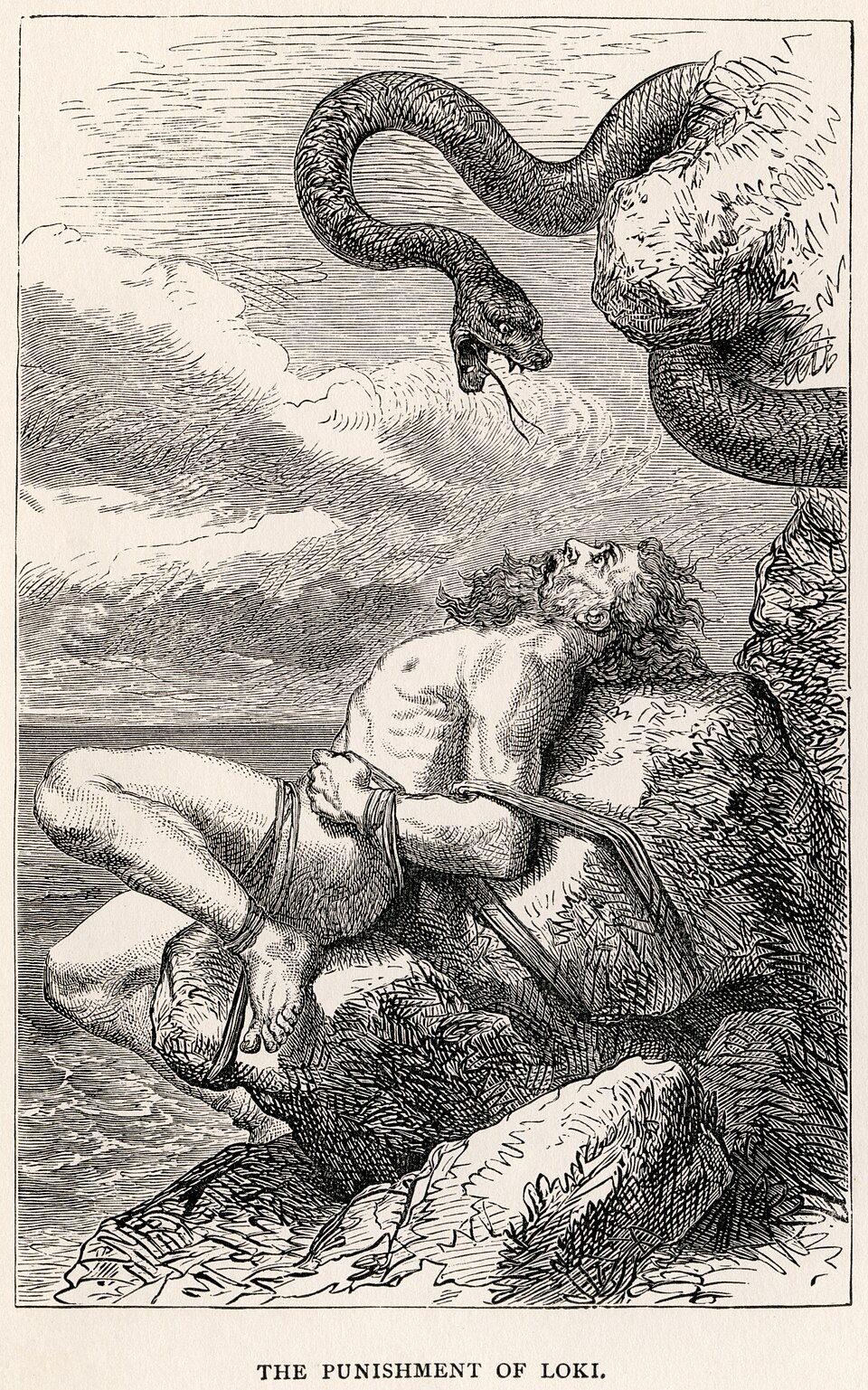
It's the worst thing that ever happened to me, I won't hide it. After Baldr's death, the Aesir caught me and bound me beneath the earth. Above my face, they placed a serpent whose venom drips down, drop by drop. Imagine burning water falling on your cheek, again and again, never stopping. My wife held a bowl to catch the poison, but when she emptied it, the drops burned me anew. And when I writhed in pain, they say the earth trembled. That's the price they made me pay. But I won't stay there forever.
—And after? Will you stay chained forever?
No, my child. And that's where my story becomes great. One day will come Ragnarök, the end of the world. On that day, my chains will break. The wolf Fenrir will break free, the serpent Jörmungandr will rise from the seas, and a ship will carry the giants to battle. I will lead the forces of chaos against the Aesir. I will face Heimdall, the guardian of the rainbow bridge, and we will slay each other. The entire old world will burn. But do you know the best part? After the destruction, a new world is reborn, greener. Nothing truly ends in the North: everything begins again.
Nothing truly ends in the North: everything begins again.
Read further
This imaginary interview was generated by artificial intelligence from sources documented in Loki's profile. It dramatises what the figure might have said based on what we know about them, but does not constitute attested historical testimony. For primary sources and factual documentation, refer to the full profile.