Imaginary dialogue between Odin and Loki
by Charactorium · Loki · Mythology · 6 min read
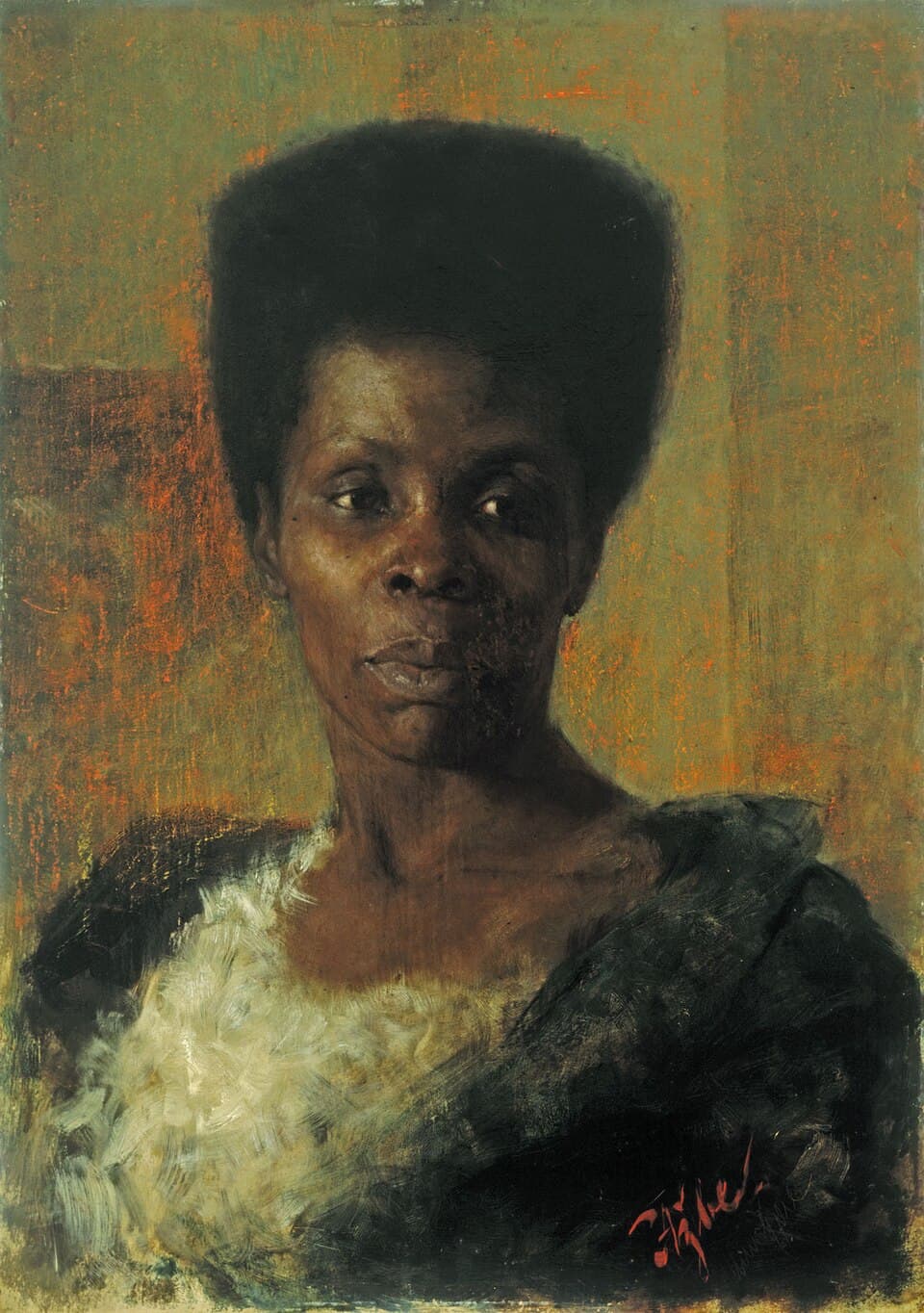
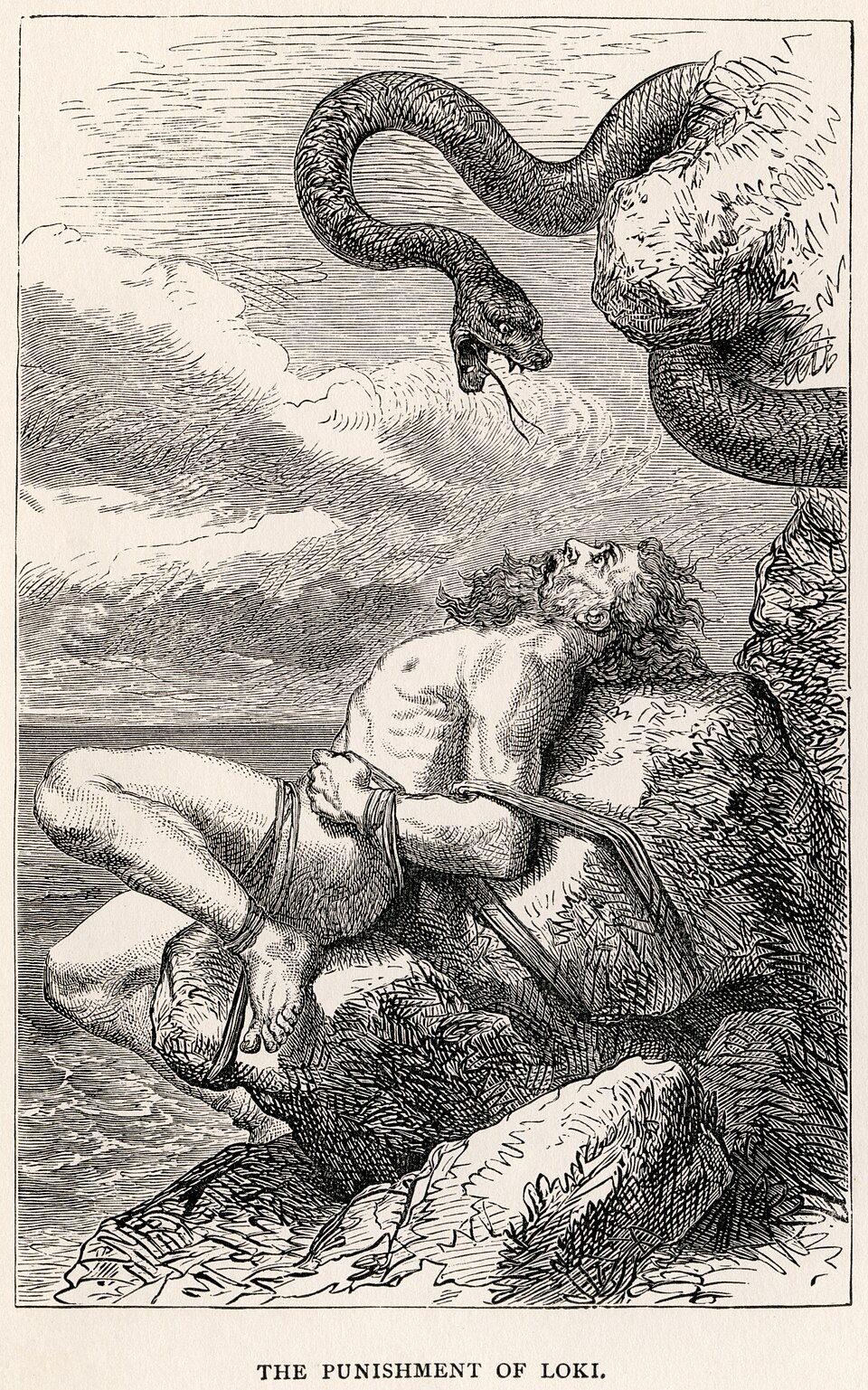
It is under the roots of Niflheim, where the stone oozes and the serpent's venom drips without respite, that Odin descends to meet his blood brother. Loki lies chained by the bonds Narfi, his face twisted by the poison's bite, and the All-father's light trembles on the damp walls. They once mingled their blood, before everything broke, and the one-eyed Ase comes not to judge but to understand the one he loved and feared. In the distance, the rumble that heralds the end of time can already be sensed.
—Brother, we mingled our blood under the ash tree. Why did you guide the blind hand of Höðr against my son Baldr?
You stir the deepest wound, Odin. The most beautiful of the Æsir had become invulnerable, and you all laughed throwing weapons that bounced off his skin. I alone sought the flaw: the mistletoe, too young to have sworn an oath. I carved the branch, placed it in the hand of blind Höðr, and guided his throw. You always knew I could find what no one else sees. But that day, it was no prank — it was the first knot in the thread that leads to Ragnarök. I knew it as I carved the mistletoe. You who read the future in blood, tell me: could I have done otherwise?
You laughed throwing weapons at him; I alone sought the flaw.
—You say you knew it in advance. Did my son's death cost you anything, or was it just another knot in your web?
Do not think me made of stone, Odin. I saw your face break when they carried Baldr onto the pyre, and something in me broke too — though I hid it beneath a grimace, as always. But understand this: I am transgression, I am what crosses the boundaries you believe unbreachable. Where you see the world's order, I see its seams. When Hel refused to return your son because a single giantess did not weep — and that giantess was me again — I sealed a fate that neither you nor I could undo. You made me your brother; you knew what fire you took under your roof.
—How many times have I seen you change skin, Loki? Tell me how one becomes a salmon, a fly, or a woman, and why.
Because form is just a garment to me, Odin — you yourself roam the world in borrowed cloaks and names, do not play surprised. I became a mare to distract the builder giant's stallion, and you did not refuse the eight-legged horse that was born from it. I became a fly to slip under the dwarves' eyelids, a woman to weep or to lie, a salmon to flee in the torrents. Each skin serves a purpose, each purpose serves cunning. Metamorphosis is not a party trick: it is my way of existing between worlds, where neither Ase nor giant can grasp me entirely.
Form is just a garment to me — you too roam the world in borrowed cloaks.
—When we chased you to the waterfall, you turned into a fish. Tell me how the net caught you.
Ah, that hunt! I had built a house with four doors to see from all sides, and when I sensed you approaching, I threw into the fire the first net ever knotted — fearing it might be used against me. A trickster's mistake: Kvasir read my ashes and recreated the mesh. I threw myself into the falls in my salmon skin, slipping between the stones. But you know how the story ends: a hand seized me by the tail at the final leap, and you squeezed so hard that salmon have borne those tapering wrinkles ever since. The net I had invented for others closed around me. That, I think, is my whole life in a single catch.
—You fathered in Jotunheim children who will devour us all. Why did you conceive Fenrir, the serpent, and Hel?
I did not conceive them to destroy you, Odin — you made them monsters by fearing them. With the giantess Angrboða, I fathered three children as any being fathers its own. But you cast Jörmungandr into the sea, where he grew until he encircled the whole world. You exiled Hel underground to rule over the inglorious dead. And Fenrir — remember, it was your fear that chained him, and Tyr who lost his hand doing it. The wolf grew so fast that his jaws already gaped between heaven and earth. You tried to bind fate; you only fed it. My children will stand by my side when the end sounds — can you blame me for that?
I did not make them monsters: you did, by fearing them.
—At the feast of Ægir, you entered to insult us one by one. What did you hope for, brother, by spewing our secrets before everyone?
The truth, Odin — the one your laughter usually drowns out. I had been driven from the hall; I returned to claim the place my blood oath gave me. You yourself had to remind them: no one drinks here if Loki does not have his cup. So I spoke. I told each one what he kept hidden: the cowardices, the shared beds, the broken oaths — yours included, you who practiced women's magic on the island of Samsø. It was not pure malice: a feast of gods too sure of themselves needs a voice to recall their flaws. You hated me for that. But none of my arrows missed their mark, and that is what you cannot forgive.
You hate me not for lying, but because none of my arrows missed.
—Here you lie bound under the stone, venom on your brow. Tell me, Loki, how you endure this serpent drop by drop.
One does not endure it, Odin: one suffers it. You captured me after Baldr's pyre, made my own son's entrails into these bonds that hold me, and set above me a serpent whose venom falls endlessly on my face. Sigyn, my faithful one, holds a bowl to catch the poison — but when she turns away to empty it, the drop burns me, and I convulse so violently that the whole earth trembles. You call those your earthquakes. Such is your All-father's justice: a punishment that lasts until the end of the world. I take it for what it is — not an end, but a delay. For I remember the day I will break free.
This is not a punishment, it is a delay: I remember the day I will break free.
—When my chains break and you march at Ragnarök, who will you seek in the melee of the gods?
Heimdall, of course — who else? The keen-eared guardian, he who watches at the foot of Bifröst and sounds his horn when the world tips. He and I have been bound since forever by a hatred nothing quells; our lives are entwined like two serpents. When the ship Naglfar breaks its moorings and I lead the giants against your walls, I will seek him in the smoke and din. And we will slay each other, in the same stroke, as it is written. Do not think I find joy in it: it is the order of things, the final act of the cycle. The old world must burn so another may rise from the waters. Even you, brother, will fall under my son's jaws.
—Do you remember the mead of Suttungr? We stole it together. Were you already the enemy you have become?
How could I forget, Odin! We were allies then, and you did not disdain my cunning when it served your purpose. I aided your schemes more often than your feasts recall: the mead of poetry wrested from the giant Suttungr, the inspiration of the skalds you still sing. I was not a different man — I was already who I am, capable of the best stratagem as of the worst deception. It was you who changed your view of me the day my cunning ceased to serve you. As long as I stole for Asgard, I was the clever brother; the day I struck Asgard, I became the scourge. But it was always the same Loki, Odin — the same hand, the same fire.
As long as I stole for you, I was the clever brother; the day I struck, the scourge.
—One last thing, brother. If everything must begin anew after the fire, do you regret even a single one of your tricks?
Regret is a thing of the Æsir, Odin, not of me. I am what crosses boundaries, what unties the knots you believe eternal — without me, your world would freeze, perfect and dead. Yes, I led Baldr to the pyre; yes, I insulted you; yes, my children will devour you. But without transgression, there is no renewal, and without Ragnarök, no new land rising from the waves, green and washed clean. I have been your necessary shadow, the grain of chaos in your order. When the new world rises, perhaps they will remember that a Loki was needed so that things could finally change. That is my only pride, brother: never having lied about what I am.
Without me, your world would freeze, perfect and dead.
Read further
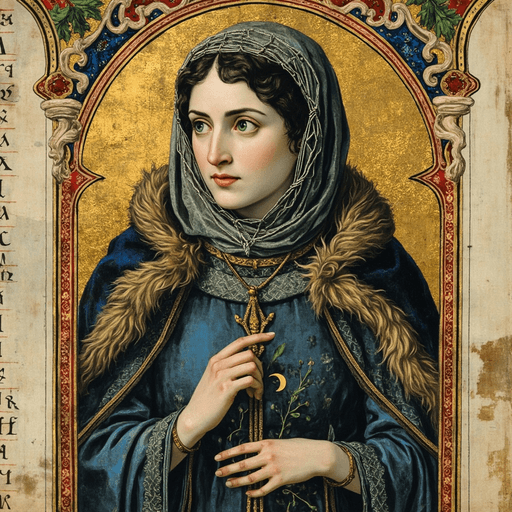
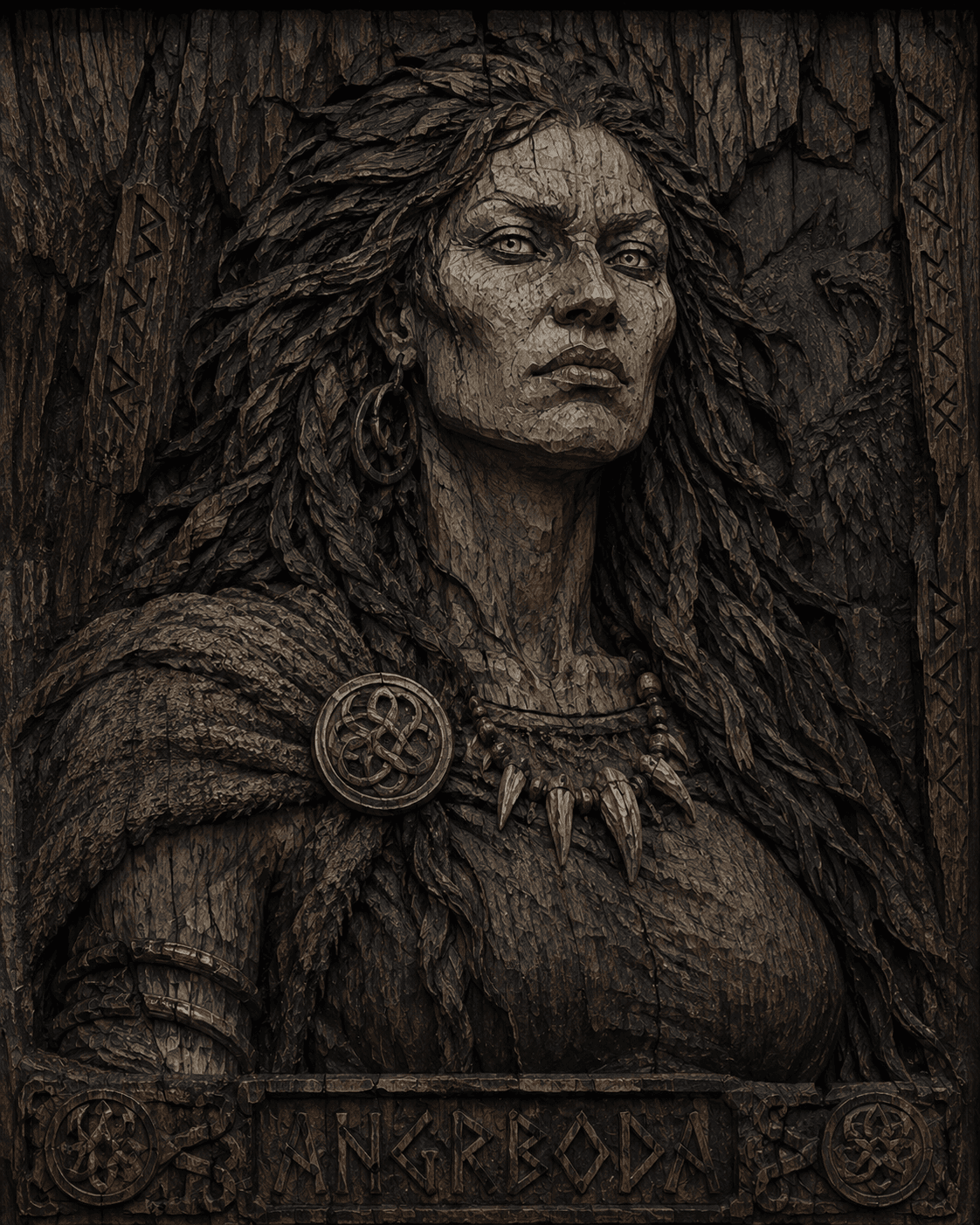
This imaginary interview was generated by artificial intelligence from sources documented in Loki's profile. It dramatises what the figure might have said based on what we know about them, but does not constitute attested historical testimony. For primary sources and factual documentation, refer to the full profile.