 flip
flipBrined fermented cucumbers and cabbage (solenye)
Brined fermented cucumbers and cabbage (solenye)
Why this dish? Soviet life revolved around jars: from autumn, whatever the season gave was brined to get through the long Leningrad and Moscow winter, when fresh produce disappears.
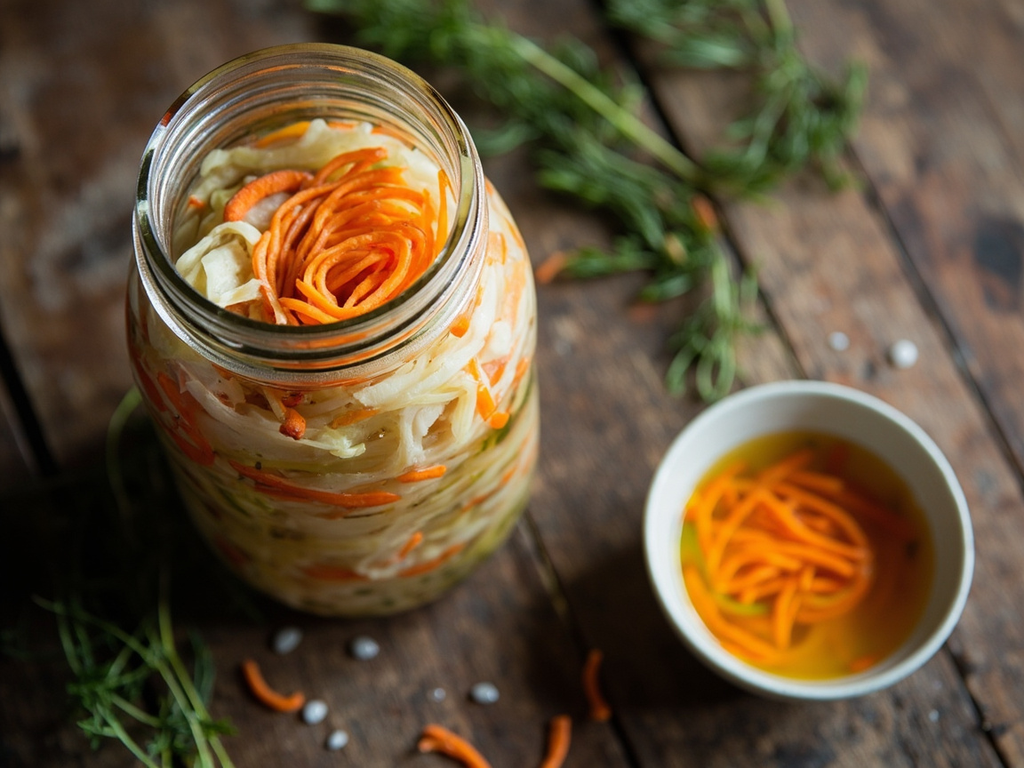
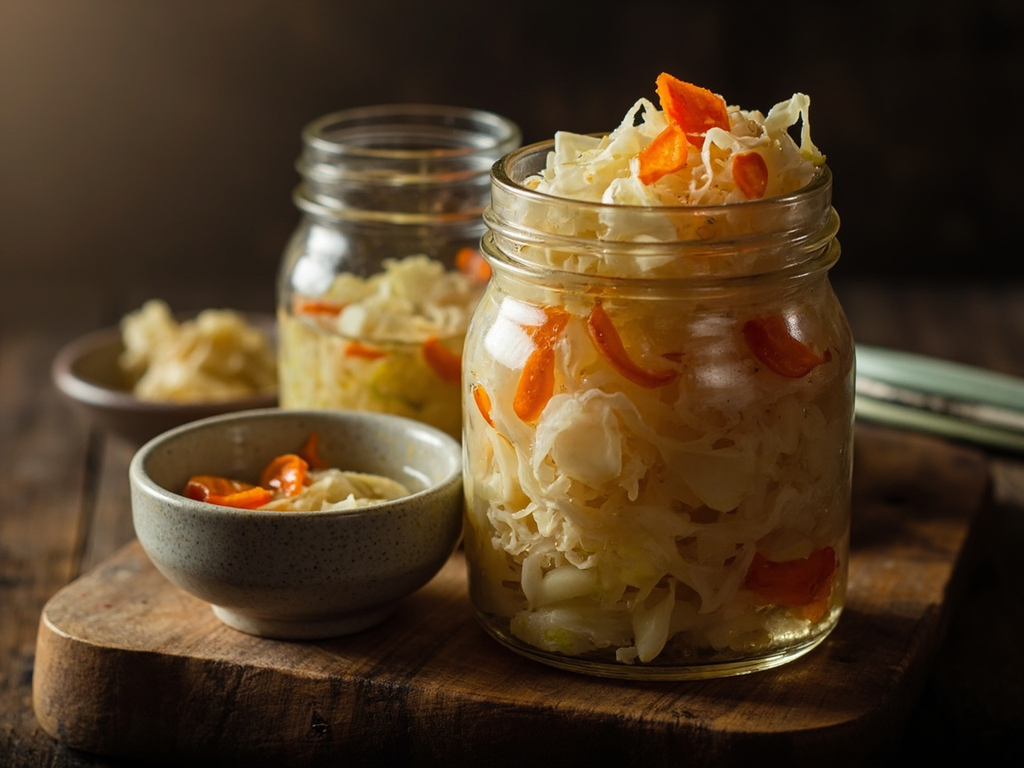
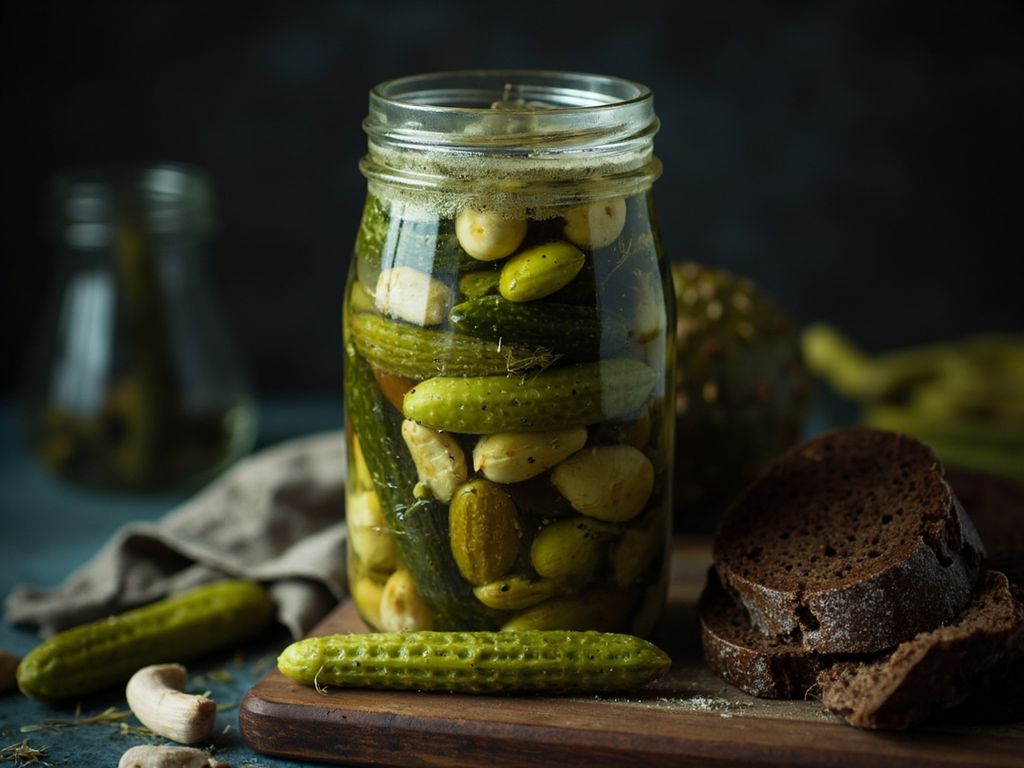
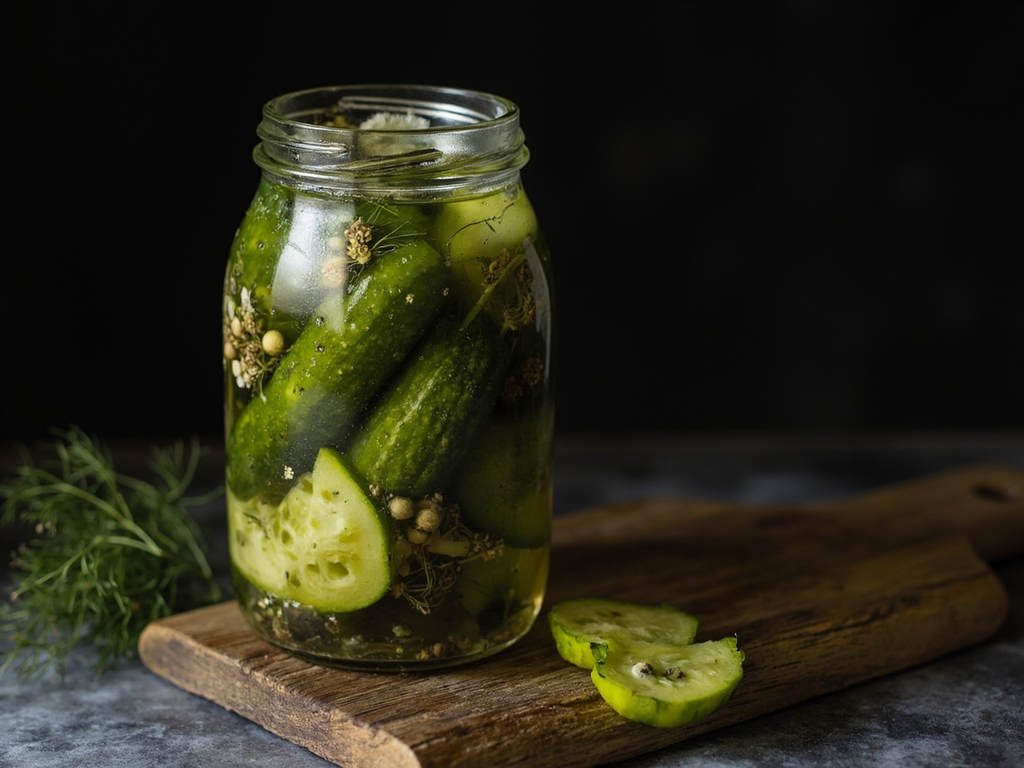
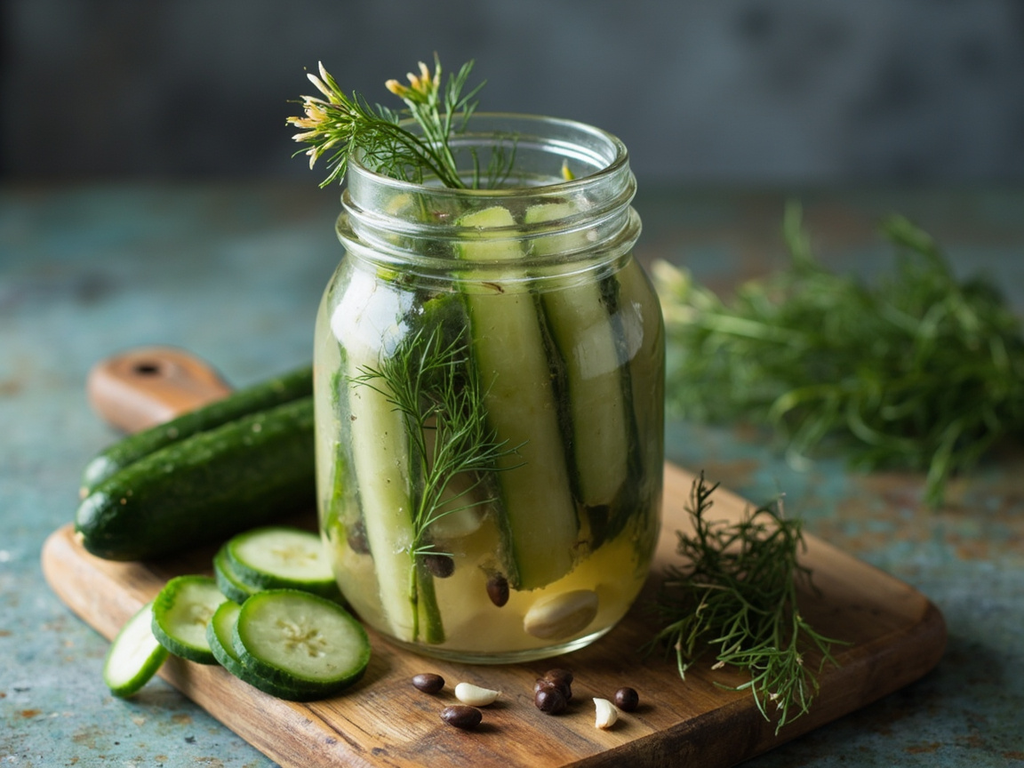
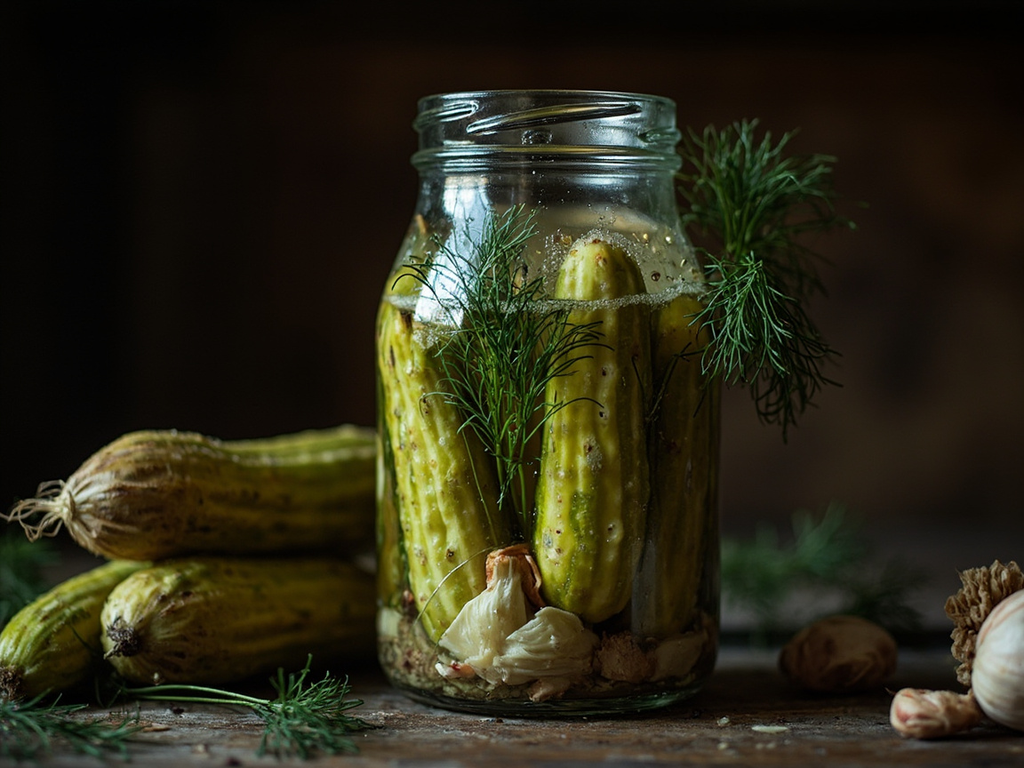
Cucumbers and cabbage submerged in a brine of water, salt, and aromatics, left to ferment slowly. The result is sour, salty, alive — the obligatory companion to kasha, meat, and the evening glass.
The Russian winter forgives nothing, so from autumn we fill the jars: cucumbers, cabbage, whatever the dacha gives. We drown them in brine, slip in dill and garlic, and let the cellar do its patient work. All winter, these preserves accompany kasha and the evening glass. A well-salted pickle, you see, is life holding out until spring.
- •Firm cucumbers — a full jar (vegetable to ferment)
- •White cabbage — one head (sauerkraut (kvachenaya kapusta))
- •Rock salt — for brine (fermentation agent)
- •Dill umbels, garlic, blackcurrant or horseradish leaves — a few (aroma and crispness)
Brined fermented cucumbers and cabbage (solenye)
Cucumbers and cabbage submerged in a brine of water, salt, and aromatics, left to ferment slowly. The result is sour, salty, alive — the obligatory companion to kasha, meat, and the evening glass.
Why this dish? Soviet life revolved around jars: from autumn, whatever the season gave was brined to get through the long Leningrad and Moscow winter, when fresh produce disappears.
The Russian winter forgives nothing, so from autumn we fill the jars: cucumbers, cabbage, whatever the dacha gives. We drown them in brine, slip in dill and garlic, and let the cellar do its patient work. All winter, these preserves accompany kasha and the evening glass. A well-salted pickle, you see, is life holding out until spring.
Ingredients (period version)
- Firm cucumbers — a full jar (vegetable to ferment)
- White cabbage — one head (sauerkraut (kvachenaya kapusta))
- Rock salt — for brine (fermentation agent)
- Dill umbels, garlic, blackcurrant or horseradish leaves — a few (aroma and crispness)
Ingredients
- Small cucumbers — 1 kg (main vegetable)
- Non-chlorinated water — 1 L (brine)
- Non-iodized salt — 50 to 60 g (fermentation (≈ 5-6%))
- Garlic — 4 cloves (aroma)
- Dill (stems and umbels) — 1 bunch (aroma, signature)
- Blackcurrant or horseradish leaves — a few (tannins, keeps crunch)
Method
- Dissolve salt in water to make brine.
- Pack cucumbers, garlic, dill, and leaves into a clean jar.
- Cover completely with brine; keep vegetables submerged with a weight.
- Ferment at room temperature 3 to 7 days, away from sunlight, until pleasantly sour (bubbles appear: that's a good sign).
- Taste, then refrigerate to slow fermentation and store for weeks.
How it was made : Before refrigeration, lactic fermentation was THE Russian preservation method. Barrels of pickles and sauerkraut were buried in the cellar or yard. Sauerkraut, rich in vitamin C, protected against scurvy during the harshest winters — a vital resource in times of war and blockade.
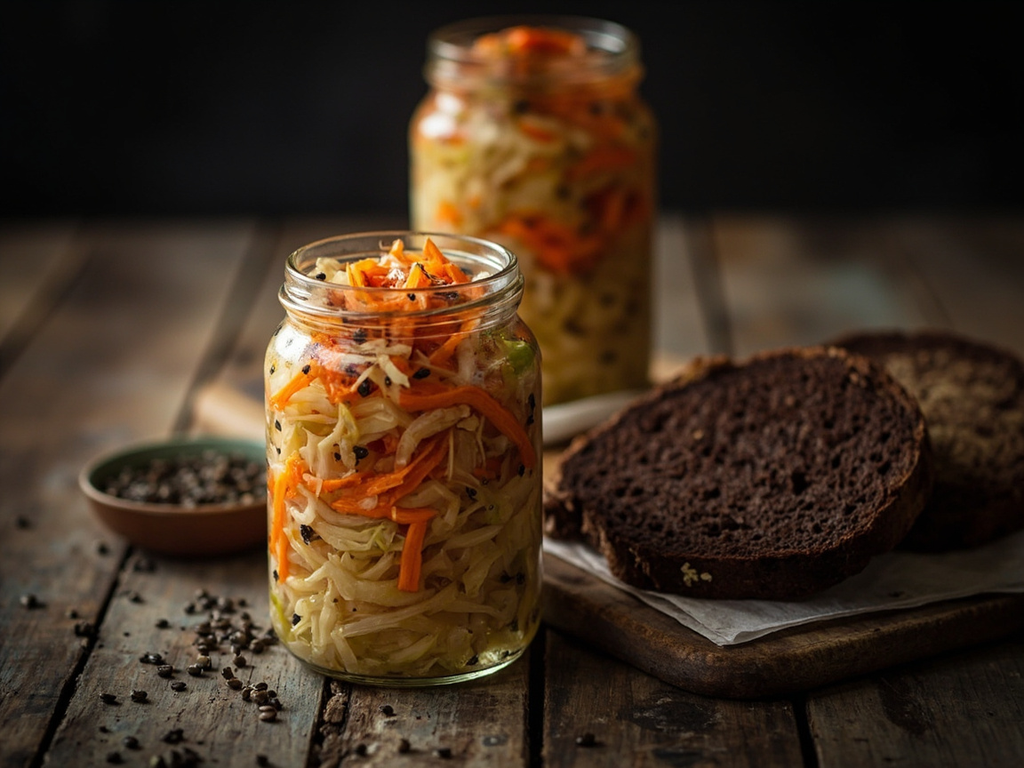
The contemporary twist : Finely chopped with a drizzle of oil and some red onion, homemade fermented sauerkraut becomes a lively, tangy zakouska, perfect on buttered black bread.
Sources : Elena Molokhovets, « A Gift to Young Housewives », 1861
Dmitri Shostakovich · Charactorium