 flip
flipMishmishiya — Lamb Stew with Apricots, Almonds, and Saffron
Mishmishiya — Lamb Stew with Apricots, Almonds, and Saffron
Why this dish? Ibn Khaldun himself describes mutton for festive occasions. This sweet-and-savory saffron stew belongs to the grand cuisine of the courts he frequented — those of Tunis, Fez, Granada, and Mamluk Cairo where he ended his career as a qadi. It is the dish of notables' banquets, where the refinement of the table signals one's rank.
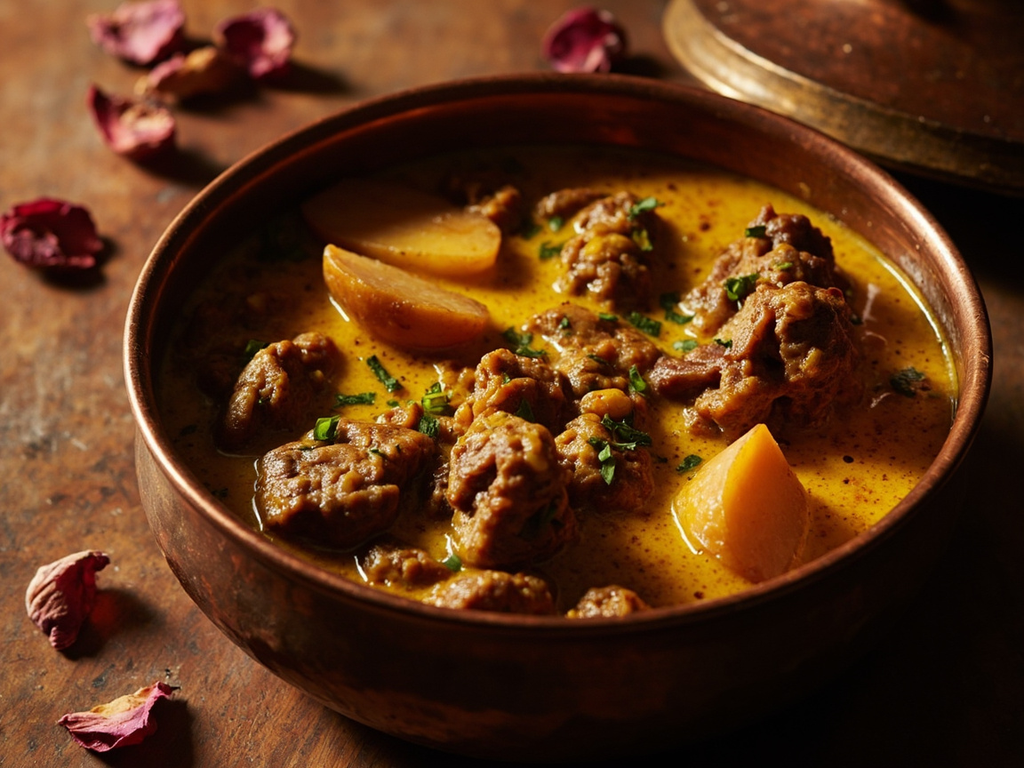
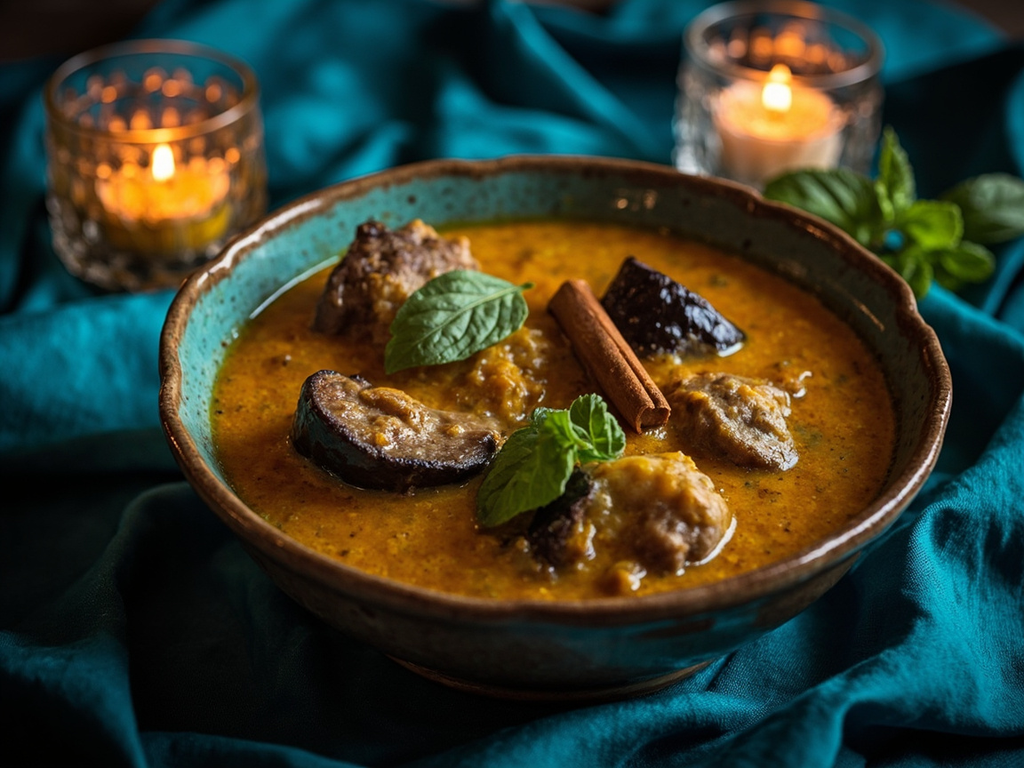
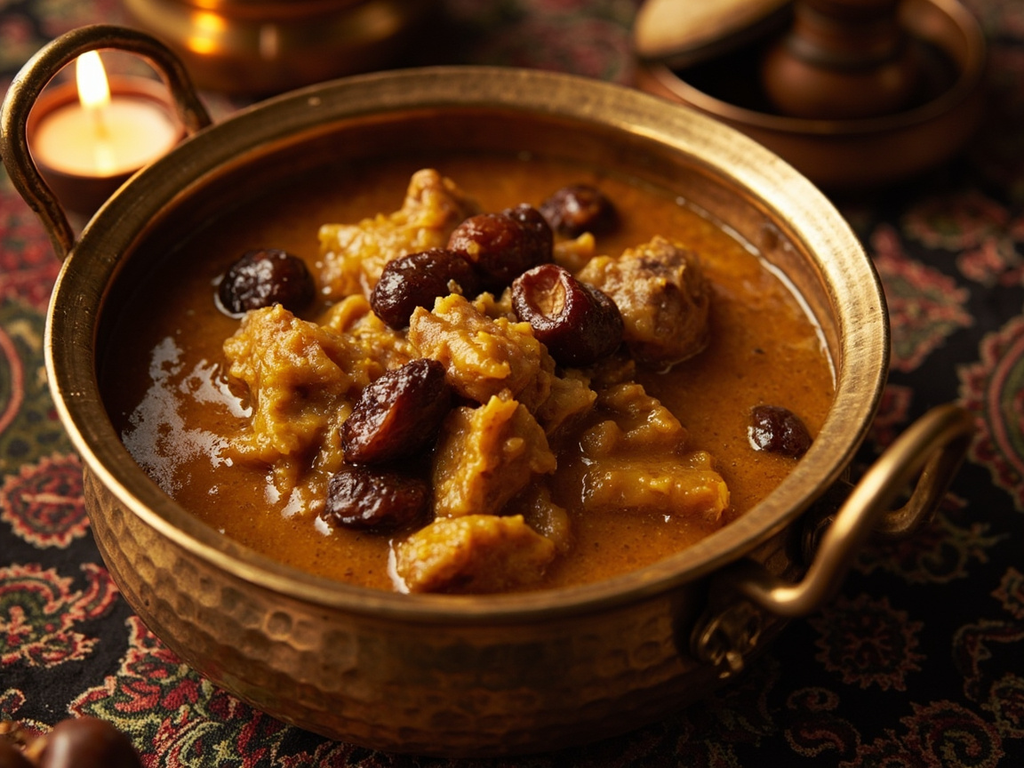
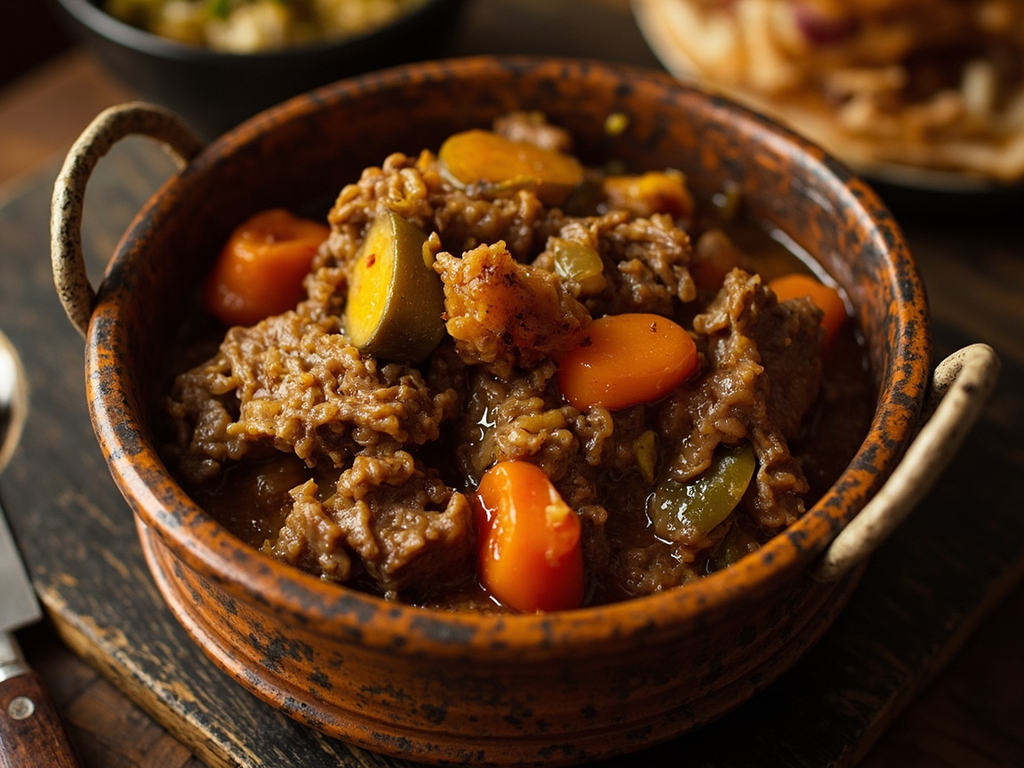
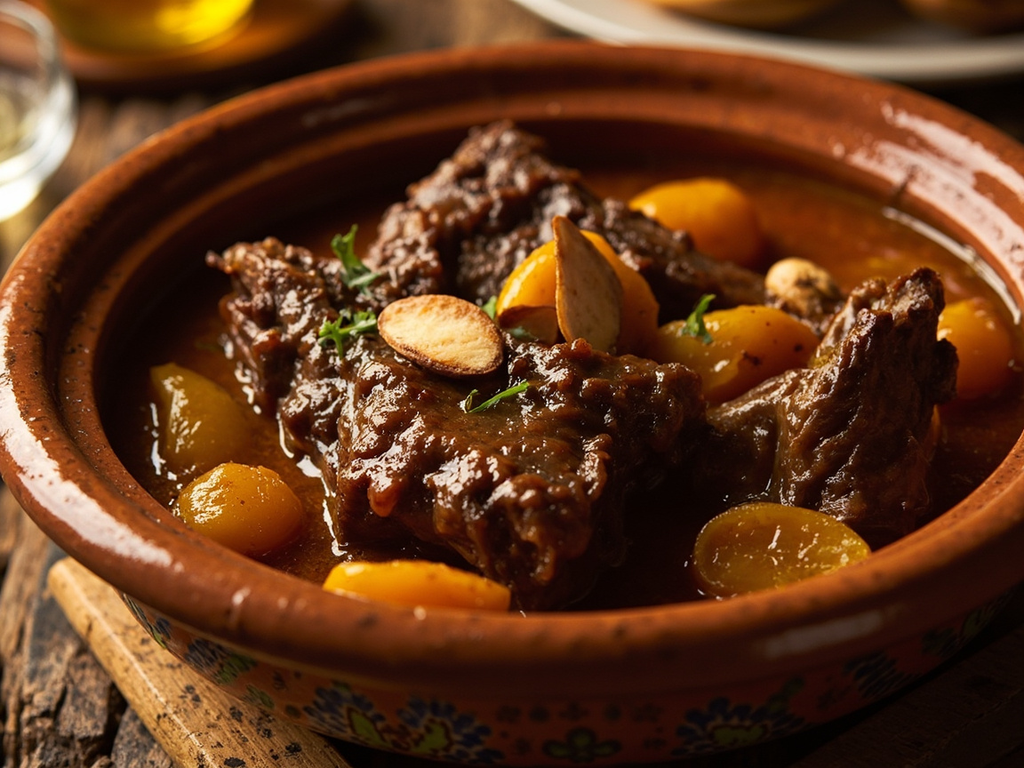
A meltingly tender lamb stew, bound with dried apricot juice, perfumed with saffron, cinnamon, and a hint of honey, and scattered with blanched almonds. 'Mishmish' (apricot) gives its name and gentle acidity to this classic from medieval cookbooks.
On feast days, when I received a scholar or an emir at my table, this dish was brought in, and its fragrance alone told the honor I was bestowing upon my guest. Know that the richness of a dish betrays the state of a dynasty: as long as luxury remains measured, it adorns civilization; when it becomes excess, it softens it. We would sweat the mutton in clarified butter, then join it with apricots, saffron, and a spoonful of honey until the sauce coated the finger. I added the almonds at the last moment, for the crunch. Eat, but remember moderation.
- •Mutton shoulder — in pieces, for the company (festive meat)
- •Dried apricots — a good handful (tangy sweetness)
- •Blanched almonds — a handful (crunchy garnish)
- •Saffron — a few filaments (noble color and fragrance)
- •Cinnamon — one stick (warm spice)
- •Honey — one spoonful (sweet binder)
- •Clarified butter (smen) — for searing (fat)
- •Onion — two (stew base)
Mishmishiya — Lamb Stew with Apricots, Almonds, and Saffron
A meltingly tender lamb stew, bound with dried apricot juice, perfumed with saffron, cinnamon, and a hint of honey, and scattered with blanched almonds. 'Mishmish' (apricot) gives its name and gentle acidity to this classic from medieval cookbooks.
Why this dish? Ibn Khaldun himself describes mutton for festive occasions. This sweet-and-savory saffron stew belongs to the grand cuisine of the courts he frequented — those of Tunis, Fez, Granada, and Mamluk Cairo where he ended his career as a qadi. It is the dish of notables' banquets, where the refinement of the table signals one's rank.
On feast days, when I received a scholar or an emir at my table, this dish was brought in, and its fragrance alone told the honor I was bestowing upon my guest. Know that the richness of a dish betrays the state of a dynasty: as long as luxury remains measured, it adorns civilization; when it becomes excess, it softens it. We would sweat the mutton in clarified butter, then join it with apricots, saffron, and a spoonful of honey until the sauce coated the finger. I added the almonds at the last moment, for the crunch. Eat, but remember moderation.
Ingredients (period version)
- Mutton shoulder — in pieces, for the company (festive meat)
- Dried apricots — a good handful (tangy sweetness)
- Blanched almonds — a handful (crunchy garnish)
- Saffron — a few filaments (noble color and fragrance)
- Cinnamon — one stick (warm spice)
- Honey — one spoonful (sweet binder)
- Clarified butter (smen) — for searing (fat)
- Onion — two (stew base)
Ingredients
- Lamb shoulder — 1 kg, cut into large cubes (meat)
- Dried apricots — 200 g (tangy sweetness)
- Blanched almonds — 80 g (garnish)
- Saffron — 1 generous pinch, infused in a little hot water (fragrance)
- Cinnamon — 1 stick + 1/2 tsp ground (spice)
- Ground ginger — 1/2 tsp (warmth)
- Honey — 1 to 2 tbsp (sweet binder)
- Clarified butter (ghee/smen) — 2 tbsp (fat)
- Onions — 2, sliced (base)
- Salt — to taste (seasoning)
Method
- Brown the lamb pieces on all sides in the clarified butter, then set aside.
- In the same pot, soften the sliced onions, add cinnamon and ginger.
- Return the meat, cover with water halfway, add the infused saffron and the cinnamon stick. Simmer covered for 1 hour 30 minutes.
- Add the dried apricots and honey, continue for 30 minutes until the meat is meltingly tender and the sauce is syrupy.
- Toast the almonds dry or in a little butter. Season the dish, plate, and sprinkle with almonds.
How it was made : The 'mishmishiya' (from mishmish, apricot) appears in medieval Arabic cookbooks, from the Baghdadi Kitāb al-ṭabīkh to Andalusian-Maghrebi works. Meat, dried fruits, honey, and precious spices (saffron, cinnamon) were combined without hesitation, the sauce thickened with pounded almonds. Smen, fermented and salted butter, flavored festive dishes.
The contemporary twist : Served over light semolina and crowned with toasted slivered almonds and a veil of saffron, it is a showpiece tagine that still holds its own at grand tables.
Sources : Kitāb al-ṭabīkh (medieval Arabic cookbooks), trans. Charles Perry / Nawal Nasrallah · Kitāb al-ṭabīkh fī al-Maghrib wa-l-Andalus (anonymous Andalusian-Maghrebi book, 13th c.)
Ibn Khaldun · Charactorium