Yōkai — Creatures of Japanese Folklore
Tengu, Oni, Kappa, Yuki-onna, Kitsune — the spirits, demons and supernatural creatures of Japanese folklore.
64 characters

64 characters
Fujin
Fujin is the god of wind in Japanese Shinto mythology. He is depicted as a demon carrying a large bag containing the winds of the world. Twin of Raijin, the god of thunder, he is one of the oldest deities in the Japanese pantheon.
Inari
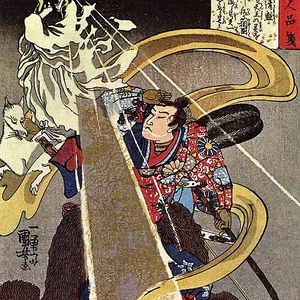
Japanese Shintō deity associated with rice, fertility, foxes, and commerce. Inari is one of the most venerated deities in Japan, with shrines (inari-sha) found throughout the country.
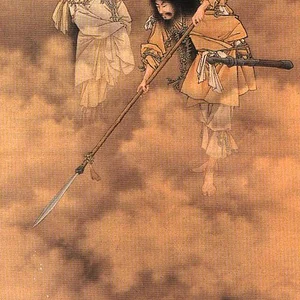
Izanami
Japanese goddess of creation and death, wife of Izanagi, from the Shinto tradition. According to the Kojiki (c. 8th century), she and Izanagi gave birth to the islands of Japan and the primordial deities. Her death during the birth of the fire god led her to reign over the land of the dead, Yomi.
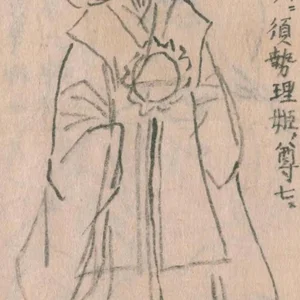
Kushinadahime
A divine princess of Japanese Shinto mythology, Kushinadahime is known through the Kojiki (712 AD) and the Nihon Shoki (720 AD), two imperial Japanese chronicles recording oral traditions that are far older. According to these sacred texts, she was rescued from the eight-headed serpent Yamata no Orochi by the god Susanoo, who then took her as his wife.

Raijin
Raijin is the god of thunder and lightning in Japanese Shinto mythology. He is depicted as a demon surrounded by drums that he strikes to produce thunder. Often paired with Fūjin, the god of wind, he stands as a guardian at the gates of major Buddhist and Shinto temples.
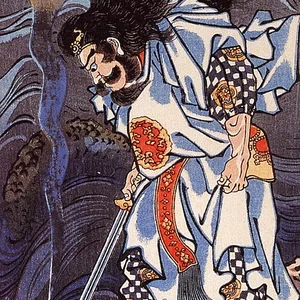
Susanoo
Susanoo is the god of storms in Japanese Shinto, son of Izanagi and brother of Amaterasu. Banished from the heavens, he accomplished the feat of slaying the eight-headed serpent Yamata no Orochi, discovering within its body the sacred sword Kusanagi.
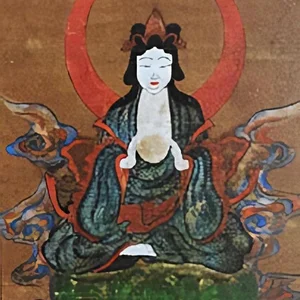
Tsukuyomi
Tsukuyomi is the god of the Moon in Japanese Shintō mythology. Born from the right eye of Izanagi during the primordial purification, he reigns over the night. His quarrel with the sun goddess Amaterasu explains the separation of day and night.
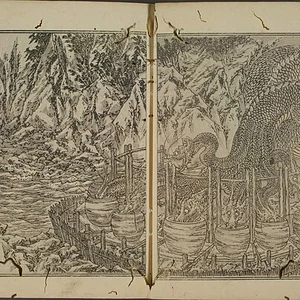
Yamata no Orochi
Yamata no Orochi is a colossal eight-headed, eight-tailed serpent-dragon from Japanese mythology. It is defeated by the storm god Susanoo, who gets it drunk on sake and beheads it, discovering inside one of its tails the sacred sword Kusanagi-no-Tsurugi.
Amaterasu
Goddess of the sun and major deity of Japanese Shinto, venerated as the legendary ancestor of the imperial family. According to Japanese mythology, she is the most important of the kami (spirits) in the Shinto pantheon.
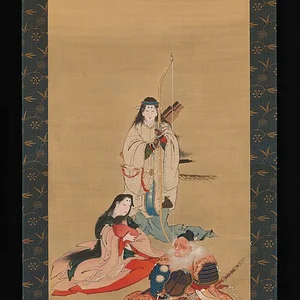
Empress Jingu
A legendary empress of Japan, Jingū is said to have reigned in the 3rd century according to Japanese chronicles. Tradition credits her with a military campaign against the Korean peninsula, carried out while she was pregnant. Her historical existence is unattested and she belongs to Japan's founding mythology.
Tenazuchi
Tenazuchi is an earthly deity (kunitsukami) of Japanese Shinto mythology. Wife of Ashinazuchi and mother of Kushinada-hime, she appears in the myth where the god Susanoo saves her daughter from the eight-headed serpent Yamata-no-Orochi.
Benzaiten
A Japanese goddess of Buddhist and Shinto tradition, Benzaiten is associated with music, the arts, wisdom, and water. Derived from the Hindu goddess Sarasvati, she was introduced to Japan through Buddhism around the 6th century. She is the only female figure among the Seven Gods of Fortune (Shichifukujin).
Dogen
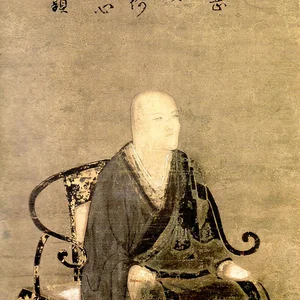
Japanese Buddhist monk of the 13th century, founder of the Sōtō school of Zen in Japan. After a stay in China, he taught the practice of seated meditation (zazen) and wrote the Shōbōgenzō, a major work of Buddhist thought.
Empress Teishi
Empress consort of Japan (976–1001), wife of Emperor Ichijō and daughter of regent Fujiwara no Michitaka. She was the patron of Sei Shōnagon, whose celebrated *The Pillow Book* bears witness to the brilliant life at her court. Her rivalry with Fujiwara no Shōshi, patroness of Murasaki Shikibu, illustrates the literary ferment of the Heian period.
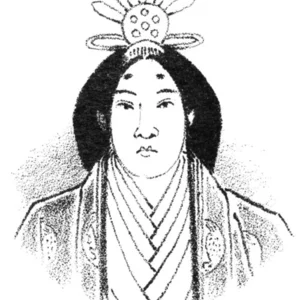
Genmei
661 — 722
Reigning empress of Japan from 707 to 715, Genmei is one of the few women to have held supreme power in Japan. She is notably responsible for commissioning the Kojiki, Japan's first historical chronicle.
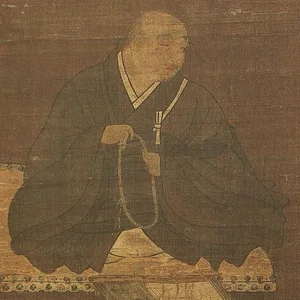
Hōnen
1133 — 1212
Hōnen was a Japanese Buddhist monk who founded the Pure Land school (Jōdo-shū). He taught that simply reciting the nembutsu, the invocation of Amida Buddha, was enough to achieve salvation, making the practice accessible to everyone.
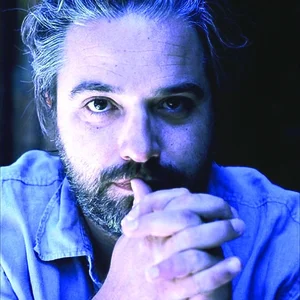
Kitsune
The kitsune is a fox-spirit (yōkai) from Japanese folklore, gifted with supernatural powers and able to shapeshift, notably into a woman. The longer it lives, the more tails it gains, up to nine, a sign of its wisdom and power.
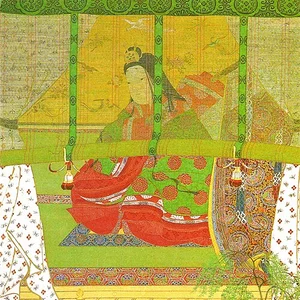
Koken
718 — 770
Empress of Japan who reigned twice (749–758 then 764–770), she is one of the very few women to have occupied the Japanese imperial throne. A devout Buddhist, she actively promoted the spread of Buddhism throughout the country and commissioned the construction of numerous temples.
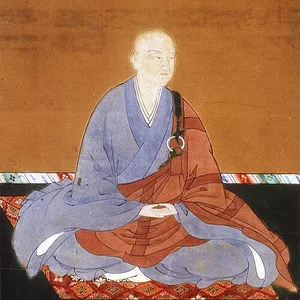
Kōmyō
1322 — 1380
Kōmyō was emperor of Japan from the Northern Court (1336–1348), enthroned by shogun Ashikaga Takauji during the great imperial split of the Nanboku-chō period. After his abdication, he withdrew from political life and became a Buddhist monk, ending his days in prayer and contemplation.
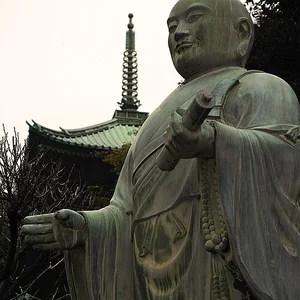
Nichiren
1222 — 1282
Nichiren (1222-1282) was a 13th-century Japanese Buddhist monk, founder of the Nichiren-shū school. He taught that the Lotus Sūtra contained the ultimate essence of the Buddha's teaching and advocated reciting the mantra “Namu Myōhō Renge Kyō.”
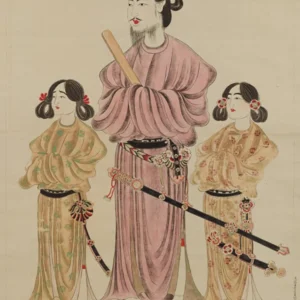
Prince Shōtoku
574 — 622
Regent of Japan under Empress Suiko (593–622), he promoted the spread of Buddhism and Confucianism, promulgated Japan's first constitution, and modernized the state by drawing on the Chinese model.
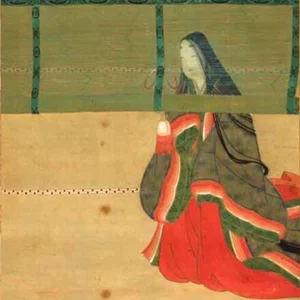
Sei Shōnagon
966 — 1025
Japanese author
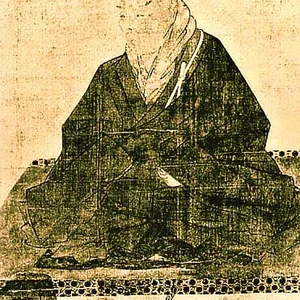
Shinran
1173 — 1263
Shinran was a Japanese Buddhist monk of the Kamakura period and a disciple of Hōnen. He founded Jōdo Shinshū, the "True Pure Land School," which teaches salvation through faith alone in the Buddha Amida.
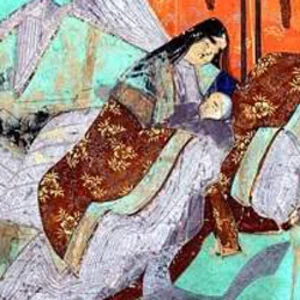
Shōshi
988 — 1074
Empress consort of Emperor Ichijō and daughter of regent Fujiwara no Michinaga, Shōshi was one of the most influential women in Heian-period Japan. Her court was a leading intellectual and artistic hub, most notably welcoming the author Murasaki Shikibu.
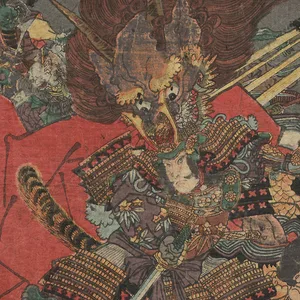
Shuten-doji
Shuten-doji is the king of oni (demons) in Japanese mythology, known for kidnapping and devouring young women from the capital from his fortress on Mount Ōe. He was defeated and beheaded by the hero Minamoto no Raikō and his four lieutenants through a ruse involving poisoned sake.
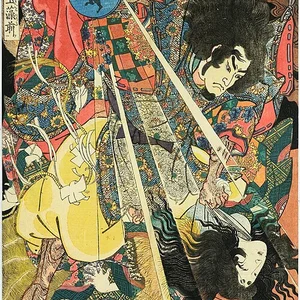
Tamamo-no-Mae
Tamamo-no-Mae is a figure from Japanese mythology, a nine-tailed fox (kitsune) who transformed herself into a court lady of incomparable beauty and intelligence. She bewitched Emperor Toba in the 12th century before being unmasked and slain, at which point she became the Killing Stone (Sessho-seki), said to poison anyone who approaches it.
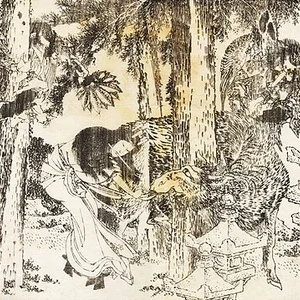
Tengu
Tengu are supernatural creatures from Japanese folklore — mountain spirits, fearsome warriors, and tricksters all at once. Depicted with a long nose or a crow's beak, they are renowned masters of martial arts and military strategy.
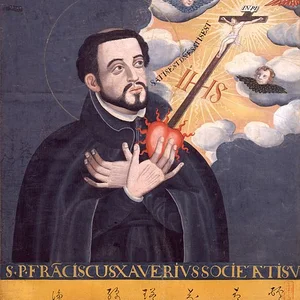
Saint Francis Xavier
1506 — 1552
A Navarrese Jesuit and co-founder of the Society of Jesus alongside Ignatius of Loyola, he was the first great Christian missionary in Asia. He evangelized India and Japan, and died at the gates of China in 1552.
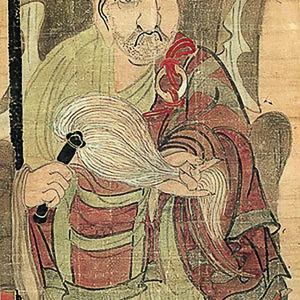
Hakuin
1685 — 1768
Hakuin Ekaku was a Japanese Buddhist master of the Rinzai school of Zen. Regarded as the reviver of Rinzai in the eighteenth century, he systematized kōan practice and spread Zen beyond the elites. He was also a prolific calligrapher and painter.
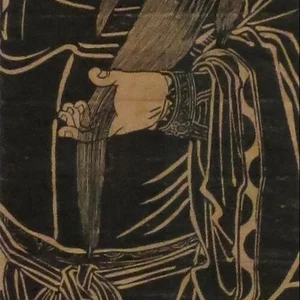
Katsukawa Shunsho
1726 — 1793
Japanese painter and printmaker of the 18th century, master of ukiyo-e woodblock printing. He is celebrated for his portraits of kabuki actors and his depictions of sumo wrestlers, and founded the Katsukawa school.
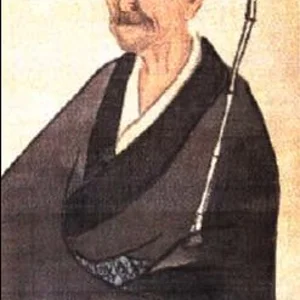
Matsuo Bashō
1644 — 1694
Matsuo Bashō (1644–1694) is the greatest master of haiku, the Japanese poetic form composed of three lines. After serving as a samurai, he devoted himself to poetry and travel across Japan. His masterwork, "The Narrow Road to the Deep North," blends prose and poetry.
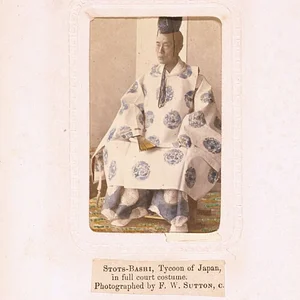
Tokugawa (shogun)
Tokugawa Ieyasu (1543-1616) unified Japan after decades of civil wars and founded the Tokugawa shogunate in 1603, establishing a peace lasting more than two centuries. His regime, the Edo period, kept Japan in near-total isolation until 1868.
Akiko Yosano
1878 — 1942
Japanese poet and novelist (1878–1942), a major figure in the revival of waka poetry during the Meiji era. A committed feminist, she advocated for women's emancipation and opposed Japanese militarist nationalism.
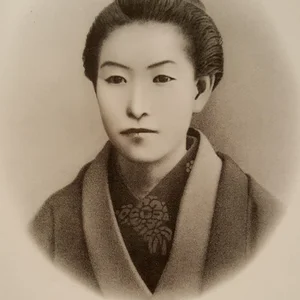
Higuchi Ichiyō
Japanese novelist and poet of the Meiji era (1872–1896), considered one of the greatest writers of modern Japan. Author of major short stories such as Takekurabe, she was the first woman to appear on a Japanese banknote (5,000 yen).
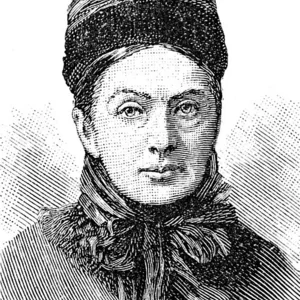
Isabella Bird
1831 — 1904
A nineteenth-century British explorer and writer, Isabella Bird was one of the first women to travel alone in Japan, China, India, Persia, and the American Rockies. She published numerous travel accounts that earned her international recognition and admission to the Royal Geographical Society.
Takai Kozan
Takai Kozan (1806-1883) was a wealthy Japanese merchant, scholar, calligrapher, and painter of the nanga school. He is best known for welcoming the master Hokusai into his home in Obuse, and for his involvement in the sonnō jōi imperialist movement at the end of the Edo period.
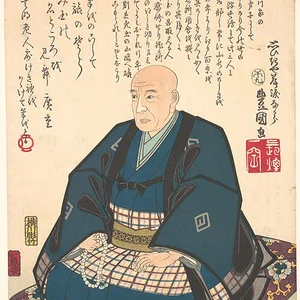
Utagawa Hiroshige
1797 — 1858
Utagawa Hiroshige is one of the greatest Japanese masters of the woodblock print (ukiyo-e). Famous for his landscapes and travel scenes, he profoundly influenced European Impressionists and Post-Impressionists such as Van Gogh and Monet.
Ayumi Hamasaki
1978 — ?
Ayumi Hamasaki is a Japanese singer, songwriter, and pop icon born in 1978 in Fukuoka. Nicknamed the "Empress of Pop" in Japan, she is one of the best-selling female artists in the history of Japanese music.
Chika Kuroda
1884 — 1968
Chika Kuroda (1884-1968) was a pioneering Japanese chemist, one of the first women in Japan to earn a university degree in science. She made her mark with her research into the structure of natural pigments.
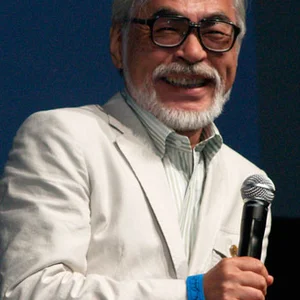
Hayao Miyazaki
1941 — ?
Hayao Miyazaki is a Japanese director, screenwriter, and animator of animated films, born in 1941. A co-founder of Studio Ghibli, he is one of the world's masters of animated cinema, famous for works such as *Princess Mononoke* and *Spirited Away*.
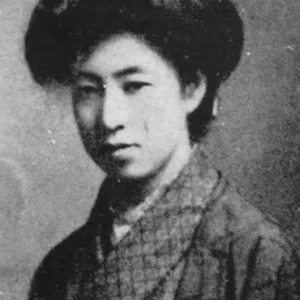
Hiratsuka Raichō
Japanese feminist and writer (1886–1971), founder of the literary journal Seitō ("Bluestocking") in 1911. She was a central figure in Japan's women's rights movement and campaigned throughout her life for equality and pacifism.
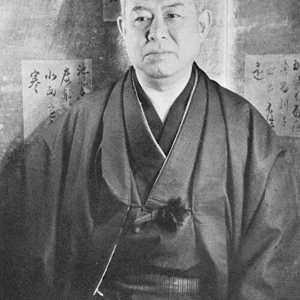
Junichiro Tanizaki
1886 — 1965
Jun'ichirō Tanizaki (1886-1965) is one of the greatest Japanese novelists of the twentieth century. His work explores desire, the Japanese aesthetic tradition, and the tension between Western modernity and ancestral culture.
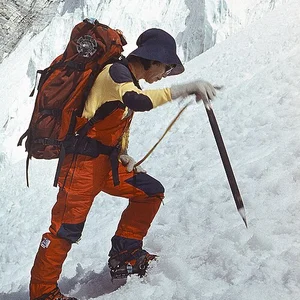
Junko Tabei
1939 — 2016
Junko Tabei (1939–2016) was a Japanese mountaineer who became, in 1975, the first woman to reach the summit of Everest. Founder of the first all-women mountaineering club in Japan, she also climbed the highest peaks on all seven continents. She was a committed advocate for the protection of mountain environments.
Kakutani Yoshie
A twentieth-century Japanese mathematician, Kakutani Yoshie contributed to the growth of modern mathematics in Japan. She worked in an academic environment largely dominated by men, paving the way for women in the exact sciences in Japan.
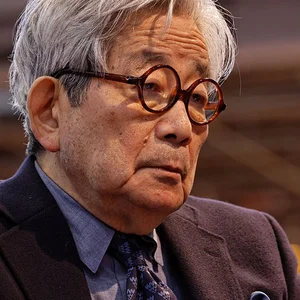
Kenzaburō Ōe
1935 — 2023
Japanese writer born in 1935, a major figure in post-war Japanese literature. His work, deeply shaped by the birth of his disabled son and by the memory of Hiroshima, earned him the Nobel Prize in Literature in 1994.
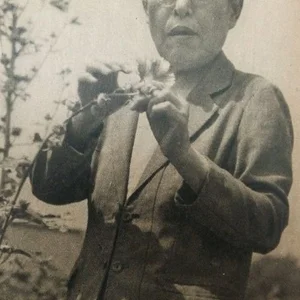
Kono Yasui
1880 — 1971
Kono Yasui (1880-1971) was a Japanese botanist and cytologist, a pioneer in the study of chromosomes and plant genetics. In 1927, she became the first Japanese woman to earn a doctorate in science.
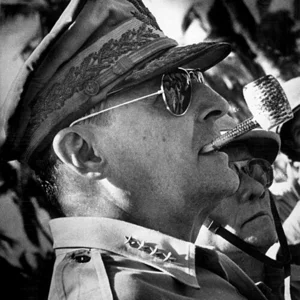
MacArthur
American general, one of the great military figures of the United States in the 20th century. Allied commander-in-chief in the Pacific during the Second World War, he then led the occupation of Japan and afterward the UN forces at the start of the Korean War.
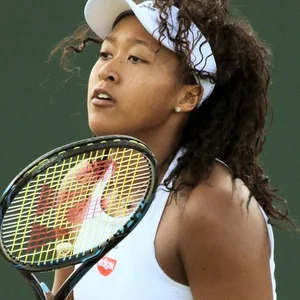
Naomi Ōsaka
1997 — ?
Naomi Ōsaka is a Japanese-American professional tennis player born in 1997 in Osaka. A former world number 1, she has won four Grand Slam titles. She has also been a vocal advocate for social justice and athletes' mental health.
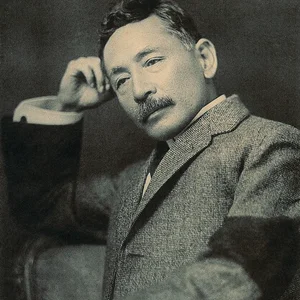
Natsume Soseki
1867 — 1916
Natsume Sōseki is one of the greatest Japanese novelists of the Meiji era. A specialist in English literature, he portrays with irony and melancholy a Japanese society torn between tradition and Western modernization.
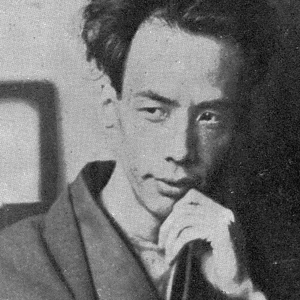
Ryunosuke Akutagawa
1892 — 1927
Japanese writer of the early 20th century, a master of the short story. He drew on Japan's ancient tales to explore the ambiguity of truth and human psychology. A major figure of modern Japanese literature, he took his own life in 1927.
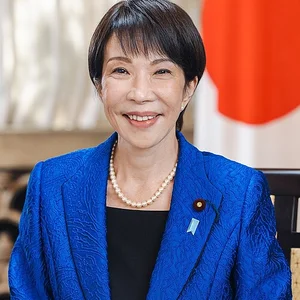
Sanae Takaichi
1961 — ?
Japanese politician born in 1961, member of the Liberal Democratic Party. She has held several ministerial positions in Japan, including Minister of Internal Affairs and Communications. Known for her conservative views and interest in Japanese pop culture.
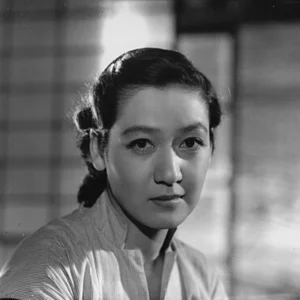
Setsuko Hara
1920 — 2015
A Japanese actress considered one of the greatest in Japanese cinema, she is inseparable from the films of Yasujirō Ozu. Her radiant smile and restrained presence earned her the nickname “Eternal Goddess.” She mysteriously retired from cinema in 1963.
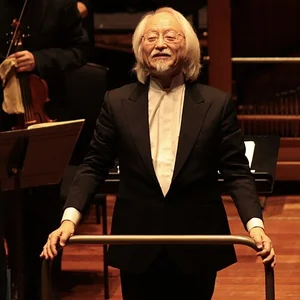
Suzuki
1954 — ?
A Japanese thinker and scholar, D.T. Suzuki was the main figure who introduced Zen Buddhism to the West in the 20th century. Through his books and lectures in English, he made Zen thought known to European and American intellectuals and artists.
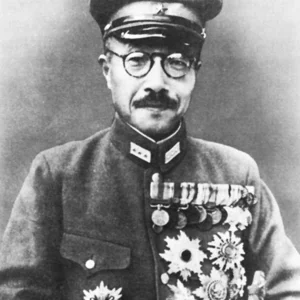
Tojo
1884 — 1948
Japanese general and statesman, Prime Minister of Japan from 1941 to 1944. A leading figure of Japanese militarism, he ordered the attack on Pearl Harbor, which brought Japan into war against the United States. Tried as a Class A war criminal, he was sentenced to death and executed in 1948.
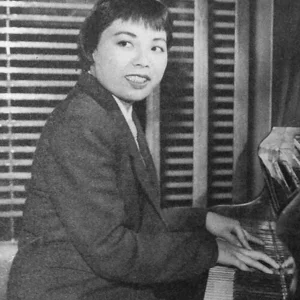
Toshiko Akiyoshi
1929 — ?
Toshiko Akiyoshi is a Japanese American jazz pianist, composer, and bandleader born in 1929. The first Japanese student at the Berklee College of Music, she has led a celebrated big band since 1973, blending American jazz with elements of traditional Japanese music.
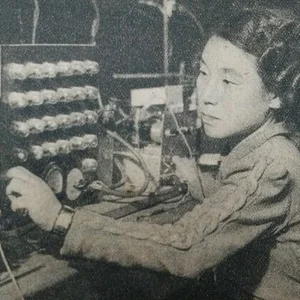
Toshiko Yuasa
1909 — 1980
Toshiko Yuasa (1909-1980) was the first female Japanese physicist. A specialist in radioactivity and nuclear physics, she spent the bulk of her career in France, at the CNRS, following in the footsteps of the Joliot-Curies' work.
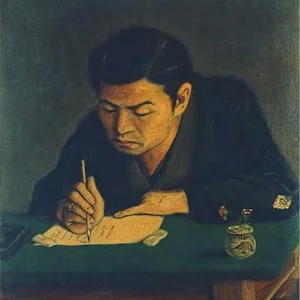
Yamamoto
1984 — ?
Japanese admiral, commander-in-chief of the Combined Fleet of the Imperial Japanese Navy during World War II. The architect of the surprise attack on Pearl Harbor in 1941, he was one of the leading naval strategists in the Pacific before being shot down in 1943.
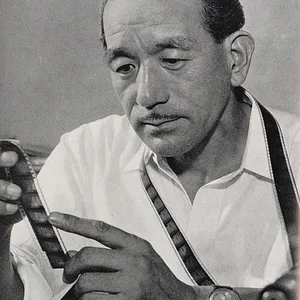
Yasujirō Ozu
1903 — 1963
Yasujirō Ozu (1903-1963) was a Japanese filmmaker, one of the greatest masters of world cinema. His intimate films delicately portray the Japanese family and the passage of time, in a spare, contemplative style.
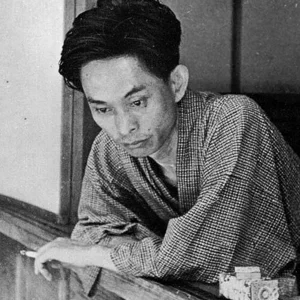
Yasunari Kawabata
1899 — 1972
Yasunari Kawabata (1899-1972) was a Japanese writer, the first author from his country to receive the Nobel Prize in Literature, in 1968. His work, imbued with melancholy and traditional Japanese aesthetics, explores fleeting beauty, solitude, and the passage of time.
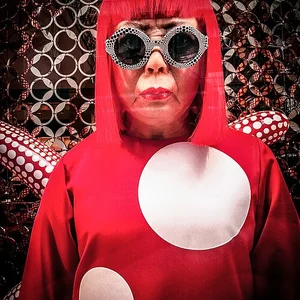
Yayoi Kusama
1929 — ?
Yayoi Kusama is a Japanese visual artist born in 1929 in Matsumoto. A pioneer of psychedelic art and pop art, she is known for her obsessive polka-dot patterns and immersive mirror installations. Since 1977, she has voluntarily lived in a psychiatric hospital in Tokyo while continuing to create.
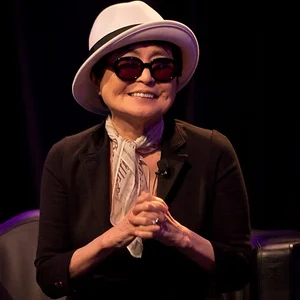
Yoko Ono
1933 — ?
Yoko Ono is a Japanese artist born in 1933 in Tokyo, a major figure in conceptual art and the Fluxus movement. A peace activist, she is also known for her artistic and political commitment alongside John Lennon. Her work explores audience participation, peace, and memory.
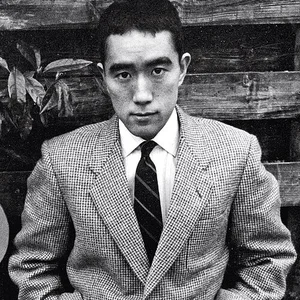
Yukio Mishima
1925 — 1970
Japanese writer, playwright, and essayist, a major figure in 20th-century literature. A prolific author blending classical aesthetics with modern obsessions, he remains famous for his ritual suicide by seppuku following an attempted coup d'état.
Banana Yoshimoto
1964 — ?
Japanese novelist born in 1964, Banana Yoshimoto is world-renowned for her novel Kitchen (1988). Her work sensitively explores solitude, grief, and inner healing.
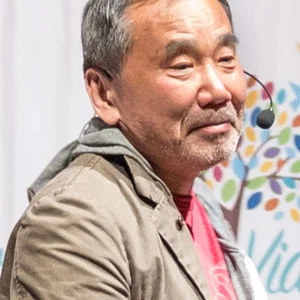
Haruki Murakami
1949 — ?
Haruki Murakami is a Japanese writer born in 1949, one of the most widely translated contemporary novelists in the world. His work blends realism and the fantastic, exploring the loneliness and unease of the individual in modern Japan.