Women in Science
Mathematicians, physicists, biologists and astronomers who pushed the boundaries of knowledge despite the obstacles.
190 characters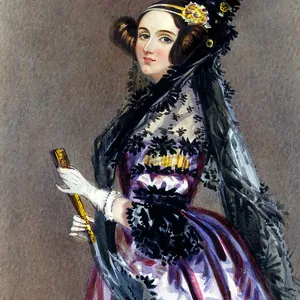
190 characters
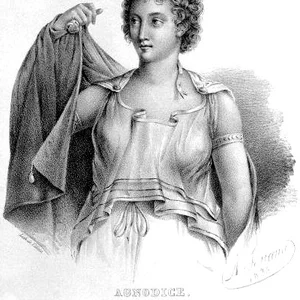
Agnodice
400 av. J.-C. — 360 av. J.-C.
Agnodice is a legendary figure from ancient Greece, presented as the first female physician and gynecologist in Athens in the 4th century BCE. According to the account of the Latin author Hyginus, she disguised herself as a man in order to study medicine under Herophilus in Alexandria, and then to practice in Athens.
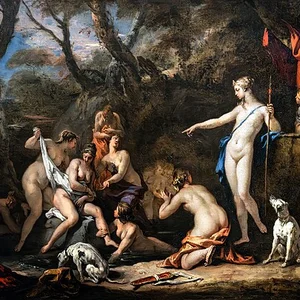
Callisto
Callisto is a nymph from Greek mythology and a companion of Artemis, goddess of the hunt. Seduced by Zeus, she was transformed into a bear by the jealous Hera, then placed in the sky as the constellation Ursa Major.
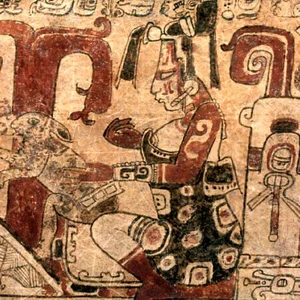
Ixchel
Ix Chel is a goddess of Maya mythology, venerated as a figure of the moon, medicine, weaving, and fertility. According to oral traditions and colonial written sources (Maya codices), she embodied both the creative power and the destruction associated with water and lunar cycles.
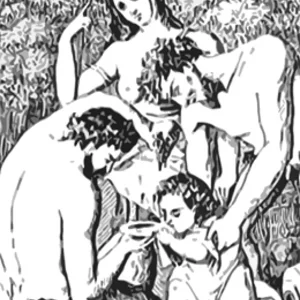
Panacea
Greek goddess of universal healing, daughter of Asclepius and Epione. She personified the remedy capable of curing all ailments. Her name, meaning “she who heals all” in Greek, is the origin of the word “panacea” in modern languages.
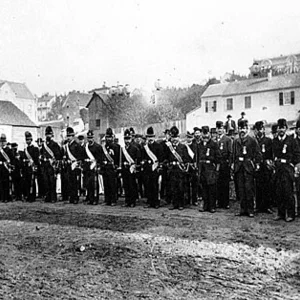
Pythias
361 av. J.-C. — 400 av. J.-C.
Greek biologist and embryologist of the 4th century BC, wife of Aristotle. She is believed to have actively participated in the philosopher's natural research, particularly in embryology and marine biology. A rare female figure in ancient science.

Tapputi-Belatekallim
1200 av. J.-C. — ?
Tapputi-Belatekallim was a Babylonian perfume-maker of the second millennium BCE, often regarded as the first chemist in recorded history. Her name appears on a cuneiform tablet describing her perfume-making processes.
Theano
600 av. J.-C. — 500 av. J.-C.
A Greek philosopher and mathematician of the 6th century BCE, Theano was a student and later the wife of Pythagoras. She contributed to the development of the Pythagorean school and carried on its teachings after her master's death.
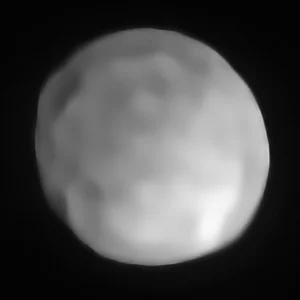
Hygiea
Hygiea is the Greek goddess of health, cleanliness, and hygiene. Daughter of Asclepius, god of medicine, she personified the prevention of disease. Her name gave rise to the word “hygiene” in all Western languages.
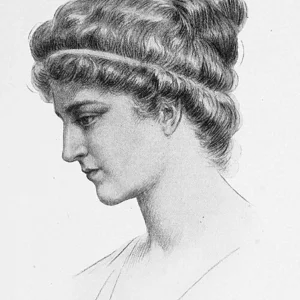
Hypatia
360 — 415
Mathematician, astronomer, and Neoplatonist philosopher from Alexandria (c. 360–415). Considered the first known female scientist in history, she led the philosophical school of Alexandria and was murdered by a fanatical Christian mob.
Hypatia of Alexandria
vers 355/370 — 415
Greek mathematician, astronomer, and philosopher of the 4th–5th centuries, she taught in Alexandria and advanced the sciences of antiquity. An iconic figure of female scholarship, she was murdered in 415 during religious unrest.
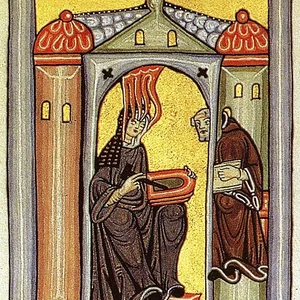
Hildegard of Bingen
1098 — 1179
A twelfth-century German Benedictine nun, Hildegard of Bingen was at once a mystic, composer, naturalist, and theologian. She founded her own monastery and corresponded with the most powerful figures of her time, including popes and emperors.

Jutta of Sponheim
A German Benedictine recluse and mystic of the 12th century, Jutta of Sponheim founded a community of women at the monastery of Disibodenberg. She is best known as the spiritual teacher and educator of Hildegard von Bingen.
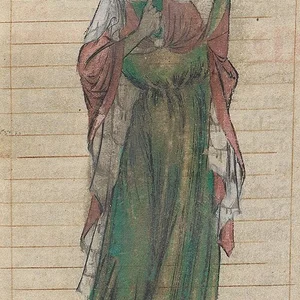
Trotula of Salerno
1110 — 1197
Female physician of the 11th century associated with the School of Medicine of Salerno, Europe's first organized medical institution. She is linked to foundational treatises on gynecology and obstetrics, though her exact biography remains a matter of debate.
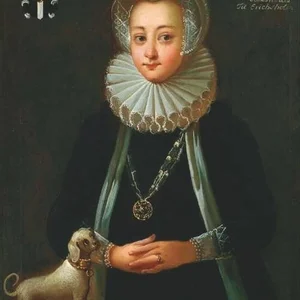
Sophie Brahé
A Danish astronomer and horticulturist of the 16th century, she actively collaborated with her brother Tycho Brahe in his astronomical observations. A passionate self-taught scholar, she also mastered chemistry, medicine, and genealogy.
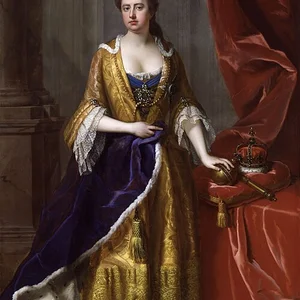
Anne of Great Britain
1665 — 1714
Queen of England, Scotland, and Ireland from 1702 to 1707, then first Queen of Great Britain following the Acts of Union of 1707. Her reign saw the rise of parliamentary government and the War of the Spanish Succession.
Anne Ponsarde
Anne Ponsarde is a female figure of the early modern period, associated with the world of natural sciences and practical knowledge in France. Her story reflects the role of women in the transmission of knowledge during the early modern era.
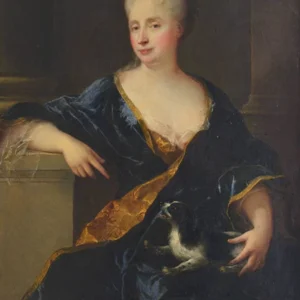
Anne Thérèse de Marguenat de Courcelles, marquise de Lambert
A Parisian writer and salon hostess (1647–1733), she presided over one of the most influential literary salons of the Regency period, frequented by Fontenelle, Montesquieu, and Marivaux. A pioneer in thinking about women's education, she championed their access to intellectual life.
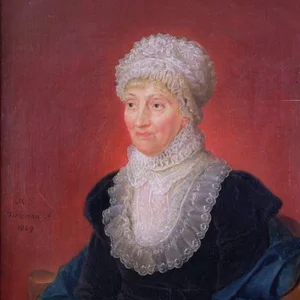
Caroline Herschel
1750 — 1848
A pioneering astronomer from Hanover, Caroline Herschel discovered eight comets and helped map the sky alongside her brother William. She was the first woman to receive the Gold Medal of the Royal Astronomical Society, in 1828.
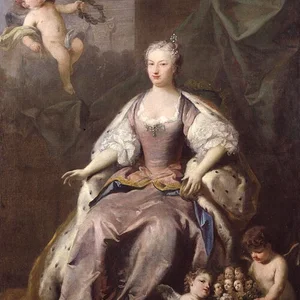
Caroline of Ansbach
1683 — 1737
Queen consort of Great Britain and Ireland (1727–1737), wife of George II. An Enlightenment intellectual, she corresponded with Leibniz and actively supported Newton in the philosophical and scientific dispute between the two men. Regent on several occasions, she wielded major political influence over the British monarchy.
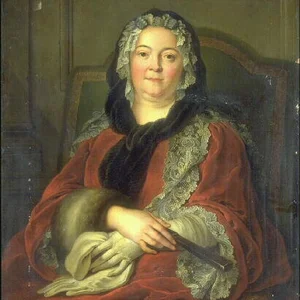
Claudine Guérin de Tencin
1682 — 1749
French novelist and salonnière (1682–1749), she hosted one of the most influential literary salons of the eighteenth century in Paris. The mother who abandoned d'Alembert at birth, she is the author of sentimental and historical novels such as the Mémoires du comte de Comminge.
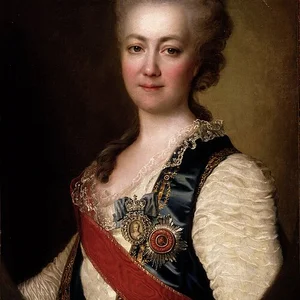
Ekaterina Vorontsova-Dashkova
1743 — 1810
A learned Russian aristocrat and close associate of Catherine II, she played a part in the coup d'état of 1762. The first woman to head the Russian Academy of Sciences, she founded the Russian Academy devoted to the language.
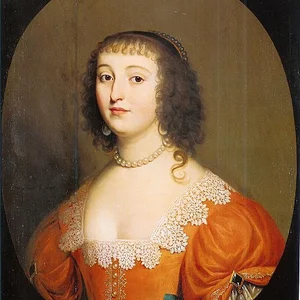
Elisabeth of Bohemia
1618 — 1680
Princess Palatine (1618–1680), daughter of King Frederick V of Bohemia. A self-taught philosopher, she engaged in a celebrated correspondence with Descartes, challenging his mind-body dualism. She ended her life as abbess of the Lutheran convent of Herford.
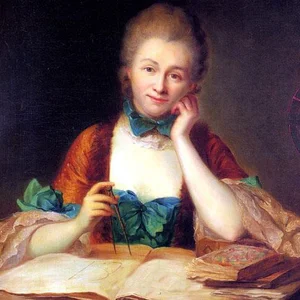
Émilie du Châtelet
1706 — 1749
Émilie du Châtelet (1706-1749) was a French physicist and mathematician of the Enlightenment. She translated and annotated Newton's Principia Mathematica, a work that remained the standard French reference until the 19th century. Voltaire's companion, she demonstrated that kinetic energy is proportional to the square of velocity.
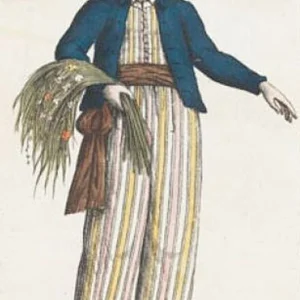
Jeanne Barret
1740 — 1807
explorer and botanist (1740-1807)

Katharina Gsell
1707 — 1773
Katharina Gsell (c. 1707–1773) was the daughter of Swiss painter Georg Gsell, who was employed at the imperial court of Saint Petersburg. In 1734 she married the mathematician Leonhard Euler, one of the greatest scholars of the 18th century, and was the companion of his entire scientific life.
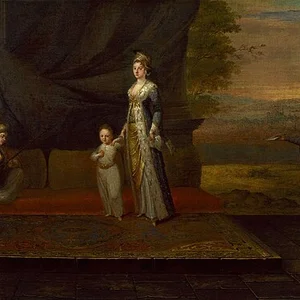
Lady Montagu
An English aristocrat and woman of letters of the 18th century, Mary Wortley Montagu accompanied her husband, an ambassador, to Constantinople. There she discovered variolation and introduced it to Western Europe, saving countless lives before Jenner's development of the vaccine.
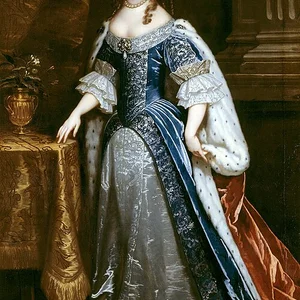
Margaret Cavendish
1617 — 1673
Seventeenth-century English natural philosopher and woman of letters (1623–1673), she developed her own theories on the nature of matter, drawing on atomism while proposing an original vitalist materialism. The first woman to attend a meeting of the Royal Society, in 1667.
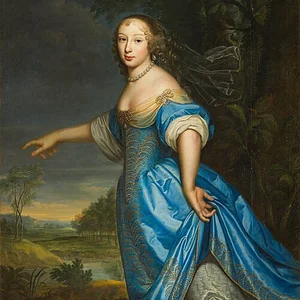
Marguerite de La Sablière
A salonnière and woman of letters of the seventeenth century, she presided over one of the most celebrated salons in Paris, bringing together poets, philosophers, and scholars. A patron of La Fontaine, she welcomed him into her home for nearly twenty years. Passionate about science, she studied astronomy and natural philosophy under scholars such as Bernier.
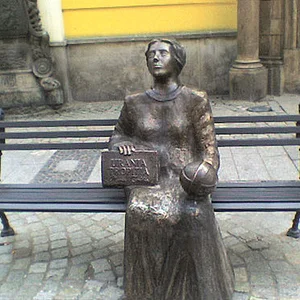
Maria Cunitz
1607 — 1664
A Silesian astronomer of the 17th century, Maria Cunitz published Urania Propitia in 1650, a simplification of Kepler's tables written in both Latin and German. Considered the most remarkable female scholar of her time, she made Keplerian astronomy accessible to a wider audience.
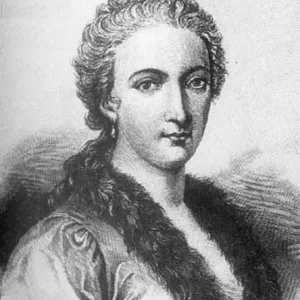
Maria Gaetana Agnesi
1718 — 1799
An Italian mathematician and philosopher of the 18th century, Maria Gaetana Agnesi is celebrated for her treatise Instituzioni analitiche (1748), a pioneering pedagogical synthesis of differential and integral calculus. The first woman appointed as a professor of mathematics at the University of Bologna, she later devoted her life to charity and spirituality.
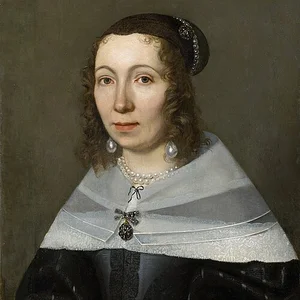
Maria Sibylla Merian
1647 — 1717
A German naturalist and artist of the 17th century, Maria Sibylla Merian was a pioneer in the study of insects and their metamorphosis. She led an expedition to Suriname (1699–1701) to observe and illustrate tropical flora and fauna, at a time when women rarely had access to the sciences.
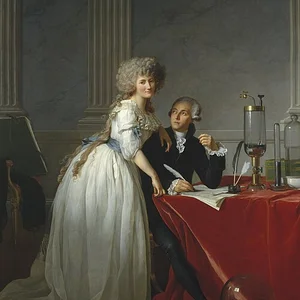
Marie-Anne Paulze
French chemist and illustrator (1758–1836), essential collaborator of Antoine Lavoisier. She translated English scientific treatises and created the engravings for the landmark "Elementary Treatise on Chemistry" (1789), contributing to the chemical revolution.
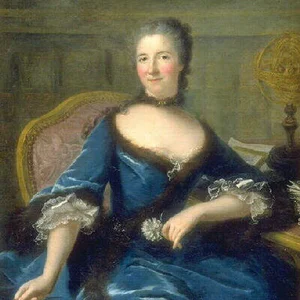
Marquise du Châtelet
An 18th-century French physicist and mathematician, she translated and annotated Newton's Principia Mathematica, introducing Newtonian mechanics to France. Voltaire's companion and a central figure of the Enlightenment, she developed the concept of vis viva (kinetic energy).
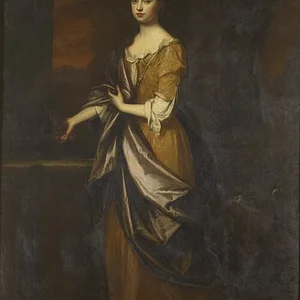
Mary Pitt
1676 — ?
Mary Pitt (1676-) was an English courtesan moving in circles close to British royal power at the end of the 17th century. Her role at court places her within a context of spreading scientific and cultural ideas characteristic of the era.

Sarah Chiswell
Young Englishwoman who died of smallpox around 1714, and a friend of Lady Mary Wortley Montagu. Her tragic death prompted Lady Mary to champion variolation in England after observing the practice in the Ottoman Empire, indirectly contributing to the history of vaccination.
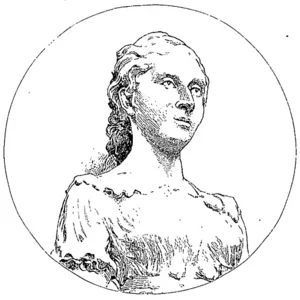
Sophie Germain
1776 — 1831
French mathematician and philosopher (1776–1831), a pioneer in science at a time when women were excluded from it. She made contributions to number theory and elasticity, and corresponded with Gauss under a male pseudonym.

Wang Zhenyi
1768 — 1797
Wang Zhenyi was a Chinese astronomer, mathematician, and poet of the Qing dynasty. Despite the conventions of her time that kept women away from learning, she popularized astronomy and championed intellectual equality between men and women.
Ada Lovelace
1815 — 1852
British mathematician (1815-1852), pioneer of computing and programming. She wrote the first algorithm intended to be executed by a machine, working on Charles Babbage's Analytical Engine. Her legacy makes her a founding figure of theoretical computer science.
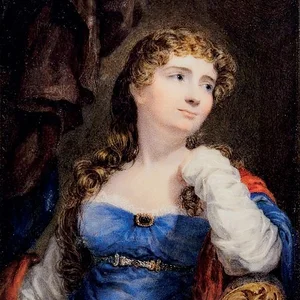
Annabella Milbanke
1792 — 1860
British aristocrat (1792–1860), self-taught mathematician and philanthropist, she married the poet Lord Byron in 1815 before separating from him a year later. She went on to dedicate herself to popular education and social reform, and is the mother of Ada Lovelace, pioneer of computing.

Bronisława Dłuska
Polish physician (1865-1939), elder sister of Marie Curie, she funded her sister's studies in Paris. A pioneer of women's medicine in Poland, she ran a clinic in Zakopane and campaigned for women's emancipation.
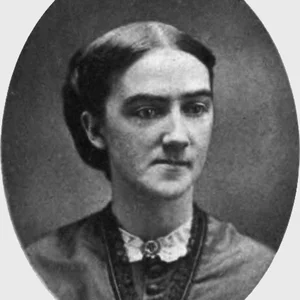
Ellen Swallow Richards
1842 — 1911
Pioneering American chemist, the first woman admitted to MIT, where she became an instructor. A specialist in sanitary chemistry, she analyzed water and air quality and founded scientific home economics.
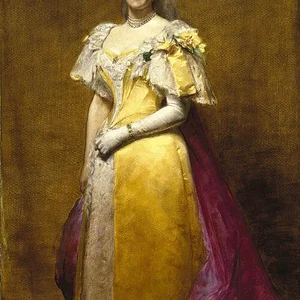
Emily Warren Roebling
1843 — 1903
Emily Warren Roebling was an American pioneer of civil engineering. When her husband, chief engineer Washington Roebling, was struck by caisson disease, she took over the technical supervision of the Brooklyn Bridge construction until its completion in 1883.
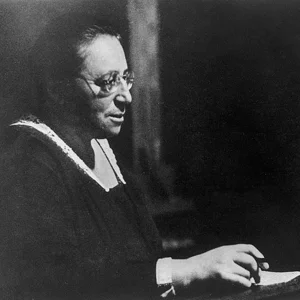
Emmy Noether
1882 — 1935
German mathematician (1882–1935) considered one of the greatest mathematicians of the 20th century. She revolutionized abstract algebra, and her landmark theorem established the deep connection between symmetries and conservation laws in physics.
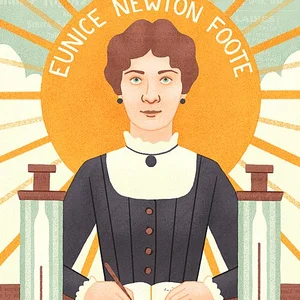
Eunice Newton Foote
1819 — 1888
An American scientist, Eunice Newton Foote demonstrated as early as 1856 the ability of carbon dioxide to trap heat, anticipating the understanding of the greenhouse effect. An activist as well, she was a forgotten pioneer of climate science.
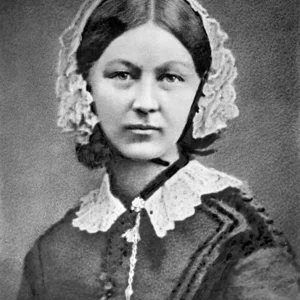
Florence Nightingale
1820 — 1910
British nurse and statistician (1820–1910), she revolutionized hospital care during the Crimean War. A pioneer of public health, she founded the first secular nursing school and used statistics to demonstrate the critical importance of hygiene.
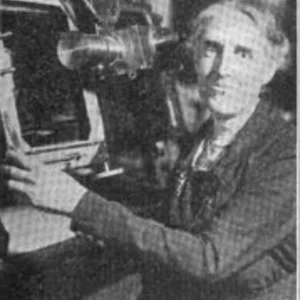
Henrietta Leavitt
1868 — 1921
Henrietta Swan Leavitt (1868-1921) was an American astronomer who discovered the period-luminosity relationship of Cepheid stars, giving humanity a tool to measure distances across the universe. Working as a "human computer" at the Harvard Observatory, she transformed astronomy despite the discrimination she faced because of her gender.
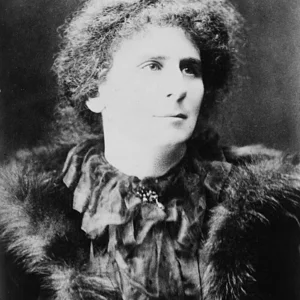
Hertha Ayrton
1854 — 1923
British mathematician and engineer (1854-1923), pioneer of electrical engineering. She conducted groundbreaking research on the electric arc and invented several technical devices, becoming the first woman elected as an associate member of the Royal Society.
Jeanne Villepreux-Power
1794 — 1871
French naturalist (1794–1871), pioneer of marine biology. She invented the glass aquarium to observe octopuses and cephalopods in situ, revolutionizing the study of the marine world.
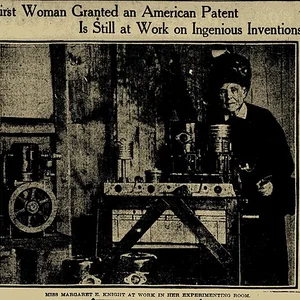
Margaret Knight
1838 — 1914
Margaret Knight (1838–1914) was a prolific American inventor who revolutionized the packaging industry by developing the machine that produces flat-bottomed paper bags. Over the course of her life she filed more than 27 patents across fields as varied as textiles, mechanics, and automotive engineering.
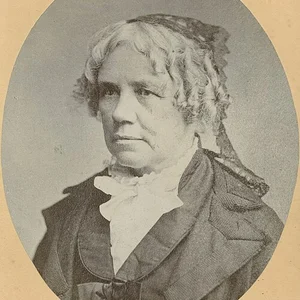
Maria Mitchell
1818 — 1889
America's first professional female astronomer, Maria Mitchell discovered a comet in 1847, earning her a gold medal from the King of Denmark. She was the first woman elected to the American Academy of Arts and Sciences and advocated for the scientific education of women.
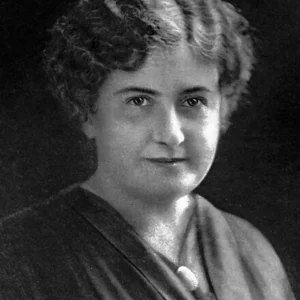
Maria Montessori
1870 — 1952
Italian physician and educator
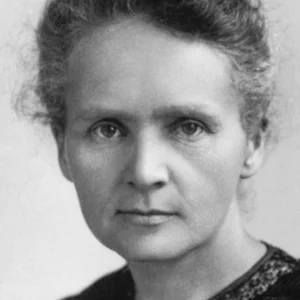
Marie Curie
1867 — 1934
Polish-born French physicist and chemist (1867–1934). A pioneer in the study of radioactivity, she was the first woman to receive a Nobel Prize and the only person to receive two Nobel Prizes in different scientific fields. Her discoveries revolutionized modern physics and chemistry.
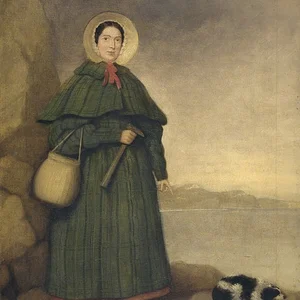
Mary Anning
1799 — 1843
Mary Anning was a self-taught English paleontologist who, from childhood, collected fossils along the cliffs of Lyme Regis. She discovered the first complete skeletons of an ichthyosaur and a plesiosaur, revolutionizing the understanding of extinct species. Despite her major contributions, she was long excluded from scientific circles because of her sex and her modest background.
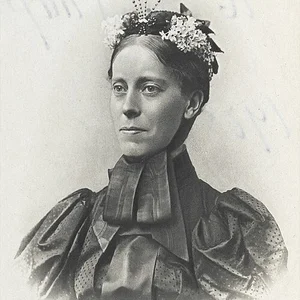
Mary Kingsley
1862 — 1900
British explorer and ethnographer (1862–1900), Mary Kingsley was one of the first European women to travel alone in West Africa. She brought back invaluable observations on the cultures and wildlife of Gabon and the Congo, and championed African societies against colonial prejudice.
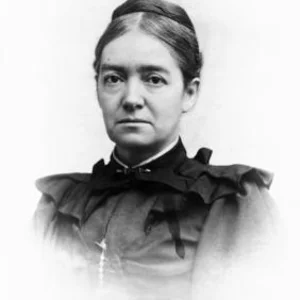
Mary Putnam Jacobi
1842 — 1906
American physician, a pioneer for the place of women in medicine in the 19th century. A rigorous researcher and suffragist activist, she scientifically refuted the medical prejudices that deemed women unfit for intellectual and physical effort.
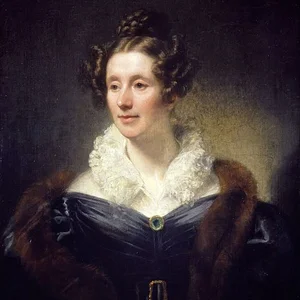
Mary Somerville
1780 — 1872
Scottish mathematician and scientist (1780–1872), a pioneer of science in the 19th century. She popularised the works of Laplace and contributed to celestial mechanics. Together with Caroline Herschel, she was one of the first women to be elected an honorary member of the Royal Astronomical Society.
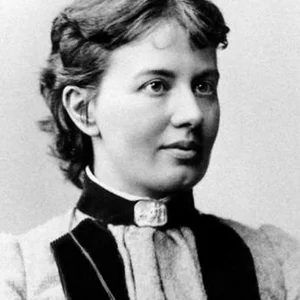
Sofia Kovalevskaya
1850 — 1891
Sofia Kovalevskaya (1850–1891) was the first woman to earn a doctorate in mathematics in Europe and the first female professor of mathematics at a modern university. A pioneer in analysis and mechanics, she broke through the barriers of the male academic world to establish herself as a leading mathematician.
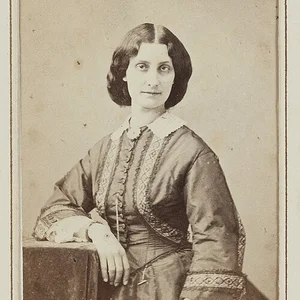
Sophie Berthelot
1837 — 1907
Wife of the great chemist Marcellin Berthelot, Sophie Berthelot (1837-1907) was a cultured woman who accompanied her husband throughout his entire career. Having died on the same day as him, she became the first woman interred in the Panthéon in 1907, a symbol of the grateful Republic.
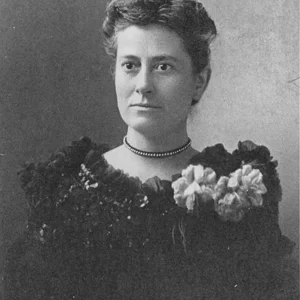
Williamina Fleming
1857 — 1911
Scottish-American astronomer, she joined the Harvard Observatory as a "Harvard Computer." She developed a system for classifying stellar spectra and discovered the Horsehead Nebula in 1888.
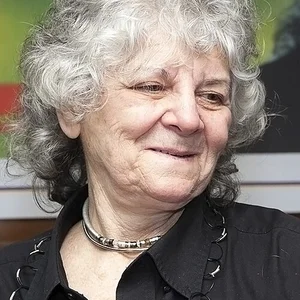
Ada Yonath
1939 — ?
Israeli crystallographer and molecular biologist, Ada Yonath elucidated the three-dimensional structure of the ribosome, the cellular machinery responsible for protein synthesis. She received the Nobel Prize in Chemistry in 2009, the first woman to do so in 45 years.
Adele Goldberg
1945 — ?
American computer scientist born in 1945, Adele Goldberg worked at Xerox PARC where she contributed to the development of the Smalltalk programming language. She played a pioneering role in the design of graphical user interfaces and object-oriented programming.
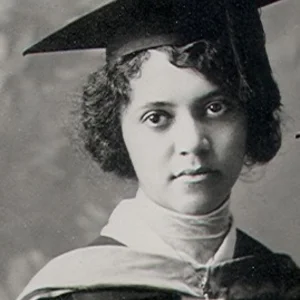
Alice Ball
1892 — 1916
Alice Ball was an African American chemist known for developing an injectable treatment for leprosy made from chaulmoogra oil. She died at just 24, and her pioneering work was not recognized until decades later.
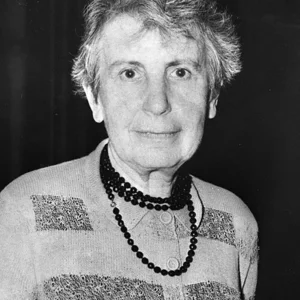
Anna Freud
1895 — 1982
Austrian-British psychoanalyst (1895–1982), daughter of Sigmund Freud. A pioneer of child psychoanalysis, she theorized the ego's defense mechanisms and founded child therapy in London.
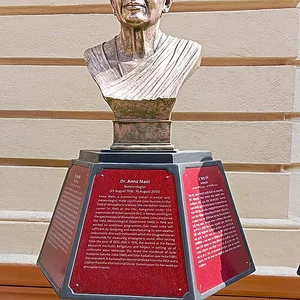
Anna Mani
1918 — 2001
Anna Mani (1918-2001) was an Indian physicist and meteorologist. A pioneer of meteorology in India, she designed instruments to measure solar radiation, ozone, and wind, contributing to her country's scientific growth after independence.
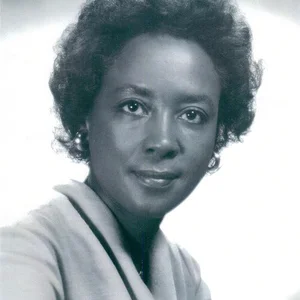
Annie Easley
1932 — 2011
An African American mathematician and computer scientist at NASA, Annie Easley contributed to the development of Centaur rockets and early solar energy technologies. A pioneer in a field dominated by white men, she also advocated for equal access to education.
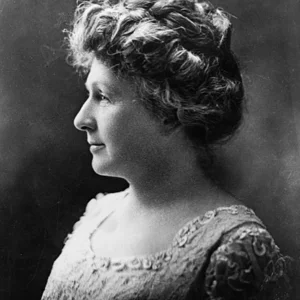
Annie Jump Cannon
1863 — 1941
A pioneering American astronomer, Annie Jump Cannon revolutionized astronomy by classifying the spectra of more than 350,000 stars. Her spectral classification system (OBAFGKM) is still in use today.
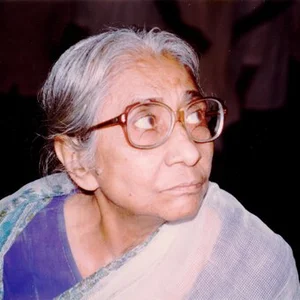
Asima Chatterjee
1917 — 2006
Asima Chatterjee (1917-2006) was a pioneering Indian chemist who specialized in the chemistry of natural products and medicinal plants. She was the first woman to receive a Doctor of Science degree from an Indian university.
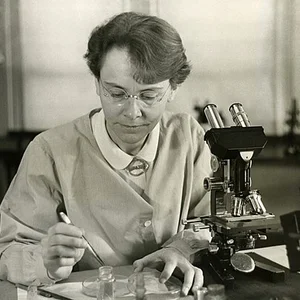
Barbara McClintock
1902 — 1992
Barbara McClintock is a pioneering American geneticist who discovered transposable elements, known as "jumping genes," in maize as early as the 1940s. Long overlooked by the scientific community, she received the Nobel Prize in Physiology or Medicine in 1983, the only woman to have received it unshared in that discipline.
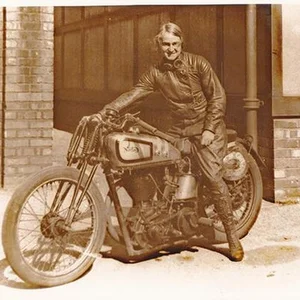
Beatrice Shilling
1909 — 1990
Beatrice Shilling (1909-1990) was a British aeronautical engineer. She is famous for solving a serious flaw in the Rolls-Royce Merlin engines that powered RAF fighters during the Second World War.
Beatrice Tinsley
1941 — 1981
Beatrice Tinsley is a New Zealand astronomer and cosmologist of British origin, a pioneer in the study of galaxy evolution. Her work transformed our understanding of how galaxies form and age over the course of the Universe's history.
Beulah Henry
An American inventor nicknamed "Lady Edison," Beulah Henry filed more than 110 patents between 1912 and 1970, covering household appliances, bobbinless sewing machines, and various practical tools. A pioneer in a field almost exclusively dominated by men, she founded several companies to bring her inventions to market.
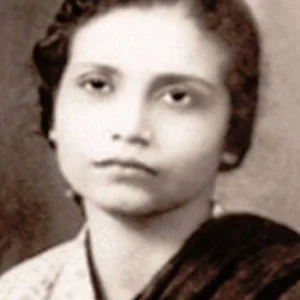
Bibha Chowdhuri
1913 — 1991
Bibha Chowdhuri (1913-1991) was an Indian physicist and a pioneer in the study of cosmic rays and particle physics. Working with Debendra Mohan Bose, she used photographic plates to detect subatomic particles, coming close to discovering the meson.
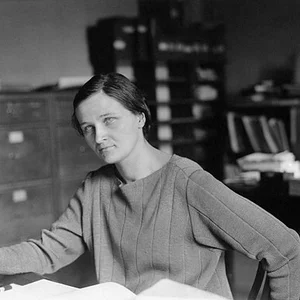
Cecilia Payne-Gaposchkin
1900 — 1979
British-born American astronomer (1900–1979), she discovered that stars are composed primarily of hydrogen and helium. Her 1925 doctoral thesis revolutionized astrophysics, even though her conclusions were initially rejected by her peers.
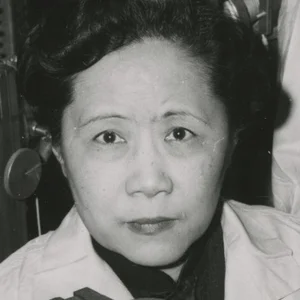
Chien-Shiung Wu
1912 — 1997
Chien-Shiung Wu was a Chinese-American experimental physicist, nicknamed "the First Lady of Physics." Her 1956 experiment disproved the law of conservation of parity, upending particle physics. Unjustly passed over for the Nobel Prize awarded to Lee and Yang for that discovery, she remains one of the most important figures in twentieth-century physics.
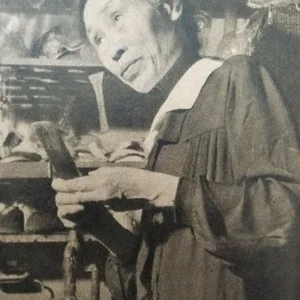
Chika Kuroda
1884 — 1968
Chika Kuroda (1884-1968) was a pioneering Japanese chemist, one of the first women in Japan to earn a university degree in science. She made her mark with her research into the structure of natural pigments.
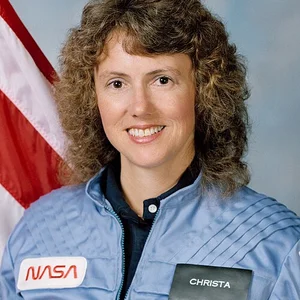
Christa McAuliffe
1948 — 1986
An American teacher selected for NASA's Teacher in Space program, she was set to become the first civilian in space. She perished in the Space Shuttle Challenger disaster on January 28, 1986.
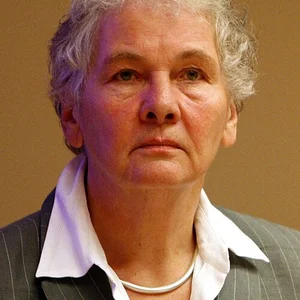
Christiane Nüsslein-Volhard
1942 — ?
Christiane Nüsslein-Volhard is a German biologist born in 1942, a specialist in developmental genetics. Her work on the fruit fly (Drosophila) revealed how genes control the formation of the embryo. She received the Nobel Prize in Physiology or Medicine in 1995.
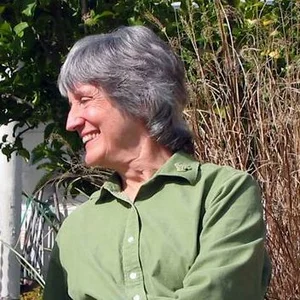
Donna Haraway
1944 — ?
Donna Haraway is an American academic, feminist theorist, and historian of science. Known for her “Cyborg Manifesto” (1985), she questions the boundaries between human, animal, and machine, and rethinks the relationships between nature, technology, and feminism.
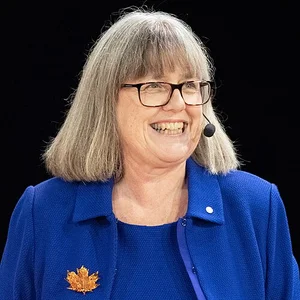
Donna Strickland
1959 — ?
Donna Strickland is a Canadian physicist and pioneer in the field of ultra-intense lasers. In 1985, she co-developed with Gérard Mourou the technique of chirped pulse amplification (CPA), revolutionizing laser physics. In 2018, she received the Nobel Prize in Physics, becoming only the third woman ever to receive this distinction.
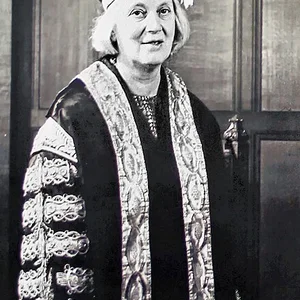
Dorothy Hodgkin
1910 — 1994
British chemist (1910-1994)
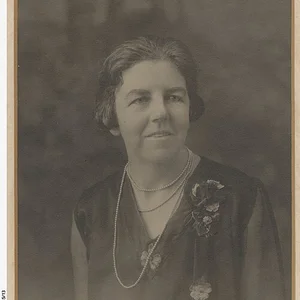
Dorothy Vaughan
1881 — 1974
An African-American mathematician, Dorothy Vaughan joined the NACA in 1943 as a "human computer." She became the agency's first Black supervisor in 1949, leading the West Area Computing unit. A computing pioneer, she taught herself FORTRAN and prepared her teams for the era of electronic computers.
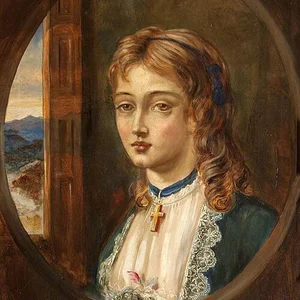
Edith Clarke
1883 — 1959
First woman to earn an electrical engineering degree from MIT (1919) and the first professionally employed female electrical engineer in the United States. She invented the Clarke graphical calculator, which greatly simplified electrical power transmission calculations.
Edith Flanigen
Edith Flanigen is an American chemist born in 1929, a pioneer in the chemistry of zeolites (molecular sieves). Her work revolutionized oil refining and industrial purification. She is one of the most prolific inventors of the 20th century.
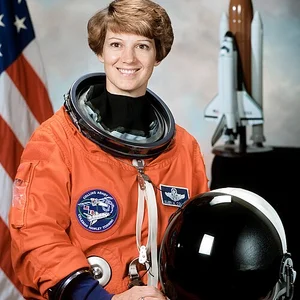
Eileen Collins
1956 — ?
An American astronaut and military pilot, Eileen Collins was the first woman to pilot and then command an American Space Shuttle. She completed four missions with NASA between 1995 and 2005.
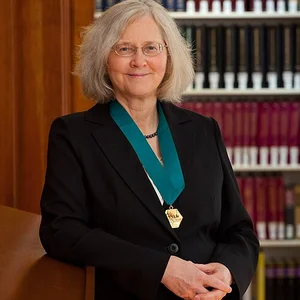
Elizabeth Blackburn
1948 — ?
Elizabeth Blackburn is an Australian-American molecular biologist born in 1948 in Tasmania. She discovered telomerase, the enzyme that protects the ends of chromosomes, which earned her the Nobel Prize in Physiology or Medicine in 2009.

Erna Schneider Hoover
1926 — ?
Erna Schneider Hoover (1926-2025) was an American mathematician and computer scientist. In the 1960s she invented a computerized stored-program-controlled telephone switching system, revolutionizing the way calls were handled in telephone exchanges.
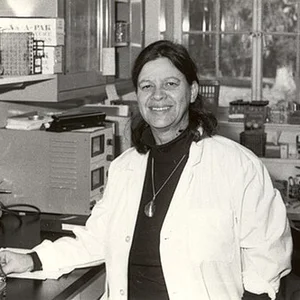
Esther Lederberg
1922 — 2006
Esther Lederberg (1922-2006) was an American microbiologist who pioneered bacterial genetics. She discovered the lambda bacteriophage and developed the replica plating technique, long overshadowed by her husband Joshua Lederberg.
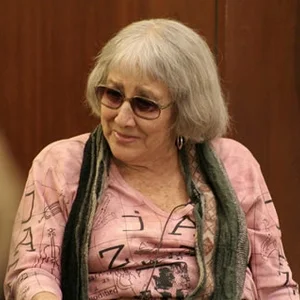
Eugenie Clark
1922 — 2015
Eugenie Clark (1922-2015) was an American ichthyologist, a pioneer of scientific diving and a world-renowned shark expert. Nicknamed “the Shark Lady,” she transformed the image of these predators and advanced the study of fishes.

Evelyn Berezin
1925 — 2018
Evelyn Berezin (1925-2018) was an American engineer and computer scientist, a pioneer of computing. In 1971 she designed the first computerized word processor, the Data Secretary, and founded the company Redactron to bring it to market.
Evelyn Boyd Granville
1924 — 2023
Evelyn Boyd Granville was an American mathematician, one of the first African American women to earn a doctorate in mathematics in the United States (Yale, 1949). She contributed to the American space programs by developing trajectory analyses for the Vanguard, Mercury, and Apollo missions.
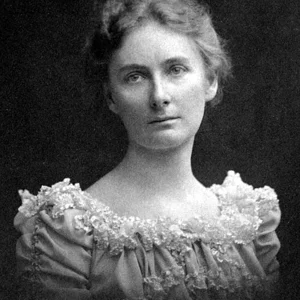
Florence Bascom
1862 — 1945
Florence Bascom (1862-1945) was an American geologist and a pioneer of the Earth sciences. The first woman to earn a doctorate from Johns Hopkins University (1893) and the first woman hired by the US Geological Survey, she was a recognized specialist in mineralogy and petrography.
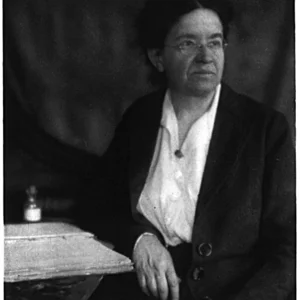
Florence Sabin
Florence Sabin (1871-1953) was an American physician and anatomist, a pioneer of medical research. She was the first woman to become a full professor at the Johns Hopkins Medical School and the first woman elected to the National Academy of Sciences of the United States.
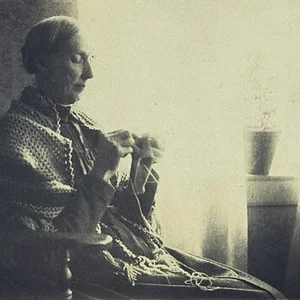
Frances Allen
1934 — 2018
American computer scientist and pioneer in compiler optimization at IBM. The first woman to win the Turing Award in 2006, she laid the theoretical foundations of modern compilation and parallel programming.
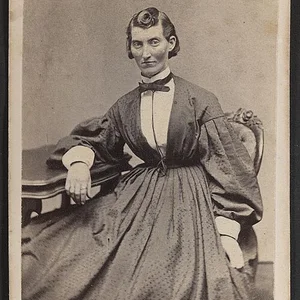
Frances Clayton
1830 — 1863
American psychologist and partner of the African American poet and activist Audre Lorde for nearly twenty years. The couple raised Lorde's two children together on Staten Island, a figure in 20th-century lesbian and feminist history.
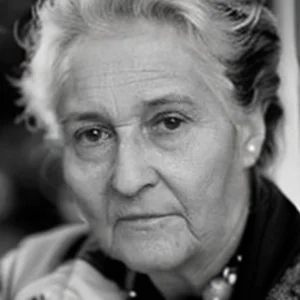
Françoise Dolto
1908 — 1988
French pediatrician and psychoanalyst (1908–1988), Françoise Dolto revolutionized the understanding of children and their psychological development. She brought psychoanalysis to a wide public audience and championed children's rights.
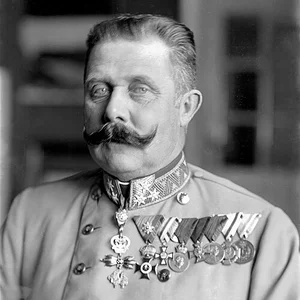
Franz Ferdinand of Austria
1863 — 1914
Archduke and heir to the Austro-Hungarian Empire, his assassination in Sarajevo on June 28, 1914, by Gavrilo Princip triggered the First World War. A central figure in the nationalism and European tensions of the early twentieth century.
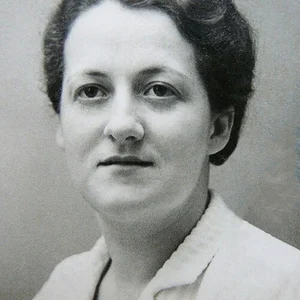
Germaine Tillion
1907 — 2008
A French ethnologist specializing in the Berber societies of Algeria, Germaine Tillion joined the Resistance in 1940 before being deported to Ravensbrück. A survivor and tireless witness, she dedicated her entire life to human rights and understanding between peoples.
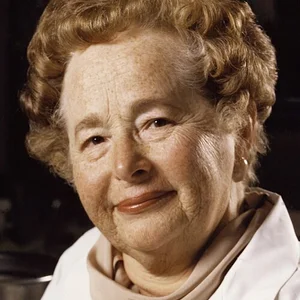
Gertrude B. Elion
1918 — 1999
Gertrude B. Elion (1918-1999) was an American biochemist and pharmacologist, a pioneer of rational drug design. Her research led to the development of treatments for leukemia, gout, transplant rejection, and viral infections. She received the Nobel Prize in Medicine in 1988.
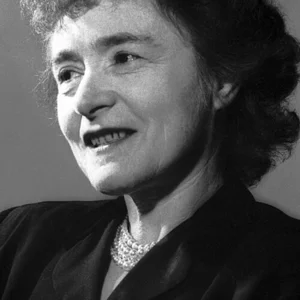
Gerty Cori
1896 — 1957
An American biochemist of Czech origin, Gerty Cori was the first woman to receive the Nobel Prize in Physiology or Medicine in 1947, which she shared with her husband Carl Cori. Her work on glycogen metabolism laid the foundations of modern biochemistry.
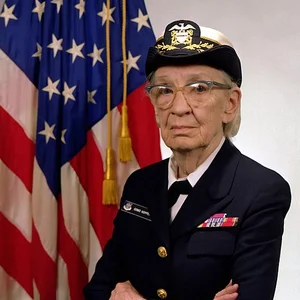
Grace Hopper
1906 — 1992
Grace Hopper, American mathematician and rear admiral, is one of the pioneers of computer science. She developed one of the first compilers and contributed to the creation of the COBOL programming language, revolutionizing programming. She popularized the term "bug" in computing after finding a real insect inside a computer.
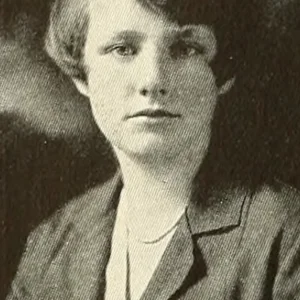
Harriet Creighton
1909 — 2004
American geneticist and botanist, Harriet Creighton is celebrated for her landmark experiment conducted with Barbara McClintock in 1931, proving that genetic crossing-over corresponds to a physical exchange between chromosomes. She taught botany at Wellesley College for decades.
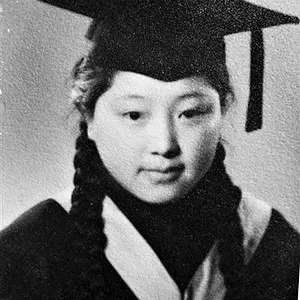
He Zehui
1914 — 2011
He Zehui was a Chinese nuclear physicist and a pioneer of particle physics in China. Together with her husband Qian Sanqiang, she studied the fission of uranium and helped found nuclear research in China. She is sometimes called the “Marie Curie of China.”
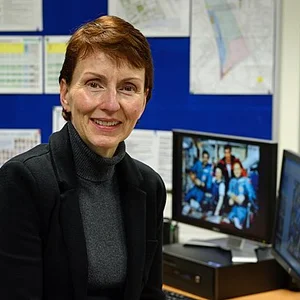
Helen Sharman
1963 — ?
British chemist born in 1963, Helen Sharman became in 1991 the first British person and the first Western woman to travel to space, aboard the Soviet station Mir as part of the Juno project.
Hertha Meyer
A German-Brazilian biophysicist of the 20th century, Hertha Meyer was a pioneer in electron microscopy applied to cell biology. She worked at the Instituto de Biofísica at the Federal University of Rio de Janeiro, contributing to the development of biophysics in Brazil.
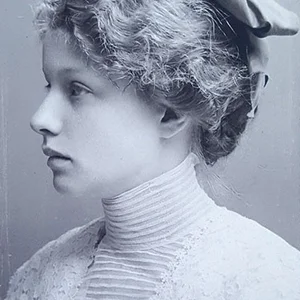
Hertha Sponer
1895 — 1968
Hertha Sponer (1895-1968) was a German, later American, physicist and chemist, a pioneer in applying quantum mechanics to atomic and molecular physics. She was one of the first women to teach physics at university level in Germany before emigrating to the United States.
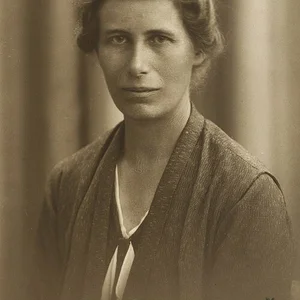
Inge Lehmann
1888 — 1993
Danish seismologist (1888–1993), Inge Lehmann discovered in 1936 that the Earth has a solid inner core, through the analysis of seismic waves. This fundamental discovery reshaped our understanding of Earth's internal structure.
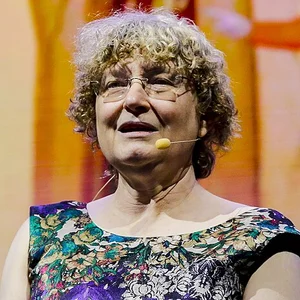
Ingrid Daubechies
1954 — ?
Belgian-born physicist and mathematician, naturalized American, born in 1954. A pioneer of wavelet theory, her work revolutionized signal processing and image compression. First female president of the International Mathematical Union.
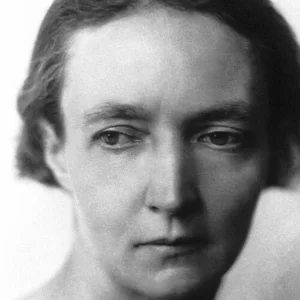
Irène Joliot-Curie
1897 — 1956
French physicist and chemist, daughter of Pierre and Marie Curie. With her husband Frédéric Joliot-Curie, she discovered artificial radioactivity in 1934, which earned them the Nobel Prize in Chemistry in 1935.
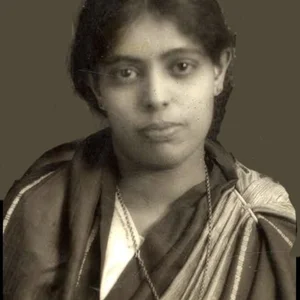
Janaki Ammal
1897 — 1984
Janaki Ammal was an Indian botanist and cytogeneticist, a pioneer in the study of the chromosomes of cultivated plants. She is especially known for her work on improving sugarcane and for helping to preserve India's native flora.
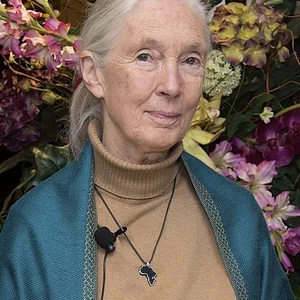
Jane Goodall
1934 — 2025
British ethologist and primatologist born in 1934, Jane Goodall is world-renowned for her pioneering research on chimpanzees in the Gombe forest of Tanzania. Her observations transformed our understanding of animal behaviour and human origins.
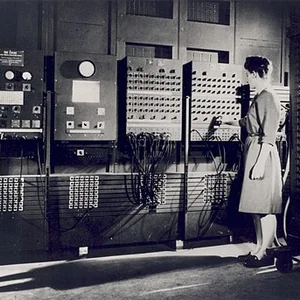
Jean Bartik
1924 — 2011
Jean Bartik (1924-2011) was an American mathematician and computer scientist, one of the first six programmers of the ENIAC, the first fully programmable electronic computer. She helped transform automatic computation into a new discipline: programming.
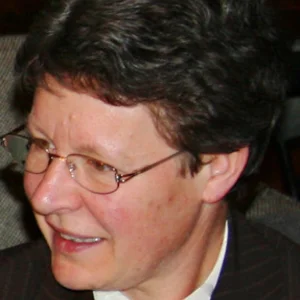
Jocelyn Bell Burnell
1943 — ?
British astrophysicist born in 1943, Jocelyn Bell discovered pulsars in 1967 — neutron stars emitting regular radio signals — during her doctoral thesis. Her thesis supervisor received the Nobel Prize for this discovery, sparking a lasting controversy over the recognition of women in science.
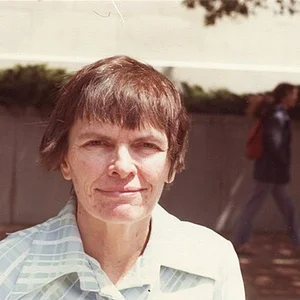
Julia Robinson
1919 — 1985
Julia Robinson (1919-1985) was an American mathematician famous for her work in number theory and mathematical logic. She made a decisive contribution to solving Hilbert's tenth problem.

Kakutani Yoshie
A twentieth-century Japanese mathematician, Kakutani Yoshie contributed to the growth of modern mathematics in Japan. She worked in an academic environment largely dominated by men, paving the way for women in the exact sciences in Japan.

Kamala Sohonie
1911 — 1998
Kamala Sohonie was an Indian biochemist, the first Indian woman to earn a doctorate in science. She broke down gender barriers in scientific research and studied the nutritional value of local foods.
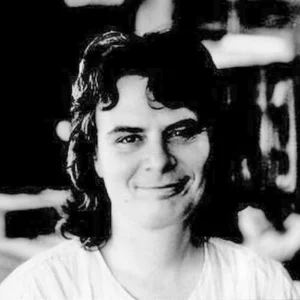
Karen Uhlenbeck
1942 — ?
American mathematician born in 1942, pioneer of geometric analysis and gauge theory. First woman to receive the Abel Prize in 2019, the highest distinction in mathematics. Her work has profoundly influenced theoretical physics and modern geometry.
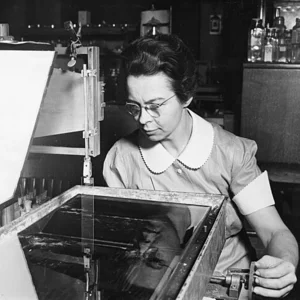
Katharine Burr Blodgett
1898 — 1979
American physicist and inventor (1898-1979), the first woman to earn a doctorate in physics from the University of Cambridge and the first female scientist hired by General Electric. She is known for inventing non-reflective glass (“invisible” glass).
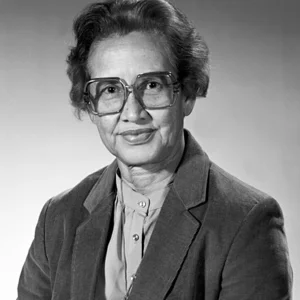
Katherine Johnson
1918 — 2020
African-American physicist, mathematician, and space engineer
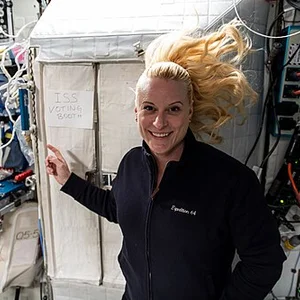
Kathleen Booth
1922 — 2022
Kathleen Booth (1922-2022) was a British computer scientist and mathematician, a pioneer of the early days of computing. She is credited with inventing assembly language and designing the first computers at Birkbeck College in London, alongside Andrew Booth.

Klára Dán von Neumann
American mathematician and programmer of Hungarian origin, regarded as one of the first programmers in history. She wrote and coded programs for the ENIAC computer, notably for weather calculations and simulations related to nuclear weapons.
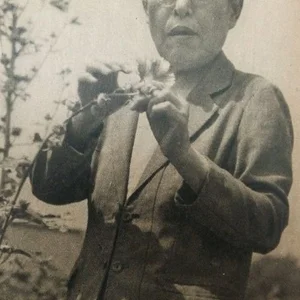
Kono Yasui
1880 — 1971
Kono Yasui (1880-1971) was a Japanese botanist and cytologist, a pioneer in the study of chromosomes and plant genetics. In 1927, she became the first Japanese woman to earn a doctorate in science.
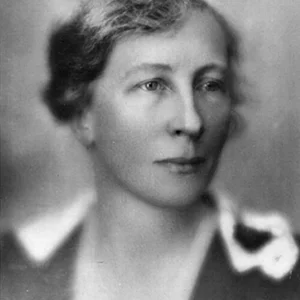
Lillian Gilbreth
American engineer, psychologist, and pioneer of scientific management. The first woman member of the American Society of Mechanical Engineers, she brought the human dimension into the study of industrial efficiency.
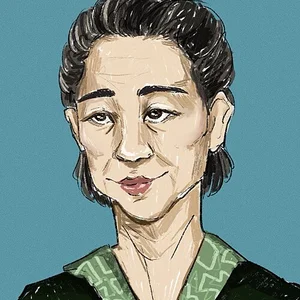
Lin Lanying
1918 — 2003
Lin Lanying was a Chinese engineer and scientist specializing in semiconductor materials. A pioneer of microelectronics in China, she is nicknamed the “mother of Chinese semiconductor materials” for developing the country's first single crystals of silicon and gallium arsenide.
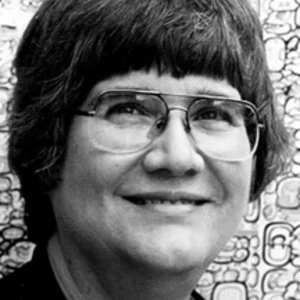
Linda Schele
1942 — 1998
American epigrapher and archaeologist (1942–1998), pioneer in the decipherment of Maya writing. Her work revolutionized our understanding of Maya history, cosmology, and dynasties.
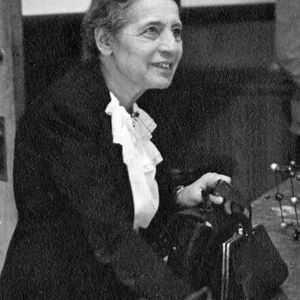
Lise Meitner
1878 — 1968
Austro-Swedish physicist
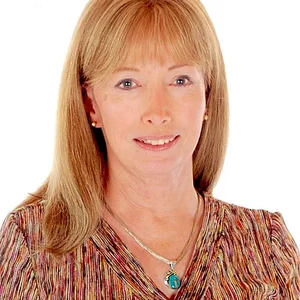
Lynn Conway
1938 — 2024
An American computer scientist and engineer, Lynn Conway revolutionized integrated circuit design by co-developing VLSI design rules with Carver Mead. A pioneer of superscalar processor architecture, she also made history as a transgender woman who rebuilt a brilliant career after being fired from IBM.
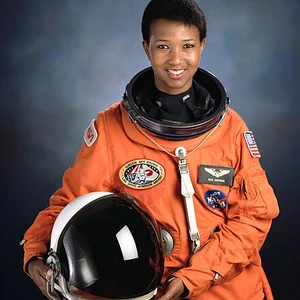
Mae Jemison
1956 —
American physician and astronaut
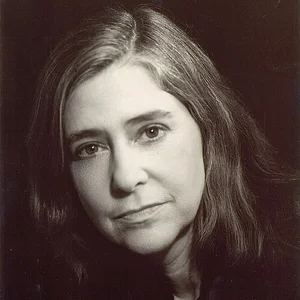
Margaret Hamilton
1936 — ?
Margaret Hamilton is a pioneering American computer scientist and engineer in the field of software engineering. She led the team that developed the onboard navigation software for the Apollo missions, directly contributing to the 1969 Moon landing. She is considered one of the founders of software engineering as a discipline.
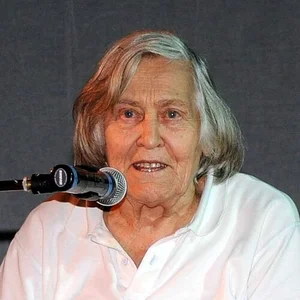
Margherita Hack
1922 — 2013
Italian astrophysicist born in Florence in 1922, she directed the Astronomical Observatory of Trieste for thirty years. A pioneer of stellar spectroscopy and a gifted science communicator, she made astronomy accessible to the general public.
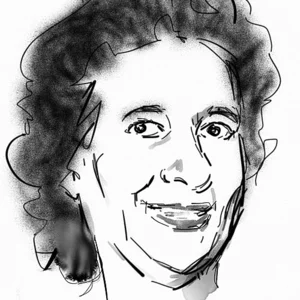
Marguerite Perey
1909 — 1975
French chemist (1909–1975), collaborator of Marie Curie at the Radium Institute. In 1939 she discovered francium, the last natural element to be discovered, and in 1962 became the first woman elected to the French Academy of Sciences.
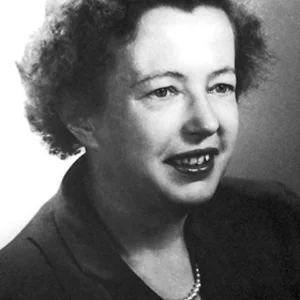
Maria Goeppert Mayer
1906 — 1972
An American theoretical physicist of German origin, she developed the nuclear shell model of the atomic nucleus. In 1963, she became the second woman in history to receive the Nobel Prize in Physics, after Marie Curie.
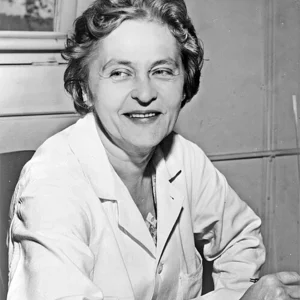
Mária Telkes
1900 — 1995
Hungarian-American biophysicist and inventor (1900-1995), nicknamed the “Queen of the Sun.” A pioneer of solar energy, she designed the first solar heating system for a home and a solar distiller used by the US Navy.
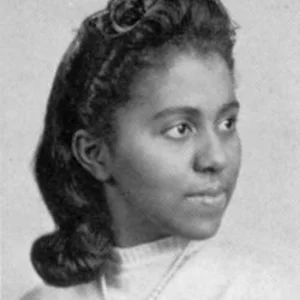
Marie Maynard Daly
1921 — 2003
Marie Maynard Daly (1921-2003) was an American biochemist, the first African American woman to earn a doctorate in chemistry in the United States. Her work focused on cholesterol, proteins, and the structure of the cell nucleus.
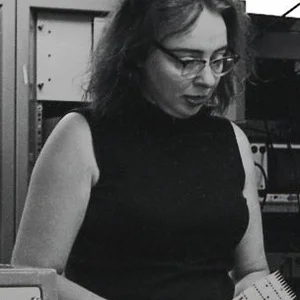
Marie Tharp
1920 — 2006
Marie Tharp was an American geologist and cartographer who produced the first scientific maps of the ocean floor. By mapping the Mid-Atlantic Ridge, she provided decisive visual proof of the theory of continental drift — long overlooked because of her status as a woman.
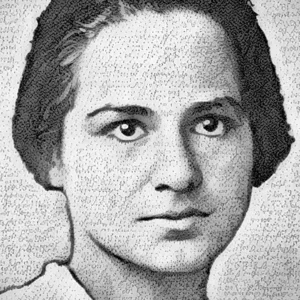
Marietta Blau
1894 — 1970
Marietta Blau (1894-1970) was an Austrian physicist who pioneered the photographic method of particle detection. Her sensitive emulsions made it possible to record cosmic rays and nuclear disintegrations, paving the way for particle physics.
Marthe Gautier
1925 — 2022
Marthe Gautier (1925-2022) was a French pediatrician and researcher. Her cell culture work was decisive in the 1958-1959 discovery of the chromosomal anomaly that causes Down syndrome. Long downplayed, her contribution reignited the debate over the recognition of women in science.
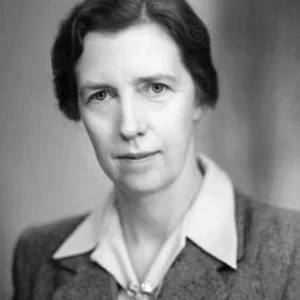
Mary Cartwright
1900 — 1998
British mathematician and pioneer of dynamical systems theory. Her work on nonlinear differential equations foreshadowed chaos theory. She was the first woman mathematician elected to the Royal Society.
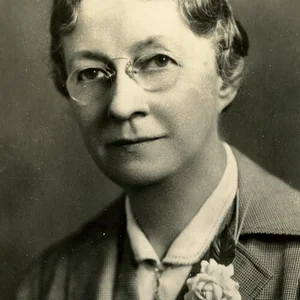
Mary Engle Pennington
1872 — 1952
Mary Engle Pennington (1872-1952) was an American chemist, bacteriologist, and engineer, a pioneer of food preservation through refrigeration. She established the scientific standards of the cold chain for milk, eggs, and poultry in the United States.
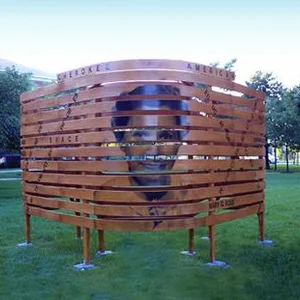
Mary Golda Ross
1908 — 2008
Mary Golda Ross (1908-2008) was an American aerospace engineer, the first female engineer of the Cherokee Nation. A pioneer of astronautics, she took part in the founding work of the American space and defense programs at Lockheed.
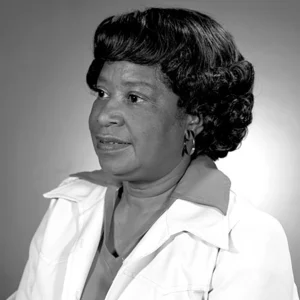
Mary Jackson
1910 — 2005
American mathematician and aerospace engineer, Mary Jackson was the first Black female engineer at NASA. A member of the “Hidden Figures,” she contributed to the calculations for the first American space missions and fought for equal rights within the agency.
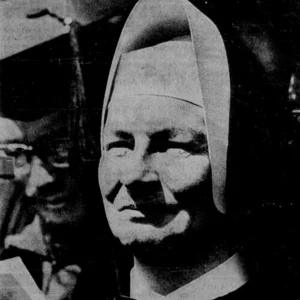
Mary Kenneth Keller
1913 — 1985
Mary Kenneth Keller was an American Catholic nun and a computing pioneer. She was one of the first people to earn a doctorate in computer science in the United States (1965) and contributed to the development of the BASIC programming language.
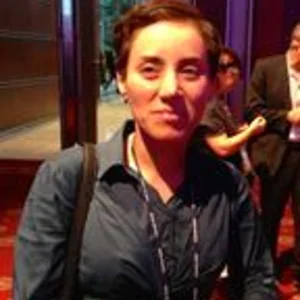
Maryam Mirzakhani
1977 — 2017
Maryam Mirzakhani is the first woman to win the Fields Medal in 2014, the highest honor in mathematics. Born in Iran, she revolutionized the understanding of Riemann surfaces and hyperbolic geometry. A professor at Stanford, she passed away from cancer at just 40 years old, leaving behind a landmark body of mathematical work.
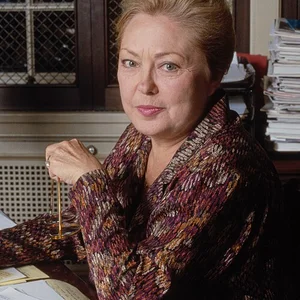
Mathilde Krim
1926 — 2018
Mathilde Krim was a medical biology researcher specializing in virology and cancer. She is best known for her pioneering fight against AIDS, having founded a research foundation that became amfAR in the 1980s.
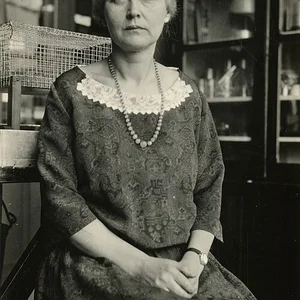
Maud Menten
1879 — 1960
Maud Menten (1879-1960) was a pioneering Canadian biochemist and physician. She co-authored the Michaelis-Menten law of enzyme kinetics (1913), a cornerstone of biochemistry. She was one of the first Canadian women to earn a doctorate in medicine.
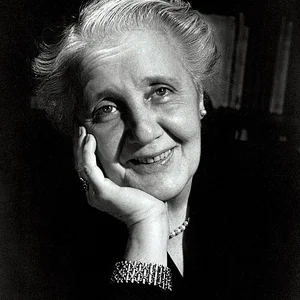
Melanie Klein
1882 — 1960
British psychoanalyst of Austrian origin (1882–1960), pioneer of child psychoanalysis. She developed object relations theory and was one of the first to analyze very young children through play. Her work profoundly influenced child psychiatry and psychoanalytic thought.
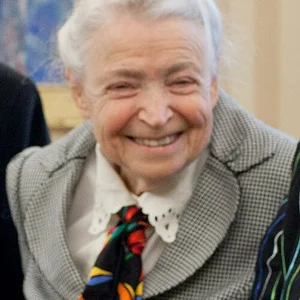
Mildred Dresselhaus
1930 — 2017
American physicist nicknamed the “queen of carbon” for her pioneering work on the electronic structure of graphite and carbon-based materials. Her research paved the way for carbon nanotubes and graphene.
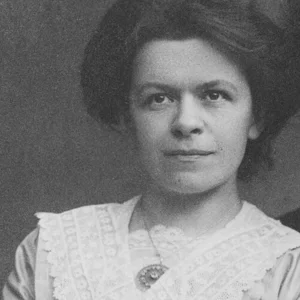
Mileva Marić
1875 — 1948
Serbian mathematician and physicist (1875–1948), the first woman admitted to the physics program at the Zurich Polytechnic. First wife of Albert Einstein, she collaborated on his *annus mirabilis* papers of 1905, though her exact contribution remains debated.
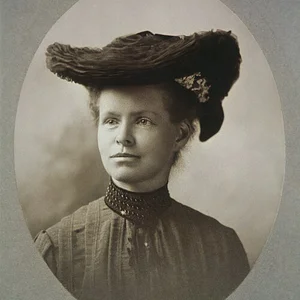
Nettie Stevens
1861 — 1912
American geneticist and pioneer of cytogenetics. In 1905, she demonstrated that an organism's sex is determined by its chromosomes, identifying the role of the Y chromosome in the mealworm beetle (Tenebrio molitor).

Olga Owens Huckins
American journalist and environmental activist (1899–1968), known for writing a letter describing the devastation caused by DDT on the birds of her private sanctuary in Massachusetts. This letter, sent to her friend Rachel Carson in 1958, was the catalyst for the writing of Silent Spring.
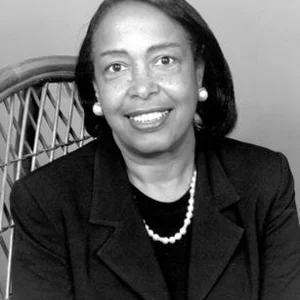
Patricia Bath
1942 — 2019
An American ophthalmologist and inventor, Patricia Bath revolutionized cataract treatment by developing the Laserphaco Probe, a laser device patented in 1988. The first African American woman to receive a medical patent in the United States, she also co-founded the American Institute for the Prevention of Blindness.
Patsy Sherman
Patsy Sherman (1930-2008) was an American chemist employed by the company 3M. She is known worldwide for co-inventing Scotchgard, a waterproofing and stain-resistant treatment for textiles.
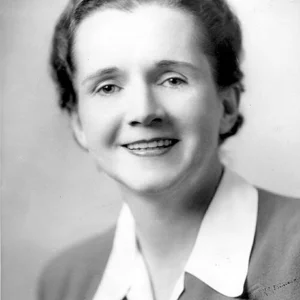
Rachel Carson
1907 — 1964
Marine biologist and American writer, Rachel Carson is the pioneer of the modern environmental movement. Her book *Silent Spring* (1962) exposed the massive use of pesticides and their devastating impact on ecosystems, sparking a global awakening on environmental protection.
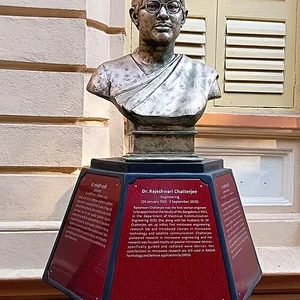
Rajeshwari Chatterjee
1922 — 2010
Rajeshwari Chatterjee was an Indian engineer and scientist, a pioneer of microwave and antenna engineering. The first woman engineer from the state of Karnataka, she taught for decades at the Indian Institute of Science in Bangalore.
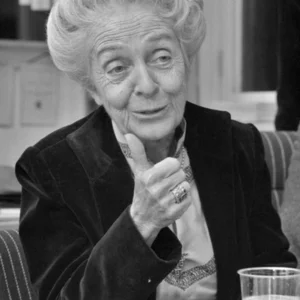
Rita Levi-Montalcini
1909 — 2012
An Italian-American neurologist, Rita Levi-Montalcini discovered nerve growth factor (NGF), revolutionizing neurobiology. She won the Nobel Prize in Medicine in 1986, and continued her research despite fascist racial laws that forced her to work in secret. She remained active in science past the age of 100.
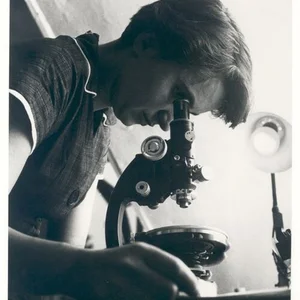
Rosalind Franklin
1920 — 1958
British molecular biologist (1920–1958), Rosalind Franklin made essential contributions to our understanding of DNA structure through her X-ray crystallography work. She is best known for Photo 51, a landmark image that revealed the double helix structure of DNA.
Rosalind Pitt-Rivers
1907 — 1990
Rosalind Pitt-Rivers was a 20th-century British biochemist who specialized in thyroid hormones. In 1952, together with Jack Gross, she co-discovered triiodothyronine (T3), a major thyroid hormone.
Rosalyn Yalow
1921 — 2011
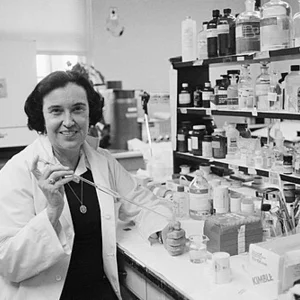
Rosalyn Yalow was an American medical physicist and a pioneer of nuclear medicine. With Solomon Berson, she developed the radioimmunoassay (RIA), a technique that revolutionized biological diagnostics. She received the Nobel Prize in Medicine in 1977.
Sally Ride
1951 — 2012
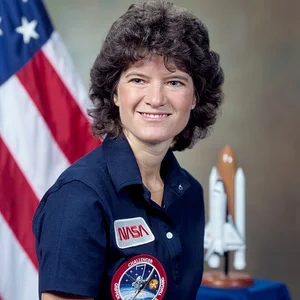
American physicist and astronaut, Sally Ride became in 1983 the first American woman to travel in space aboard the Space Shuttle Challenger. She took part in two space missions and later dedicated herself to promoting science education for young people.
Sameera Moussa
1917 — 1952
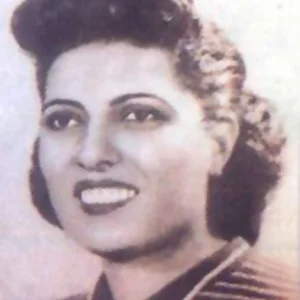
Samira Moussa (1917-1952) was an Egyptian nuclear physicist and a pioneer of atomic research in the Arab world. She worked to make the medical uses of nuclear energy accessible to all and died prematurely under circumstances that remain mysterious.
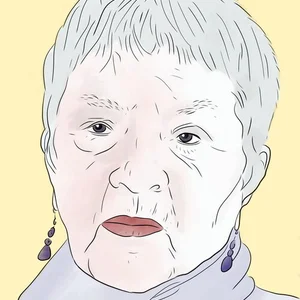
Sandra Harding
1935 — 2025
Sandra Harding is an American philosopher born in 1935, a leading figure in feminist epistemology and the philosophy of science. She theorized the notion of the “situated standpoint” (standpoint theory) and criticized the claim to neutral objectivity in scientific knowledge.
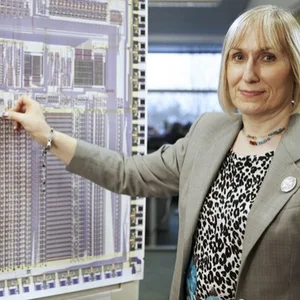
Sophie Wilson
1957 — ?
Sophie Wilson is a British computer scientist born in 1957, who designed the instruction set of the ARM processor. Her architecture now powers nearly all smartphones and mobile devices worldwide.
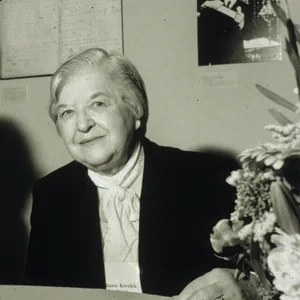
Stephanie Kwolek
1923 — 2014
American chemist (1923-2014), Stephanie Kwolek invented Kevlar in 1965, a synthetic fiber five times stronger than steel. Her discovery revolutionized protective equipment and earned her numerous scientific distinctions.

Svetlana Savitskaya
Soviet cosmonaut Svetlana Savitskaya was the second woman to travel to space and the first to perform a spacewalk (EVA). She completed two missions aboard the Salyut 7 space station in 1982 and 1984.
Sylvia Earle
1935 — ?
American oceanographer and explorer, Sylvia Earle set a solo dive record in 1979 at a depth of 381 meters. A pioneer of deep-sea exploration, she has led numerous expeditions and advocates tirelessly for ocean protection.
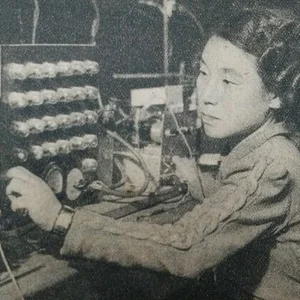
Toshiko Yuasa
1909 — 1980
Toshiko Yuasa (1909-1980) was the first female Japanese physicist. A specialist in radioactivity and nuclear physics, she spent the bulk of her career in France, at the CNRS, following in the footsteps of the Joliot-Curies' work.
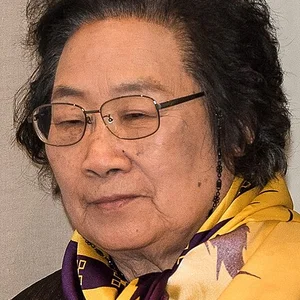
Tu Youyou
1930 —
Chinese pharmaceutical researcher
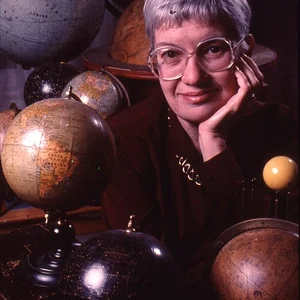
Vera Rubin
1928 — 2016
American astronomer (1928–2016), Vera Rubin demonstrated the existence of dark matter through her study of galaxy rotation curves. Her work revolutionized our understanding of the composition of the universe.

Xie Xide
1921 — 2000
Xie Xide (1921-2000) was a Chinese physicist, a pioneer of solid-state physics and semiconductors in China. The first woman to serve as president of Fudan University in Shanghai, she played a major role in the development of modern Chinese physics.
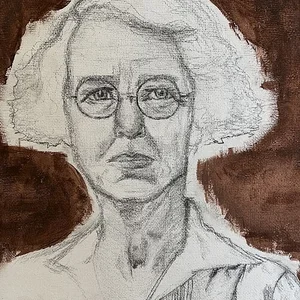
Ynes Mexia
1870 — 1938
Ynes Mexia was a Mexican-American botanist and explorer. Beginning her scientific career at over 50 years old, she led botanical collecting expeditions across North and South America, gathering tens of thousands of plant specimens, including hundreds of species new to science.

Yvette Cauchois
1908 — 1999
Yvette Cauchois (1908-1999) was a French physicist and chemist, a pioneer of X-ray spectroscopy. She designed the curved-crystal spectrograph that bears her name and was one of the first women to head a major scientific laboratory in France.
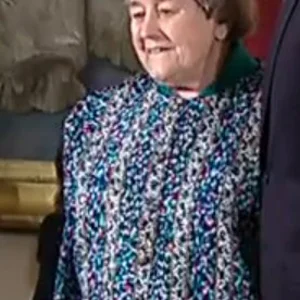
Yvonne Brill
1924 — 2013
Canadian-American aerospace engineer (1924-2013), a pioneer of spacecraft propulsion. She invented a hydrazine propulsion system that kept satellites in orbit, a technology that became an industry standard.
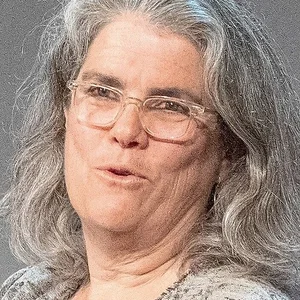
Andrea Ghez
1965 — ?
Andrea Ghez is an American astrophysicist born in 1965 who specializes in observing the galactic center. Her work provided proof of the existence of a supermassive black hole at the heart of the Milky Way. She received the Nobel Prize in Physics in 2020.
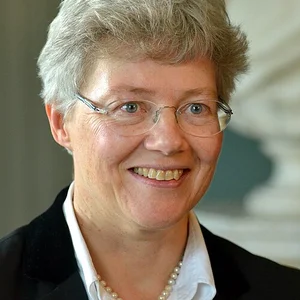
Anne L'Huillier
1958 — ?
Anne L'Huillier is a French-Swedish physicist born in 1958, a pioneer of attosecond physics. She received the 2023 Nobel Prize in Physics for her work on generating ultra-short pulses of light that make it possible to observe the motion of electrons.
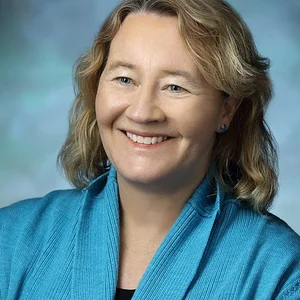
Carol Greider
1961 — ?
Carol Greider is an American molecular biologist born in 1961. In 1984 she discovered telomerase, the enzyme that protects the ends of chromosomes, which earned her the Nobel Prize in Physiology or Medicine in 2009.
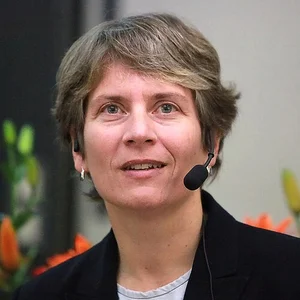
Carolyn Bertozzi
1966 — ?
American chemist born in 1966, a pioneer of bioorthogonal chemistry. She developed chemical reactions capable of taking place inside living organisms without disrupting their functioning. She received the Nobel Prize in Chemistry in 2022.
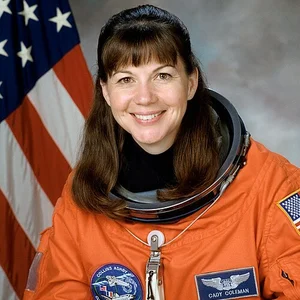
Catherine Coleman
1960 — ?
An American astronaut and chemist, Catherine Coleman completed three spaceflights, including a 159-day stay aboard the International Space Station in 2010–2011. A US Air Force officer, she contributed to scientific experiments in microgravity.
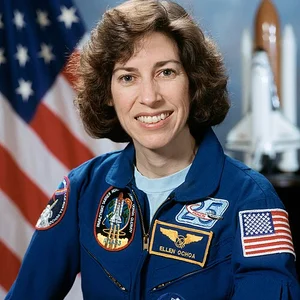
Ellen Ochoa
1958 — ?
Ellen Ochoa is an American engineer and astronaut, the first woman of Hispanic origin to travel into space in 1993. A specialist in optical systems, she flew four missions aboard the space shuttle and later directed NASA's Johnson Space Center.
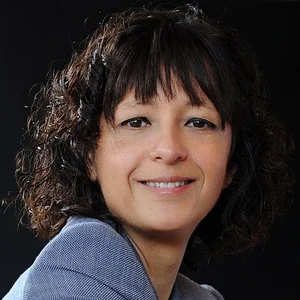
Emmanuelle Charpentier
1968 — ?
A French microbiologist and geneticist, she co-develops the CRISPR-Cas9 technique with Jennifer Doudna. This revolution in genome editing earns her the Nobel Prize in Chemistry in 2020.
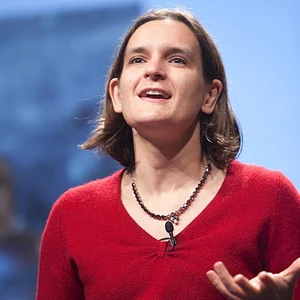
Esther Duflo
1972 — ?
French-American economist born in 1972, a specialist in development economics. She reshaped the fight against poverty by relying on rigorous field experiments. In 2019, she became the youngest person ever to win the Nobel Prize in Economics.
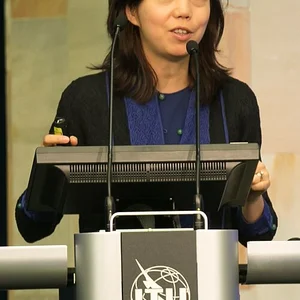
Fei-Fei Li
1976 — ?
American computer scientist of Chinese origin, pioneer in artificial intelligence and computer vision. She created ImageNet, an image database that revolutionized deep learning. A professor at Stanford, she advocates for ethical and inclusive AI.
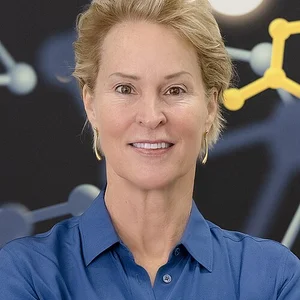
Frances Arnold
1956 — ?
American chemist and pioneer of directed protein evolution. She received the Nobel Prize in Chemistry in 2018 for applying the principles of natural evolution to enzyme design. Her work is revolutionizing biochemistry and the pharmaceutical industry.
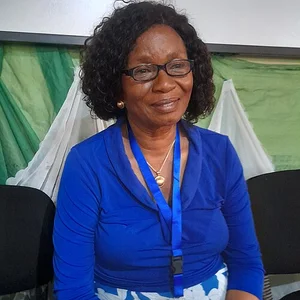
Francisca Nneka Okeke
1968 — ?
Francisca Nneka Okeke is a Nigerian physicist and professor at the University of Nigeria, Nsukka. A specialist in geophysics, she studies the electric currents of the ionosphere (the equatorial electrojet) and their link to the climate. In 2013, she received the L'Oréal-UNESCO Award for Women in Science.
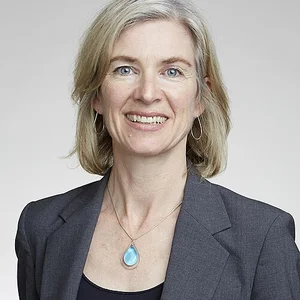
Jennifer Doudna
1964 — ?
American biochemist and pioneer of CRISPR-Cas9 technology. Her work revolutionized genome editing, opening up enormous possibilities in medicine and biotechnology. She received the Nobel Prize in Chemistry in 2020 alongside Emmanuelle Charpentier.
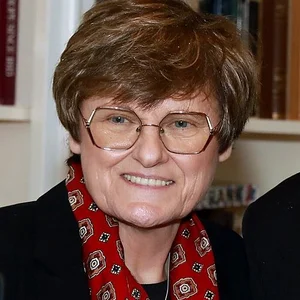
Katalin Karikó
1955 — ?
Hungarian biochemist and pioneer of messenger RNA technology. Her research, long overlooked, made mRNA vaccines against COVID-19 possible. She received the Nobel Prize in Physiology or Medicine in 2023.
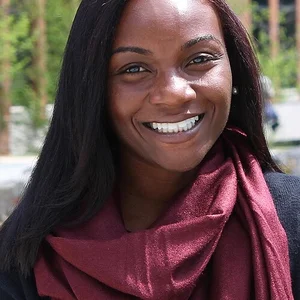
Kizzmekia Corbett
1986 — ?
An American immunologist, Kizzmekia Corbett played a central role in developing the mRNA vaccine against COVID-19 at the NIH. Her work ushered in a new era in vaccination.
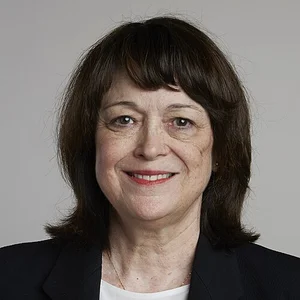
Linda B. Buck
1947 — ?
Linda Brown Buck is an American biologist born in 1947. She unraveled how the olfactory system works by discovering the large family of genes that encode odor receptors. Her work earned her the Nobel Prize in Physiology or Medicine in 2004, shared with Richard Axel.
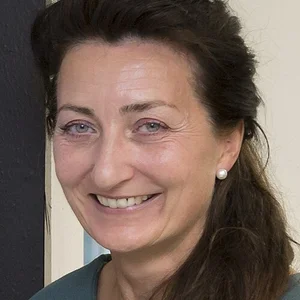
May-Britt Moser
1963 — ?
May-Britt Moser is a Norwegian neuroscientist and psychologist born in 1963. Together with her colleague Edvard Moser, she discovered “grid cells,” neurons that form the brain's positioning system. This work earned her the Nobel Prize in Physiology or Medicine in 2014.
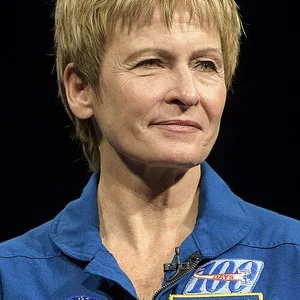
Peggy Whitson
1960 — ?
An American NASA astronaut, Peggy Whitson is the woman who has spent the most time in space (665 cumulative days). She commanded the International Space Station on two separate occasions.

Shafi Goldwasser
Israeli-American theoretical computer scientist and pioneer of modern cryptography. Co-recipient of the 2012 Turing Award with Silvio Micali, she laid the mathematical foundations of probabilistic cryptography and zero-knowledge proofs.
Tebello Nyokong
1951 — ?
Tebello Nyokong is a South African chemist born in 1951, a specialist in phthalocyanines. She develops a photodynamic therapy against cancer, an alternative to conventional chemotherapy, and works on cleaning up water through photochemistry.